
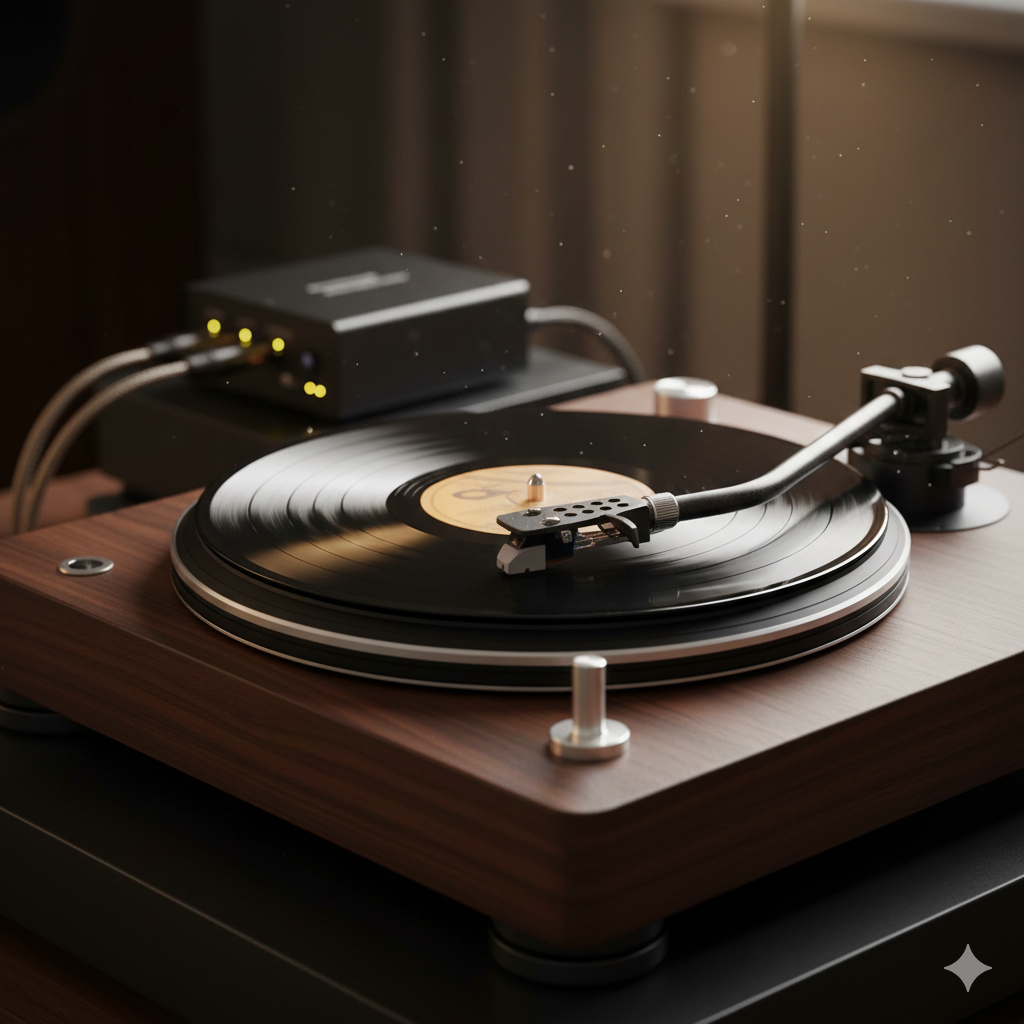
The Key Features That Separate Quality Turntables From the Rest
Turntables may look simple from the outside — a platter, a tonearm, a needle, and a spinning record. But the difference between an average turntable and a great one is massive. Sound quality, durability, tracking accuracy, and noise floor all depend on how well each part is engineered.
If you’ve ever wondered what actually makes a good turntable good, this guide breaks down the essential elements that affect performance and how they shape your listening experience.
1. A Stable, Accurate Motor
The motor is the heart of the turntable.
A good turntable maintains precise, consistent rotational speed with minimal fluctuation.
Signs of a good motor:
- Low wow & flutter (speed variation)
- Smooth, quiet operation
- Strong torque without causing vibration
- Stable 33⅓ and 45 RPM speeds
If a turntable can’t hold speed accurately, the music will sound wobbly, warped, or “off pitch.”
2. A Heavy, Resonance-Reducing Platter
A quality platter helps the record spin smoothly and isolates it from unwanted noise.
What makes a good platter:
- Made of dense materials (aluminum, acrylic, MDF)
- Has proper mass to maintain inertia
- Runs silently with no wobble
- Works with a quality bearing
The heavier and more precisely machined the platter, the more stable the playback.
3. A Well-Engineered Tonearm
The tonearm is responsible for tracking the groove accurately. Small flaws here can make even expensive cartridges perform poorly.
A good tonearm features:
- Low friction bearings
- Proper geometry (effective length + correct offset angle)
- Stable tracking without skipping
- Adjustable counterweight
- Anti-skate control
High-quality tonearms glide effortlessly across the record with minimal resistance.
4. A Good Cartridge and Stylus
The cartridge converts the groove’s vibrations into electrical signals — it’s the component that most directly affects sound.
What makes a good cartridge:
- Quality stylus shape (elliptical, hyperelliptical, microline)
- Accurate channel separation
- Low distortion
- Stable tracking force
Cheap ceramic cartridges? Avoid them.
A good turntable usually comes with a solid moving-magnet (MM) cartridge upgradeable later.
5. Solid, Vibration-Resistant Build
Great sound depends on preventing vibrations from reaching the stylus.
Look for:
- Heavy, rigid plinth
- Isolated motor design
- Dampened feet or suspension
- Low resonance materials
Vibrations cause muddiness, rumble, or distortion.
A good turntable isolates itself so only the groove is heard.
6. Adjustable Tracking Controls
Good turntables let you dial in the exact parameters needed for proper playback.
The essentials:
- Tracking force adjustment
- Anti-skate control
- VTA (Vertical Tracking Angle) on mid/high-end models
- Azimuth adjustment in advanced tonearms
More adjustability means better optimization for different cartridges.
7. Minimal Internal Electronics (Unless High-End)
Many budget turntables pack in:
- Built-in speakers
- Bluetooth
- Cheap built-in preamps
These often degrade sound.
Great turntables prioritize:
- Clean signal path
- Isolated or optional preamps
- High-quality internal wiring
Some premium models include excellent preamps — but cheap ones rarely do.
8. Upgradeability
A hallmark of a truly good turntable is the ability to grow with your system.
You should be able to upgrade:
- Cartridge
- Platter
- Belt
- Mat
- Phono preamp
This keeps the turntable relevant for years.
9. Precision Manufacturing
The difference between a mediocre and great turntable often comes down to tolerances — how precise the components are.
Better manufacturing ensures:
- Level spindle
- Perfectly balanced platter
- Smooth tonearm bearings
- No play in moving parts
- Low mechanical noise
Good turntables feel solid, smooth, and refined.
So, What Makes a Good Turntable Good?
A great turntable isn’t defined by fancy features — it’s defined by precision, stability, and engineering quality.
The best turntables have:
- A stable, accurate motor
- A heavy, well-machined platter
- A high-quality tonearm
- A good cartridge
- Excellent vibration control
- Precise construction
- Room for upgrades
These elements work together to deliver:
- Lower noise
- Better clarity
- Wider soundstage
- More detail
- Longer vinyl and stylus life
In short: A good turntable lets you hear the music exactly as it was meant to sound — nothing added, nothing taken away.