
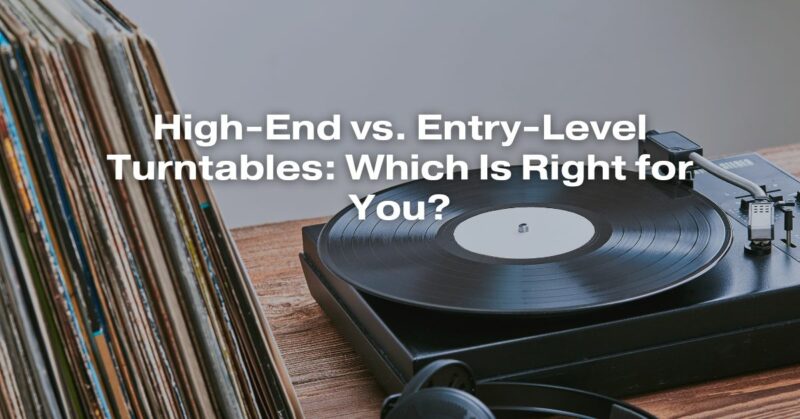
Vinyl records have made a remarkable resurgence in recent years, appealing to both audiophiles and music enthusiasts alike. Whether you’re rediscovering the magic of analog sound or diving into vinyl for the first time, choosing the right turntable is a pivotal decision. Two main categories dominate the market: high-end and entry-level turntables. In this comprehensive article, we will explore the key differences between these two options and help you determine which is right for you.
The Revival of Vinyl
Before delving into the high-end vs. entry-level debate, it’s essential to understand why vinyl records are experiencing a renaissance. Digital music has become ubiquitous, with streaming platforms offering millions of songs at our fingertips. So, why are people gravitating back to vinyl?
- Sound Quality: Vinyl records offer a warm, analog sound that many argue surpasses the clinical precision of digital audio. Audiophiles often prefer vinyl for its authenticity and depth.
- Tangible Experience: Handling vinyl records, carefully placing the needle, and flipping the record create a tangible connection to music that is missing in digital formats.
- Collectibility: Vinyl records have a charm and collectible appeal. Limited editions, unique album artwork, and vintage records all contribute to their allure.
Given this resurgence, it’s no wonder that people are investing in turntables to enjoy their vinyl collections. But, should you go for a high-end or entry-level turntable? Let’s break down the key factors.
Entry-Level Turntables
Affordability: Entry-level turntables are designed for those who want to experience vinyl without breaking the bank. They typically range from $100 to $500, making them accessible to a broad audience.
Simplicity: Entry-level turntables are user-friendly, often coming with built-in preamps and simple setup instructions. This makes them perfect for beginners who may not be familiar with the intricacies of vinyl playback.
Compact and Portable: Many entry-level turntables are compact and portable, making them suitable for small spaces and easy to transport.
Sacrifices in Build Quality: To keep costs low, entry-level turntables may compromise on build quality. This can result in less durable components and potential issues with playback accuracy over time.
Limited Customization: These turntables may not offer as much room for upgrades or customization as high-end models. This can be limiting if you plan to invest more in your vinyl setup down the road.
High-End Turntables
Superior Sound Quality: High-end turntables are engineered to provide the best possible sound quality. They often feature high-quality components like precision bearings, heavy platters, and premium tonearms.
Durability and Longevity: High-end turntables are built to last, with robust materials and craftsmanship that ensure they can withstand years of use without degradation in performance.
Customization: High-end turntables allow for extensive customization, enabling audiophiles to fine-tune every aspect of their vinyl playback experience, from cartridges to tonearm adjustments.
Price Premium: Quality comes at a cost, and high-end turntables can range from $1,000 to several thousand dollars. This investment is often justified by the unparalleled sound quality and longevity they offer.
Complex Setup: High-end turntables may require more expertise to set up correctly. This can involve precise cartridge alignment, balancing tonearms, and adjusting various parameters to achieve optimal sound.
Which Is Right for You?
Choosing between a high-end and an entry-level turntable largely depends on your budget, experience, and commitment to vinyl. Here are some considerations to help you decide:
- Budget: If you’re on a tight budget or just exploring vinyl, an entry-level turntable is a reasonable starting point. You can always upgrade in the future.
- Sound Quality: If you are a discerning audiophile who values the best possible sound, a high-end turntable is the way to go. It’s an investment in an exceptional listening experience.
- Longevity: If you plan to make vinyl a long-term hobby and want a turntable that will stand the test of time, a high-end model is a wise choice.
- Customization: If you enjoy tinkering and customizing your audio setup, a high-end turntable provides the flexibility to fine-tune your system to your exact preferences.
- Portability: If you need a portable or space-saving option, entry-level turntables are more suitable due to their compact designs.
- Simplicity: If you want a hassle-free, plug-and-play experience, an entry-level turntable with built-in features may be your best bet.
In conclusion, the choice between a high-end and entry-level turntable ultimately depends on your personal preferences and priorities. Consider your budget, level of expertise, and how you intend to use your turntable when making this decision. Both options can provide a fantastic vinyl listening experience, but they cater to different needs and expectations. Regardless of your choice, the world of vinyl awaits, offering a rich and immersive musical journey like no other.