
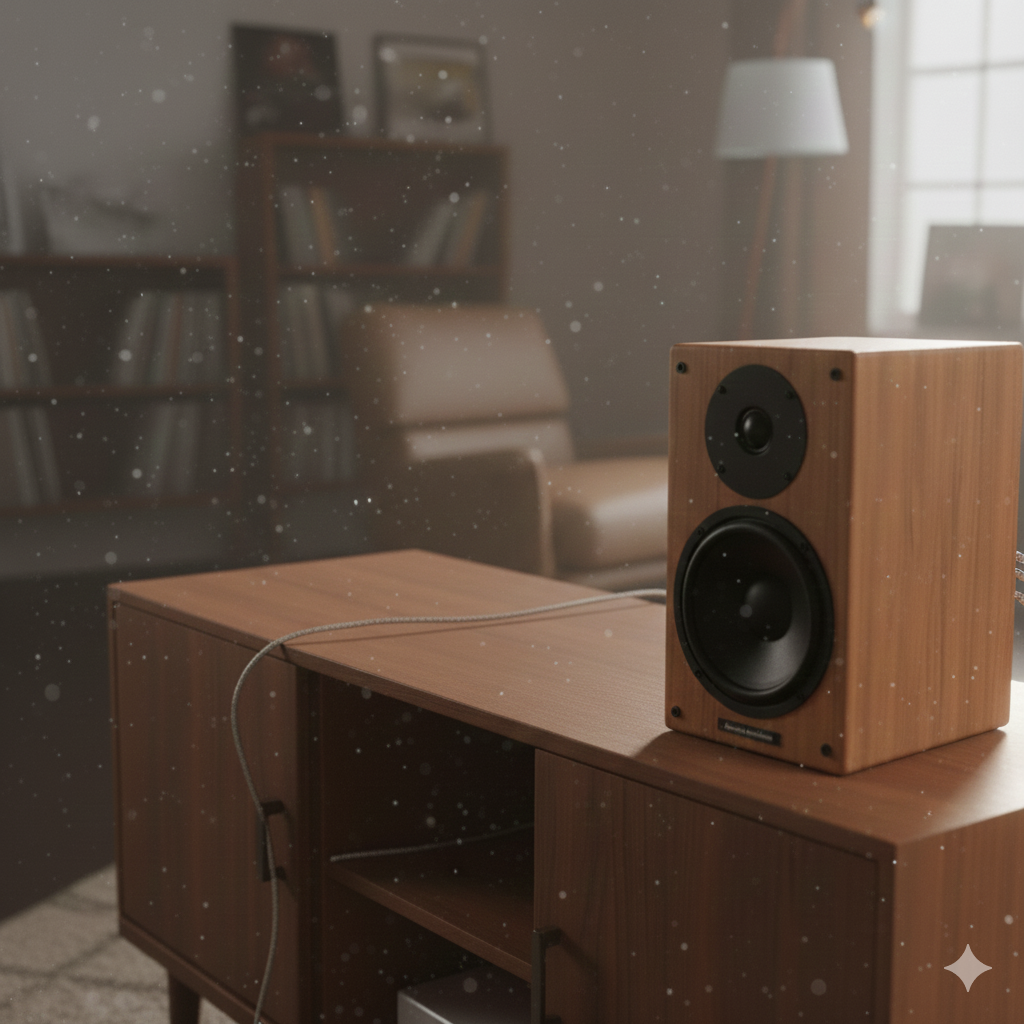
A lot of people worry when they see their speakers rated for more watts than their amplifier can deliver.
Does it damage the amp?
Will the speakers sound weak?
Is the setup unsafe?
Here’s the real answer — and it’s much simpler than most expect.
🔊 Short Answer
It’s perfectly safe to use speakers with higher wattage than your amplifier.
In fact, this is often better than the opposite situation.
As long as you don’t push the amp into distortion, the system will work normally — and sometimes even more reliably.
🎚️ Understanding Wattage Ratings
Speaker wattage (e.g., 100W, 150W, 300W) is not how much power it needs — it’s how much power it can handle safely.
An amplifier rated at 50W, 80W, or 100W will simply deliver only what it can produce, regardless of the speaker’s maximum wattage.
A higher speaker watt rating does NOT force the amp to work harder.
⚠️ The Real Risk: Underpowered Amps Driven Too Hard
The only time problems happen is when the amp is too small and you turn the volume up past its clean limit.
This causes clipping, a form of distortion that can actually kill speakers.
🔥 When clipping happens:
- Distorted signals heat up the speaker’s voice coil
- Tweeters are especially vulnerable
- Sound becomes harsh or crackly
- Long-term use can burn or tear components
So the danger isn’t high-wattage speakers — it’s a struggling amplifier pushed beyond its comfort zone.
✔️ Recommended Setup Guidelines
If you want the safest and best sound:
Good
- Speaker wattage > Amp wattage
Avoid
- Amp wattage > Speaker wattage (only if you tend to push volume to the max)
Best Practice
- Match the RMS wattage, not the peak numbers
- Choose speakers with slightly higher RMS than your amp
🎧 Final Verdict
Using speakers with higher wattage than your amplifier is safe, common, and often ideal.
Just don’t overdrive the amp, and your system will sound clean, clear, and protected from damage.