
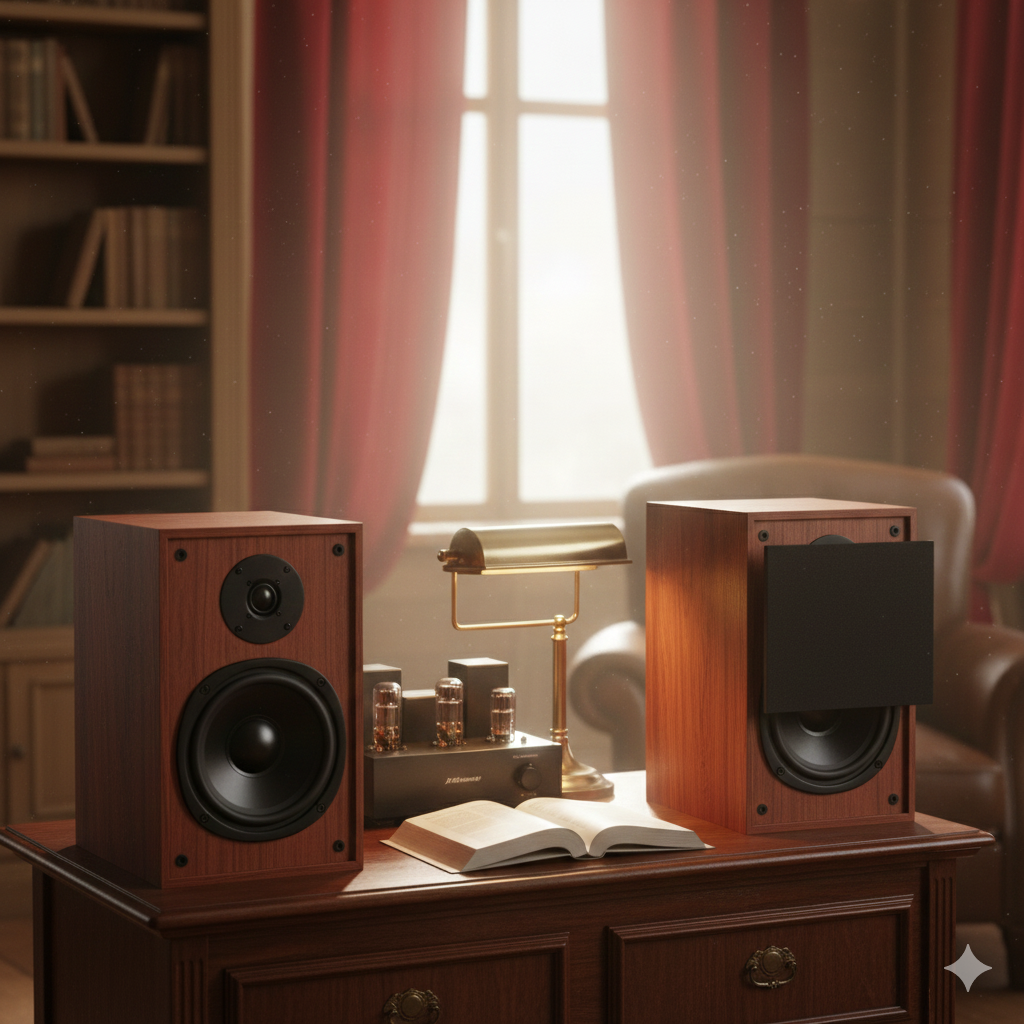
Pairing speakers and amplifiers isn’t just plug-and-play—especially when their impedance ratings differ. One of the most common (and risky) mismatches occurs when someone connects 4-ohm speakers to an amplifier designed for 8-ohm loads. While the system may produce sound, the consequences can range from harmless to catastrophic depending on the amplifier’s design.
Here’s what really happens.
1. The Amp Has to Deliver More Current
Lower-impedance speakers draw more power from the amplifier.
- 4Ω speakers = double the current demand of 8Ω speakers at the same volume.
- Some amps can handle the extra load.
- Many cannot—and begin to overheat, distort, or shut down.
Think of it like towing a trailer with a small car.
You can, but the engine strains—and may eventually fail.
2. Higher Heat = Higher Risk of Damage
When an 8-ohm-rated amp is forced to run 4-ohm speakers:
- It runs hotter than normal
- Internal components are stressed
- Protection circuits may trigger (if you’re lucky)
- Worst case: permanent damage to output transistors or power supply
Heat is the #1 killer of amplifiers.
3. You’ll Hear Distortion as the Amp Struggles
Even before an amp fails, you might hear:
- Harshness
- Clipping
- Compression at higher volumes
- Sudden shut-downs during loud passages
Clipping is especially dangerous because it can also damage your speakers.
4. At Low Volumes, It Might Be Safe
If you keep the volume very low:
- The amp may operate within its safe current limits
- Heat buildup stays minimal
- No audible distortion
But this is not reliable or guaranteed.
Even a brief loud passage can push the system into the danger zone.
5. Some Amps Are Designed for 4-Ohm Loads—But Not All
Certain equipment—like home theater receivers, vintage amps, or budget integrated amps—often cannot safely drive 4-ohm speakers.
Meanwhile, high-current or audiophile-grade amps often explicitly support 4Ω loads.
Always check:
- Back-panel labels
- User manual
- Power ratings (e.g., “100W @ 8Ω / 180W @ 4Ω” means it’s safe)
If the manual disallows 4Ω, don’t test your luck.
So, Should You Do It?
Safe?
Usually no—unless the amp is rated for 4-ohm loads.
Possible?
Yes, but with risk, and only at low volumes.
Recommended?
Never, unless the amplifier explicitly supports 4Ω speakers.
Best Practices Instead
✔ Check your amp’s minimum impedance rating
✔ Use speakers that match that rating
✔ If you must run 4Ω speakers, use a high-current amplifier
✔ Add ventilation or cooling if the amp runs warm
✔ Avoid high volumes with mismatched gear
Bottom Line
Running 4-ohm speakers from an 8-ohm amplifier forces the amp to work far harder than it was designed to, increasing heat, distortion, and the risk of equipment damage. While it might function at low volumes, it’s generally unsafe and not recommended.
Matching impedance is one of the simplest ways to protect your gear and ensure great sound.