
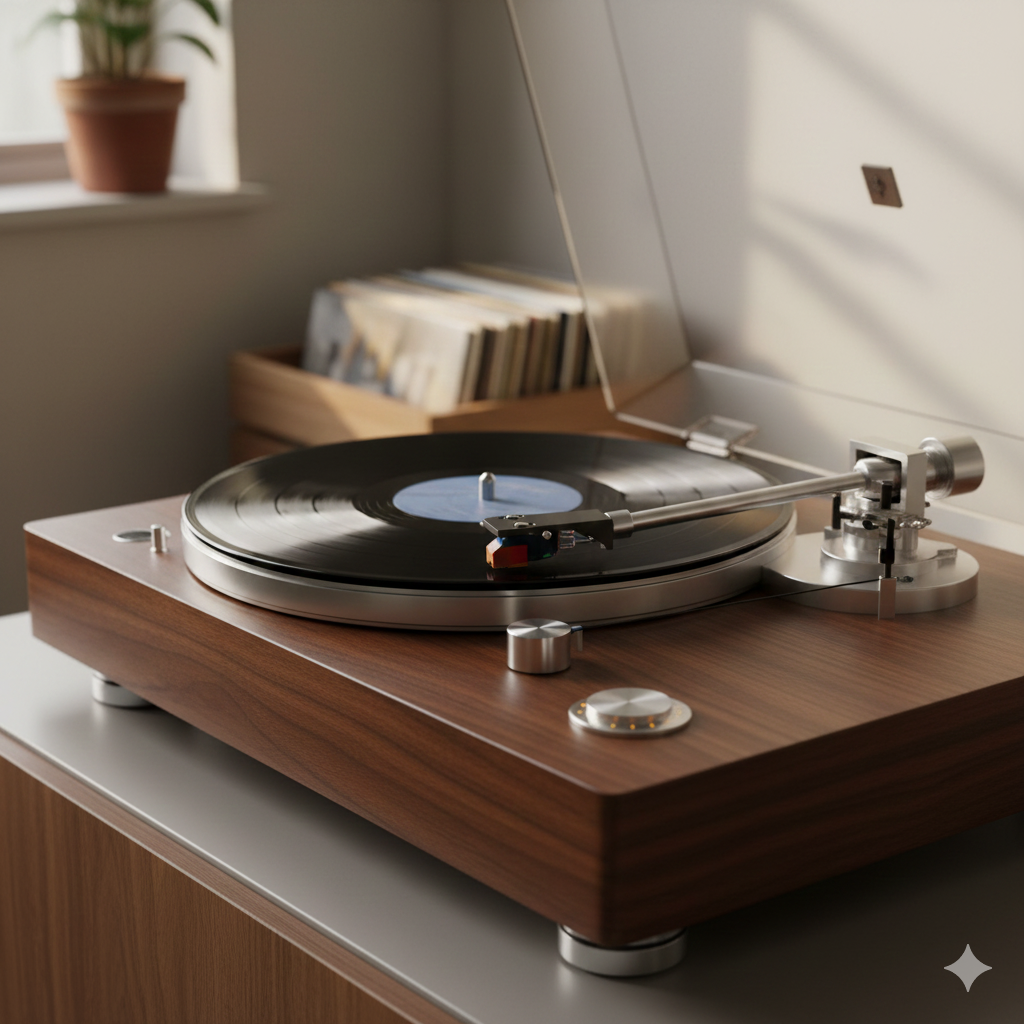
Vinyl lovers often debate: should you get an automatic turntable (push-button convenience) or a manual one (full control, purist experience)? The answer depends on how you listen, what you value, and how you use your records. This guide walks you through the differences, pros and cons, and who each type is best suited for.
🔧 What’s the Difference: Automatic vs Manual Turntables
Automatic Turntables
- You place the record, press a button, and the tonearm automatically moves, lowers the stylus, and starts playback — and will often lift the tonearm and stop when the record ends. (Vinyl Restart)
- Some models even reset the tonearm automatically to prevent stylus wear or records from playing into the run-out groove endlessly. (Lafarga & Herranz)
Manual Turntables
- You physically lift the tonearm, place the stylus on the groove to start playback, and manually lift/remove it at the end. No automation. (daturntable.com)
- Because they lack extra mechanics, manual tables tend to have fewer moving parts, simpler design, and more potential for high-fidelity playback and upgrades. (RightTechAdvice)
✅ Pros & Cons: What Each Does Well — and Where They Struggle
Automatic Turntables — Pros
- Convenience & ease of use — ideal for casual listeners or newcomers. Just press play. (HiFi Hippo)
- Protection for stylus and records — automatic tonearm placement reduces risk of mis-dropping and end-of-side damage. (daturntable.com)
- Good for multitasking or background listening — you can step away without worrying about stopping playback. (thevinylverdict.com)
- Beginner-friendly & less error-prone — lowers barrier for first-time vinyl owners. (Gear Patrol)
Automatic Turntables — Cons
- More mechanical complexity → more potential failure points — more parts to wear out or require maintenance. (HiFi Hippo)
- Potential compromise in sound quality — automation mechanisms can introduce slight vibration or tracking imprecision compared to simpler manual tonearms. (Lafarga & Herranz)
- Less flexibility / upgradeability — many automatic units use fixed cartridges or simpler arms, limiting the ability to swap parts for better performance. (SonusGear)
- Usually fewer choices in high-end models — top-tier audiophile turntables are often manual. (Gear Patrol)
Manual Turntables — Pros
- Superior sound potential — fewer components between cartridge and record leads to cleaner signal path, better tracking, and less mechanical interference. (RightTechAdvice)
- Greater control and customization — you can fine-tune cartridge, tonearm balance, anti-skating, upgrade platter or tonearm, etc. Great for audiophiles. (SonusGear)
- Longer lifespan and fewer mechanical failures — simpler build, fewer moving parts, easier maintenance. (victorystudents.com)
- Better for serious listening and critical playback — ideal if you care about extracting maximum detail and fidelity from records. (thevinylverdict.com)
Manual Turntables — Cons
- More effort and skill needed — you must cue and lift the stylus properly, risk of scratching if done carelessly. (Vinyl Restart)
- Less convenience — no auto-stop or lifting, so you must manually remove stylus at end (or risk dragging in groove). (daturntable.com)
- Not beginner-friendly — novices may struggle with correct tonearm placement, anti-skate, balancing, etc. (RightTechAdvice)
🎯 Who Should Buy Which? — Based on Your Needs & Listening Habits
| Your Need / Preference | Best Type of Turntable |
|---|---|
| You want plug-and-play simplicity, minimal fuss, no technical adjustments | Automatic — great for beginners, casual listeners, or people who want convenience. |
| You care about maximum sound quality, detail, and plan to upgrade over time | Manual — ideal for audiophiles, serious listeners, and those who value sonic fidelity. |
| You often step away while music plays or listen casually (background, social, chores) | Automatic — automatic stop and tonearm return keep vinyl safe even if you forget. |
| You enjoy the tactile ritual of vinyl and hands-on control | Manual — gives the “vinyl experience,” precise control and connection with the music. |
| You’re on a budget and want longevity without complex mechanisms | Manual — simpler construction usually means fewer problems and longer life. |
| You want to minimize maintenance or repairs | Manual — fewer mechanical parts → fewer potential failures. |
🧠 My Verdict — Automatic vs Manual: There Is No One-Size-Fits-All
- Choose automatic turntables if you value convenience, ease, and protection for your records. They’re especially good for casual listening, those new to vinyl, or people who just want to enjoy music without fuss.
- Choose manual turntables if you care about sound quality, control, and long-term potential — or if you enjoy the process as much as the playback.
Many vinyl fans actually own both types: an automatic for casual listening or background music, and a manual for serious listening sessions or favorite records.