
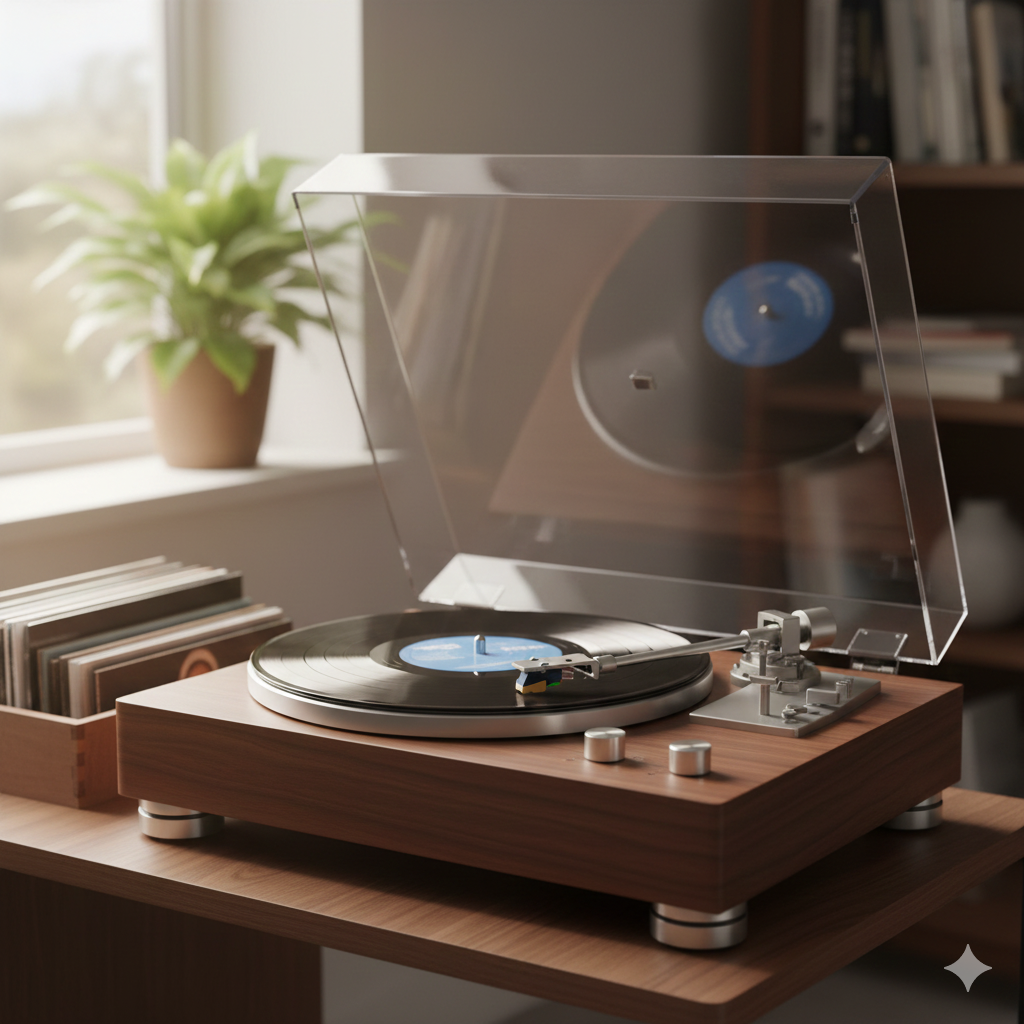
If you’ve ever looked at a record player and wondered what the numbers 33, 45, and 78 mean, you’re not alone. These are the RPM settings that determine how fast your turntable spins a record. Using the correct speed is essential for proper sound quality, correct pitch, and avoiding damage to your vinyl.
This guide explains what each speed means, why different records use different RPMs, and how to know which setting you should choose.
🎛️ What Do 33, 45, and 78 Mean?
The numbers 33, 45, and 78 refer to RPM – revolutions per minute, or how many times the platter spins in one minute.
- 33⅓ RPM
- 45 RPM
- 78 RPM
Each speed corresponds to a specific record format, size, groove width, and audio characteristics.
📀 33⅓ RPM – The Standard Album Speed
Used for:
- 12-inch LPs (Long Play albums)
- Most modern vinyl records
Why 33 RPM?
It spins slower, which allows for longer playback time per side — typically 18–25 minutes.
Sound Quality:
- Good balance of fidelity and playtime
- Narrow grooves designed for microgroove styli (0.7 mil)
This is the speed you’ll use for most full-length albums.
📀 45 RPM – Higher Fidelity & Singles
Used for:
- 7-inch singles (“45s”)
- Some audiophile 12-inch releases
- EPs
Why 45 RPM?
Faster speed = better sound quality.
The record passes under the stylus more quickly, improving:
- High-frequency detail
- Dynamic range
- Overall clarity
Play Time:
- 7-inch: about 3–6 minutes per side
- 12-inch audiophile releases: 10–15 minutes per side
If you’re playing singles or high-fidelity releases, this is the correct speed.
📀 78 RPM – Early Shellac Records
Used for:
- Vintage 10-inch shellac records (pre-1950s)
Important:
78s require a different stylus (2.5–3 mil) because the grooves are much wider. Using a modern microgroove stylus can damage a 78, and playing a 78 with the wrong stylus can damage your stylus.
Characteristics:
- Short playtime: 3–5 minutes per side
- Lower fidelity (limited frequency range)
- Made from brittle shellac, not vinyl
If your turntable has a 78 RPM setting, it’s designed for collectors or enthusiasts of early recordings.
🧠 How to Know Which Speed to Use
Here’s a quick guide:
| Record Size/Type | Speed |
|---|---|
| 12-inch album (LP) | 33⅓ RPM |
| 7-inch single | 45 RPM |
| Audiophile 12-inch single | 45 RPM |
| Vintage 10-inch shellac | 78 RPM |
Most records also print the speed on the label.
⚠️ What Happens If You Use the Wrong Speed?
Too slow (e.g., 45 played at 33):
- Music sounds low-pitched, slow, and distorted
Too fast (e.g., 33 played at 45):
- Music becomes high-pitched, cartoonish, and off-tempo
This won’t usually damage your record, but it will sound completely wrong.
For 78s, using the wrong stylus can cause damage.
🎧 Why Multiple Speeds Exist
Different speeds evolved over time because of:
- Changing technology
- Material limitations (shellac vs vinyl)
- The desire for longer playtime
- Improvements in sound quality
Today, the vinyl industry mostly uses just 33⅓ and 45 RPM, while 78 RPM remains a specialty speed for collectors.
🎵 Final Takeaway
The numbers 33, 45, and 78 on your record player refer to spinning speeds in RPM, and each corresponds to a different type of record. Using the correct speed ensures your vinyl sounds as intended and helps protect your stylus and collection.
- 33⅓ = full albums
- 45 = singles & high-fidelity releases
- 78 = vintage shellac records
Understanding these speeds is one of the first steps to mastering vinyl playback.