
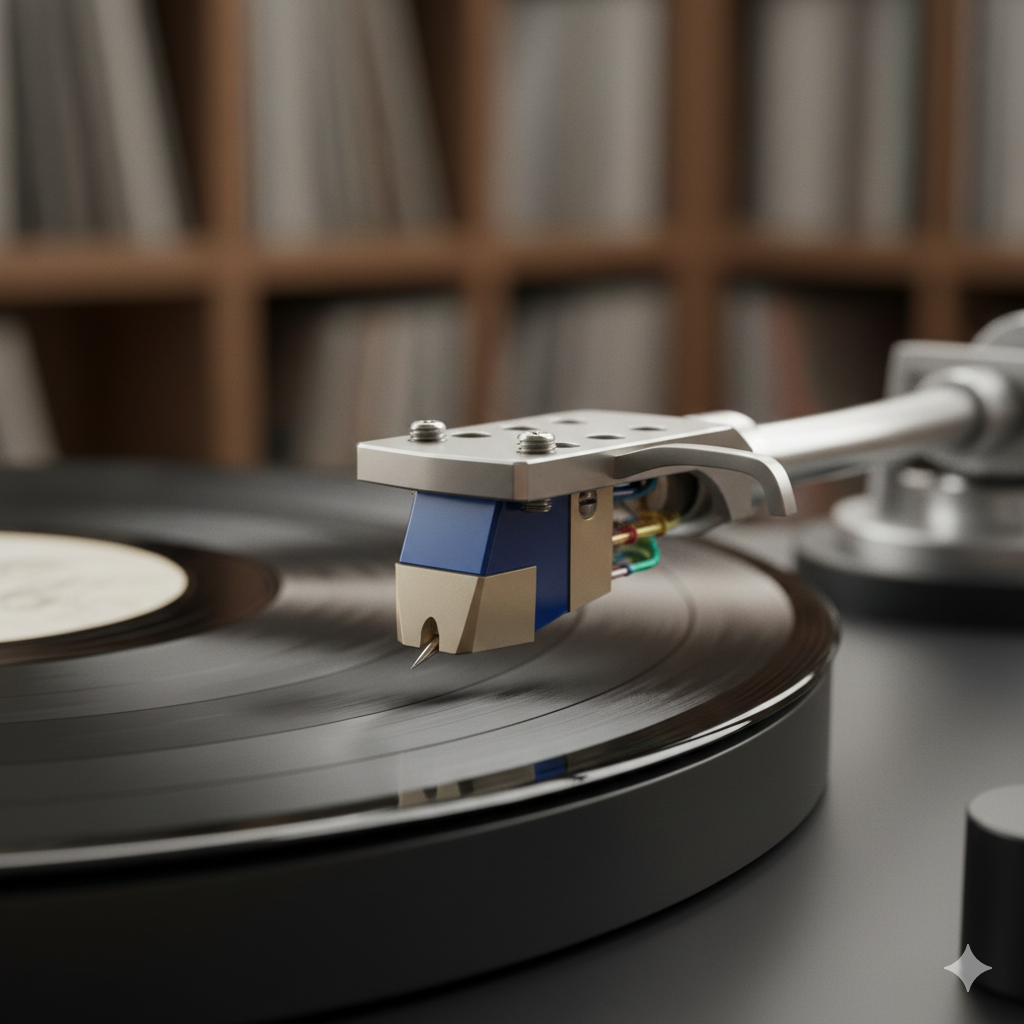
For vinyl enthusiasts who collect classic jazz, early rock, blues, or orchestral recordings, mono records are more than nostalgia—they are often the definitive versions of the music. This raises a long-standing audiophile question: do mono cartridges actually sound better than stereo cartridges when playing mono records? The short answer is yes, often they do—but with important caveats. Let’s explore why.
Understanding Mono vs. Stereo Grooves
To understand the cartridge debate, it helps to start with how records are cut.
- Mono records contain a single audio signal. Early mono LPs (especially pre-1960) were cut with lateral groove modulation only—the groove moves side to side.
- Stereo records use both lateral and vertical modulation. The left and right channels are encoded at 45° angles to the groove walls.
A stereo cartridge is designed to read both lateral and vertical movement, while a true mono cartridge is optimized to read only lateral movement.
Why Mono Cartridges Can Sound Better
1. Reduced Surface Noise and Distortion
Many sources of vinyl noise—warps, scratches, dust, pressing imperfections—produce vertical groove movement. A true mono cartridge ignores this vertical information, resulting in:
- Lower surface noise
- Less crackle and hiss
- Cleaner backgrounds
This benefit is especially noticeable on older or well-played mono records.
2. Improved Focus and Imaging
Because a mono cartridge sums the signal mechanically (rather than electrically), it often produces:
- Stronger center image
- More solid and coherent sound
- Better midrange presence (vocals and horns in particular)
Listeners often describe mono playback with a mono cartridge as more “alive” and direct.
3. Correct Stylus Geometry for Older Records
Many early mono LPs were cut with wider grooves than modern stereo records. Some mono cartridges use:
- Larger stylus tips (e.g., 1.0 mil instead of 0.7 mil)
- Profiles better matched to vintage pressings
This can reduce groove wear and extract more musical information from early records.
When a Stereo Cartridge Is Still a Good Choice
Despite the advantages of mono cartridges, a stereo cartridge can still perform very well under the right conditions.
Using a Stereo Cartridge with a Mono Switch
Many modern phono stages and preamps include a mono switch, which electronically sums the left and right channels. This can:
- Reduce noise
- Improve image stability
- Provide a large portion of the mono cartridge benefit
While not identical to a true mono cartridge, this approach is highly effective and convenient.
Modern Mono Reissues
Many modern mono reissues are cut using stereo cutting heads and are fully compatible with stereo cartridges. In these cases:
- A good stereo cartridge can sound excellent
- Differences between mono and stereo cartridges may be subtle
Types of Mono Cartridges
Not all mono cartridges are the same. Understanding the difference matters.
- True mono cartridges
Generate a single signal internally and ignore vertical movement. Best for vintage mono records. - Mono-wired stereo cartridges
Use a stereo generator internally but sum the channels. These offer convenience but fewer noise-reduction benefits.
For serious mono collectors, true mono cartridges remain the gold standard.
Practical Considerations
Before investing in a mono cartridge, consider:
- How many mono records you own
- Whether they are vintage originals or modern reissues
- Whether your tonearm supports easy cartridge swapping
- If your phono stage has a mono switch
Some enthusiasts maintain two turntables or two headshells—one optimized for stereo, one for mono.
Final Verdict
Yes, mono cartridges are generally better than stereo cartridges when playing mono records, particularly vintage pressings. They offer:
- Lower noise
- Better clarity
- More authentic sound reproduction
However, a high-quality stereo cartridge combined with a mono switch can deliver excellent results and may be the most practical solution for many listeners.
For dedicated mono collectors, a true mono cartridge isn’t just an upgrade—it’s a revelation.