
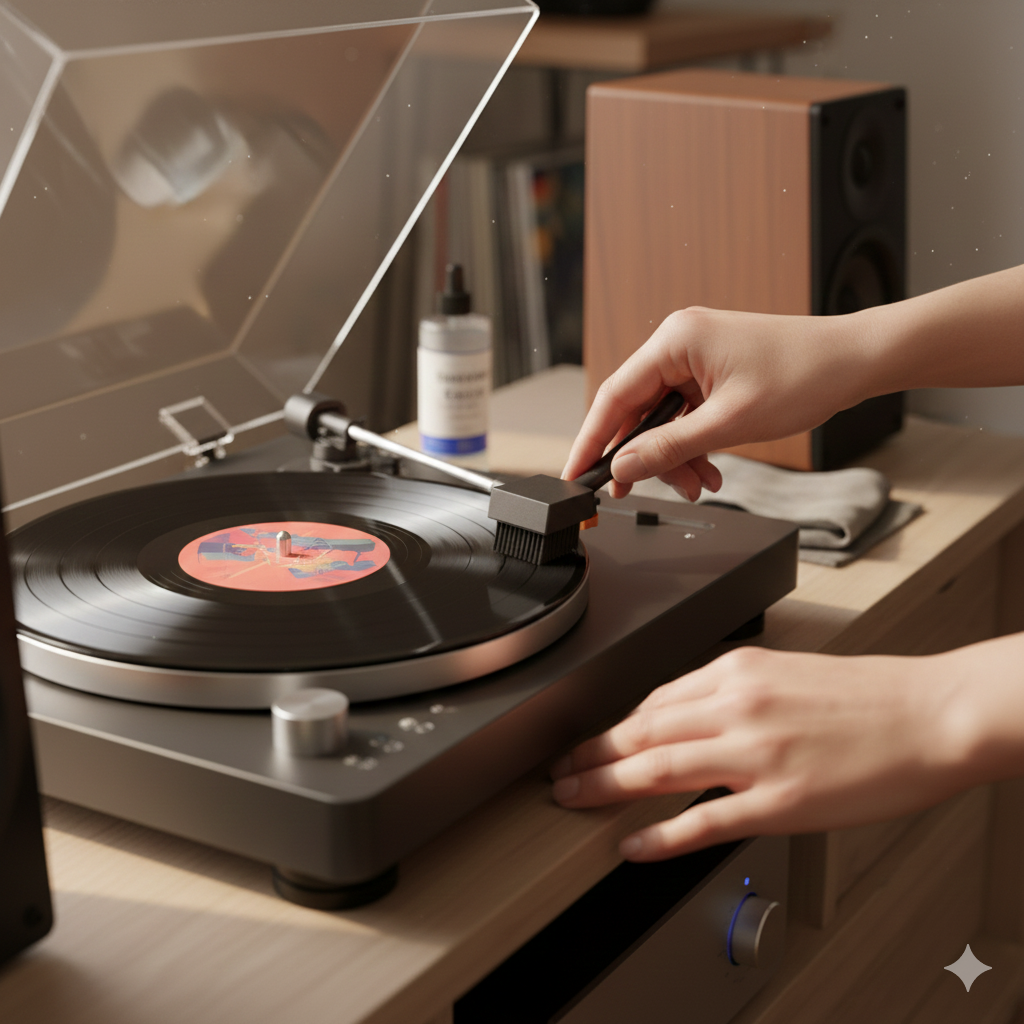
A clean vinyl record delivers quieter playback, better detail, and a longer stylus life. While commercial cleaning fluids work great, many collectors prefer a homemade cleaning solution that’s cheap, effective, and safe for vinyl. But with so many recipes online—some helpful, many harmful—it’s important to know which formula is truly the best.
This guide gives you the safest, most effective, archivist-approved DIY cleaning solution for vinyl records—and explains exactly how to use it.
🧴 The Best Homemade Vinyl Record Cleaning Solution (Safe Formula)
After years of testing by collectors, archivists, and audio hobbyists, the best DIY cleaning solution for vinyl is this simple, safe blend:
⭐ Recommended Formula (Alcohol-Free):
• 3 parts distilled water
• 1 part distilled water + 1–2 drops of non-ionic surfactant (like Triton X-100 or Tergitol 15-S-7)
• Optional: 1 tiny drop of rinse-aid (wetting agent)
This solution is considered archivist-safe and leaves no residue when applied and rinsed properly.
🔍 Why This Formula Is the Best
✔ 1. Distilled Water Prevents Mineral Deposits
Tap water leaves minerals behind. Distilled water leaves nothing but clean grooves.
✔ 2. Non-Ionic Surfactant Lifts Dirt From Deep Grooves
This is the secret ingredient.
Surfactants lower surface tension so water can reach deep into the microscopic groove walls. They help remove:
- Dust
- Finger oils
- Mold
- Static-attracting residue
Non-ionic surfactants are used by museums and libraries for safe archival cleaning.
✔ 3. Alcohol-Free = Safe for All Vinyl Records
Alcohol can leach plasticizers from certain types of vinyl if used too frequently.
Though small percentages are sometimes safe, alcohol-free is the safest long-term choice.
🧪 Alternative Formula (If You Must Use Alcohol)
For used, dirty, or moldy records, you can use a very mild alcohol dilution:
• 80% distilled water
• 20% 70% isopropyl alcohol
• 1–2 drops surfactant
This is safe for most modern vinyl but should not be used on shellac (78 RPM records) or repeatedly on the same record.
🚫 Solutions to Avoid
These common “DIY cleaning hacks” can damage records:
❌ Tap water
Leaves minerals in the grooves.
❌ Dish soap
Often contains fragrances, dyes, and degreasers that leave residue or harm vinyl.
❌ Vinegar
Too acidic and can damage labels or leave buildup.
❌ High-alcohol mixes (40–100% alcohol)
Risk drying out vinyl compounds over time.
❌ Household glass cleaner
Contains ammonia, fragrances, and surfactants not safe for vinyl.
If you wouldn’t use it on a camera lens or optical sensor, don’t use it on a record.
🎧 How to Use the Solution (Proper Method)
The cleaning solution only works if applied correctly.
1. Apply lightly
Use a microfiber cloth or dedicated record brush.
Never flood the label.
2. Wipe along the grooves
Never wipe across them.
3. Let the surfactant work
Give it 10–20 seconds to break down oils and dirt.
4. Rinse with pure distilled water
This step is essential—don’t let solution dry on the record.
5. Dry with a lint-free cloth or air dry
Place the record in a clean, dust-free spot.
🏆 Final Answer: The Best Homemade Cleaning Solution
If you want a clear, concise answer:
⭐ Best homemade cleaning solution:
Distilled water + a few drops of non-ionic surfactant (e.g., Triton X-100 or Tergitol)
Alcohol-free, residue-free, safe for vinyl, and preferred by archivists.
⭐ Best for very dirty records:
80% distilled water + 20% isopropyl alcohol + 1–2 drops surfactant
Use alcohol sparingly.
With proper cleaning, your records will play quieter, last longer, and keep your stylus in better condition.