
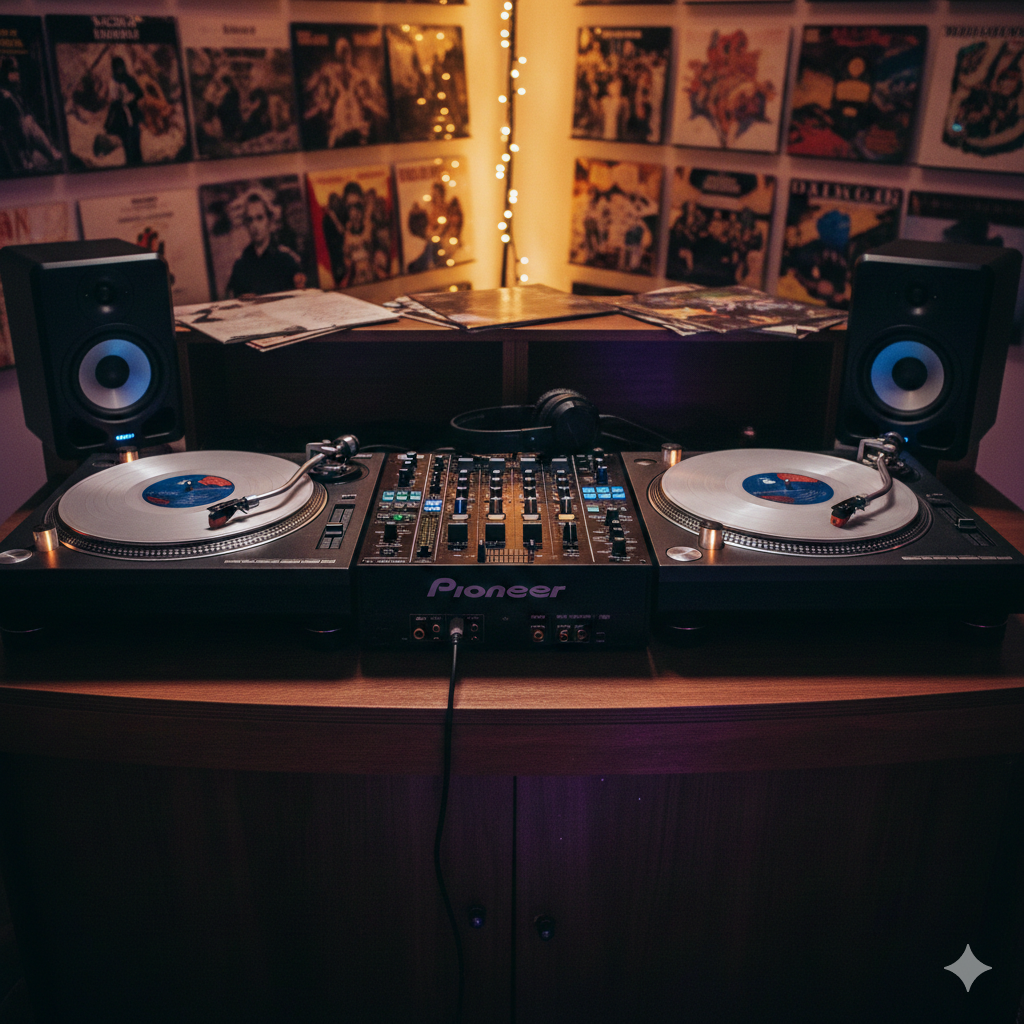
Buying your first turntable is exciting—but it can also feel overwhelming. With so many models, features, and price ranges, it’s easy to focus on the wrong things or overspend on features you don’t need.
This guide breaks down what actually matters when choosing your first turntable, helping you make a smart, future-proof choice that sounds great and grows with you.
1. Ease of Setup (Beginner-Friendly Is Key)
As a first-time buyer, you want a turntable that:
- Is easy to assemble
- Requires minimal adjustment
- Comes with clear instructions
What to Look For
- Pre-installed cartridge
- Factory-set tracking force (or easy adjustment)
- Clear markings for setup
Avoid models that require complex calibration unless you’re ready to learn.
2. Drive Type: Belt vs Direct Drive
Belt Drive (Best for Most Beginners)
Pros
- Quieter operation
- Less vibration
- Widely available
Cons
- Belts need periodic replacement
Ideal for home listening and sound quality.
Direct Drive
Pros
- Instant start/stop
- Very stable speed
- Low maintenance
Cons
- Usually more expensive
- Can transmit more motor vibration
Often chosen by DJs, but many audiophile models exist.
3. Built-In Phono Preamp: Yes or No?
Built-In Preamp (Beginner-Friendly)
Choose this if:
- Your amplifier or speakers don’t have a PHONO input
- You want a simple, plug-and-play setup
External or No Preamp
Better if:
- You plan to upgrade later
- You want higher sound quality long-term
A switchable preamp is the most flexible option.
4. Cartridge and Stylus Quality
The cartridge has a huge impact on sound.
What to Look For
- Reputable brand (Audio-Technica, Ortofon, etc.)
- Replaceable stylus
- Moving Magnet (MM) type
Avoid fixed, non-replaceable cartridges.
5. Speed Support and Accuracy
Make sure the turntable supports:
- 33⅓ RPM (LPs)
- 45 RPM (singles and EPs)
Look for:
- Easy speed switching
- Good speed stability specs
Consistent speed = accurate music.
6. Build Quality and Materials
Important Areas
- Solid plinth (MDF or composite preferred)
- Stable platter (metal or acrylic)
- Adjustable feet for leveling
A heavier, well-built turntable usually performs better.
7. Manual vs Automatic Operation
Manual Turntables
- More control
- Fewer moving parts
- Often better sound quality
Automatic / Semi-Automatic
- Easier and safer for beginners
- Auto-return protects stylus
Choose based on convenience vs involvement.
8. Upgrade Potential
A good first turntable should grow with you.
Look for:
- Standard cartridge mount
- Replaceable platter mat
- Adjustable counterweight
- Optional external preamp support
Avoid models that can’t be upgraded at all.
9. Connectivity Options
Consider how you’ll connect it:
- RCA outputs (standard)
- USB (for digitizing records)
- Bluetooth (convenient, but lower sound quality)
Bluetooth is optional—not essential.
10. Budget: Spend Where It Matters
Entry-Level Sweet Spot
- Focus on mechanical quality
- Prioritize cartridge and tonearm
- Don’t overspend on flashy features
A well-built $300 turntable often outperforms a feature-packed $150 model.
Common Beginner Mistakes to Avoid
- Buying suitcase-style players
- Ignoring cartridge quality
- Choosing looks over performance
- Forgetting about speakers or a phono stage
A poor turntable can damage records permanently.
Quick First-Turntable Checklist
✔ Stable plinth
✔ Replaceable cartridge
✔ Correct speeds (33/45)
✔ Proper tonearm with counterweight
✔ Built-in or switchable phono preamp
If it checks these boxes, you’re on the right track.
Final Thoughts
Your first turntable doesn’t need to be perfect—it needs to be reliable, gentle on records, and enjoyable to use. By focusing on sound fundamentals, build quality, and upgrade potential, you’ll avoid common pitfalls and start your vinyl journey with confidence.
A good first turntable should make you want to play records—not worry about them.