
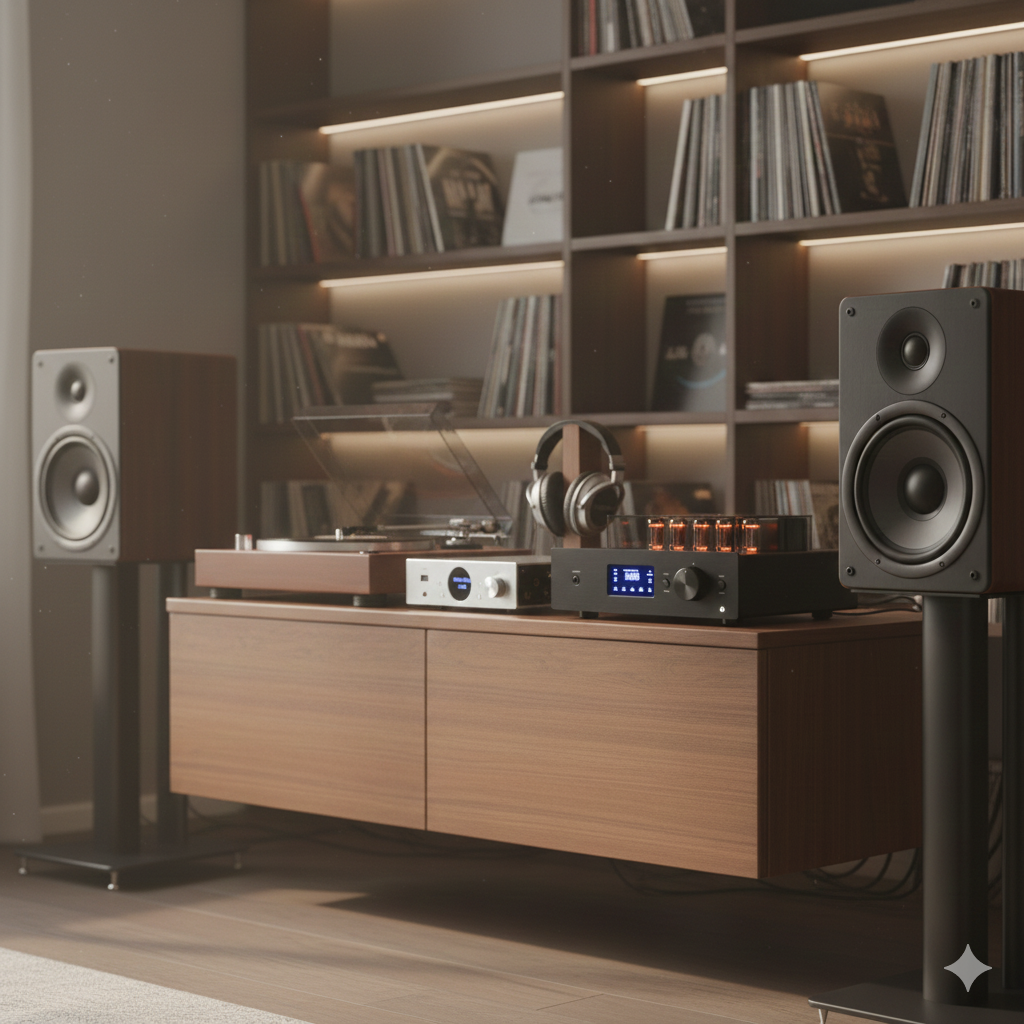
Power conditioners are often marketed as the final upgrade that unlocks hidden performance in an audio system. Cleaner backgrounds, tighter bass, wider soundstage—claims like these are common. But skeptics argue that power conditioners are unnecessary, or worse, that they restrict current and harm dynamics.
So what’s the truth? Do power conditioners really improve sound quality?
The honest answer is: sometimes—but only in specific situations. To understand when they help and when they don’t, we need to look at what power conditioners actually do.
What Is a Power Conditioner?
A power conditioner sits between your audio gear and the wall outlet. Its purpose is to manage the quality of incoming AC power before it reaches your components.
Depending on design, a power conditioner may:
- Filter electrical noise
- Suppress voltage spikes and surges
- Isolate components from each other
- Regulate or stabilize voltage (in some models)
Not all “power conditioners” do the same thing—and this is where confusion begins.
Common Types of Power Conditioners
1. Passive Power Filters
These use inductors and capacitors to reduce high-frequency noise.
Pros:
- No active circuitry
- Generally reliable
- Affordable
Cons:
- Limited noise reduction
- Effectiveness depends on your power environment
2. Isolation Transformers
These electrically isolate your system from the power grid.
Pros:
- Excellent noise isolation
- Reduces ground-related issues
Cons:
- Large, heavy, and expensive
- Can limit current if undersized
3. Voltage Regulators / Regenerators
These actively correct or recreate AC power.
Pros:
- Stable voltage
- Consistent performance
Cons:
- Expensive
- Can generate heat and noise
- Overkill for many systems
When Power Conditioners Can Improve Sound
Power conditioners are most beneficial when your power is objectively poor.
Noisy Electrical Environments
- Apartments with shared power
- Homes near industrial equipment
- Systems with dimmers, switching supplies, or HVAC noise
In these cases, a conditioner can lower:
- Background hiss or hum
- Buzzing or digital hash
- Interference between components
Sensitive Front-End Components
Low-level devices benefit the most:
- Phono preamps
- DACs
- Streamers
- Preamplifiers
Cleaner power can improve perceived:
- Blacker background
- Micro-detail
- Imaging stability
Ground Loop or Interference Issues
Some conditioners help reduce:
- Ground noise
- Component interaction through shared power
This is more about fixing problems than enhancing sound.
When Power Conditioners Usually Don’t Help
Modern Amplifiers with Robust Power Supplies
Most well-designed amplifiers already include:
- Power filtering
- Regulation
- Noise rejection
In these cases, improvements are often minimal or nonexistent.
Clean Residential Power
If your system is quiet with no hum or noise, a conditioner may do little more than offer surge protection.
High-Current Power Amplifiers
Some conditioners can limit instantaneous current, potentially:
- Reducing dynamics
- Softening bass impact
This is why many audiophiles plug power amps directly into the wall.
Measurements vs Listening
In many systems:
- Noise measurements improve slightly
- Distortion remains unchanged
- Frequency response is unaffected
Audible changes—when present—tend to be subtle:
- Lower noise floor
- Slightly clearer low-level detail
If you expect dramatic transformations, you’re likely to be disappointed.
Expectation Bias and System Context
Power conditioning is fertile ground for expectation bias.
Factors influencing perception:
- Price and brand reputation
- Visual heft and build quality
- Listening without level or time matching
Blind tests often show small or inconsistent differences, reinforcing that context matters more than theory.
Practical Advice Before Buying a Power Conditioner
Before investing, ask yourself:
- Do I hear hum, buzz, or noise?
- Do lights dim when appliances turn on?
- Is my system sensitive (phono, high-gain preamps)?
- Do I live in a noisy electrical environment?
If the answer is “no” to most of these, a power conditioner may not be necessary.
Better Alternatives to Consider First
- Proper grounding
- Dedicated power outlets
- Quality surge protection
- Clean cable routing
- Eliminating ground loops
These often deliver bigger improvements for less money.
Final Verdict: Do Power Conditioners Improve Sound?
Yes—but only when there’s a real power problem to solve.
- They can reduce noise and interference
- They rarely transform system sound
- Benefits are system- and environment-dependent
For many systems, power conditioners function best as insurance and problem-solvers, not miracle upgrades.
If your system is already quiet and stable, your money may be better spent on speakers, room treatment, or recordings.