
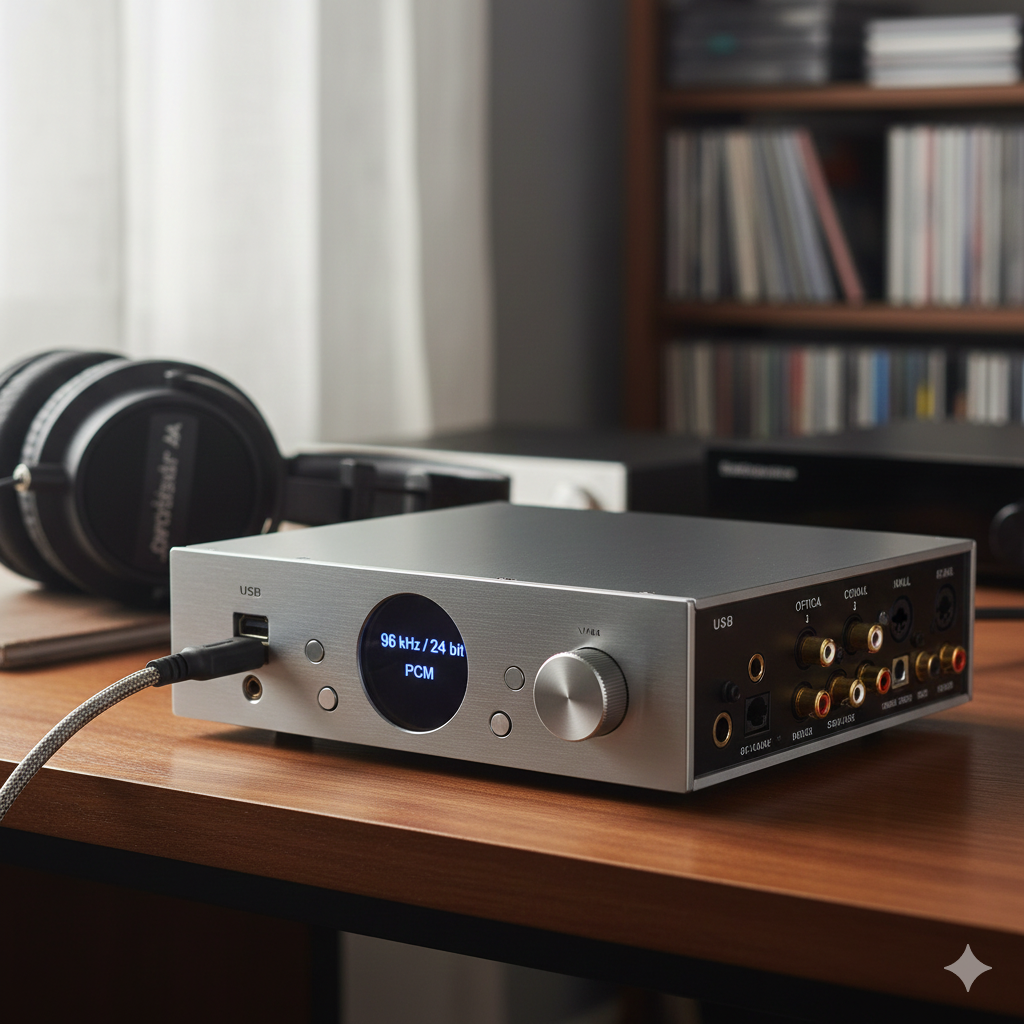
Digital-to-Analog Converters (DACs) are at the heart of every modern audio system. From smartphones and laptops to high-end streamers and standalone converters, DACs turn digital data into music we can hear. But one question refuses to go away:
Do DACs really sound different—or do they all sound the same?
The honest answer is nuanced: sometimes yes, often no, and occasionally in very obvious ways. Understanding when and why DACs sound different requires looking beyond marketing and into engineering, implementation, and human perception.
What a DAC Actually Does
At its core, a DAC converts digital audio (numbers) into an analog voltage (music). In theory, if two DACs:
- Receive the same digital data
- Output the same analog signal
- Operate within human hearing limits
They should sound identical.
In practice, real-world DACs differ in design choices, supporting circuitry, and use cases—and that’s where audible differences can appear.
Where DAC Sound Differences Come From
1. Output Stage Design
The DAC chip is only part of the story.
The analog output stage—including op-amps, discrete components, and power filtering—has a major impact on sound.
Differences can affect:
- Noise floor
- Channel separation
- Perceived “warmth” or “sharpness”
- Dynamic behavior
Two DACs using the same chip can sound noticeably different because of this stage alone.
2. Power Supply Quality
Clean power matters more than most people realize.
Poor power design can introduce:
- Noise
- Modulation artifacts
- Reduced dynamic range
High-quality DACs often use:
- Linear power supplies
- Separate regulation for digital and analog sections
- Extensive filtering
These improvements don’t always change the “tone,” but they can improve clarity and stability.
3. Filtering and Oversampling Choices
Most DACs apply digital filters to reconstruct the analog waveform.
Different filter designs can subtly affect:
- Transient response
- High-frequency behavior
- Pre-ringing and post-ringing
Some DACs even let users select filters, which can create small but real sonic differences.
4. Jitter and Clocking
Jitter refers to timing errors in the digital signal.
Modern DACs are generally excellent at controlling jitter, but:
- Poor USB implementations
- Inadequate clock isolation
- Cheap digital inputs
…can still allow jitter to affect the analog output, especially in lower-end designs.
When DACs Sound the Same
In many setups, DAC differences are extremely small or inaudible.
DACs tend to sound the same when:
- They measure transparently (low distortion, low noise)
- They’re level-matched
- They feed competent amplifiers
- Listening is done blind or casually
In fact, many modern DACs—budget and high-end alike—already exceed human hearing thresholds for distortion and noise.
When DAC Differences Become Audible
DACs are more likely to sound different when:
- The output stage is poorly designed
- One DAC is clipping or underpowered
- Headphones are driven directly from the DAC
- The system is highly resolving
- Listening levels are mismatched
- Expectation bias is involved
Notice that system context matters as much as the DAC itself.
The Role of Measurements vs Listening
Measurements Tell Us:
- Transparency
- Noise and distortion levels
- Channel balance
- Frequency response accuracy
Listening Reveals:
- System synergy
- Output drive capability
- Ergonomic and usability factors
- Personal preference
When a DAC measures cleanly, any audible differences tend to be subtle, not dramatic.
Expectation Bias: The Elephant in the Room
Human perception is easily influenced by:
- Price
- Brand reputation
- Visual design
- Reviews and hype
Blind tests consistently show that perceived differences often shrink or disappear when listeners don’t know which DAC they’re hearing.
This doesn’t mean listeners are “imagining things”—it means the brain is part of the audio chain.
Expensive DAC vs Affordable DAC: Is It Worth It?
Higher price does not guarantee better sound.
What you often pay for instead:
- Better build quality
- Improved connectivity
- Balanced outputs
- Display and controls
- Brand prestige
Sound quality improvements beyond a competent entry-level DAC are usually incremental, not transformational.
Practical Advice: Choosing a DAC Wisely
Instead of chasing “DAC flavor,” focus on:
- Low noise and distortion measurements
- Output voltage that matches your amplifier
- Reliable drivers and firmware
- Input compatibility
- Build quality and support
If a DAC measures transparently, it’s unlikely to be the weakest link in your system.
Final Verdict: Do DACs Really Sound Different?
Yes—but far less than many people expect.
- Poorly designed DACs can sound noticeably worse
- Well-designed DACs tend to sound very similar
- Differences are often subtle, system-dependent, and listener-dependent
For most listeners, speakers, headphones, room acoustics, and recordings matter far more than the DAC.
Once your DAC reaches transparency, upgrading it is more about features and confidence than dramatic sonic change.