
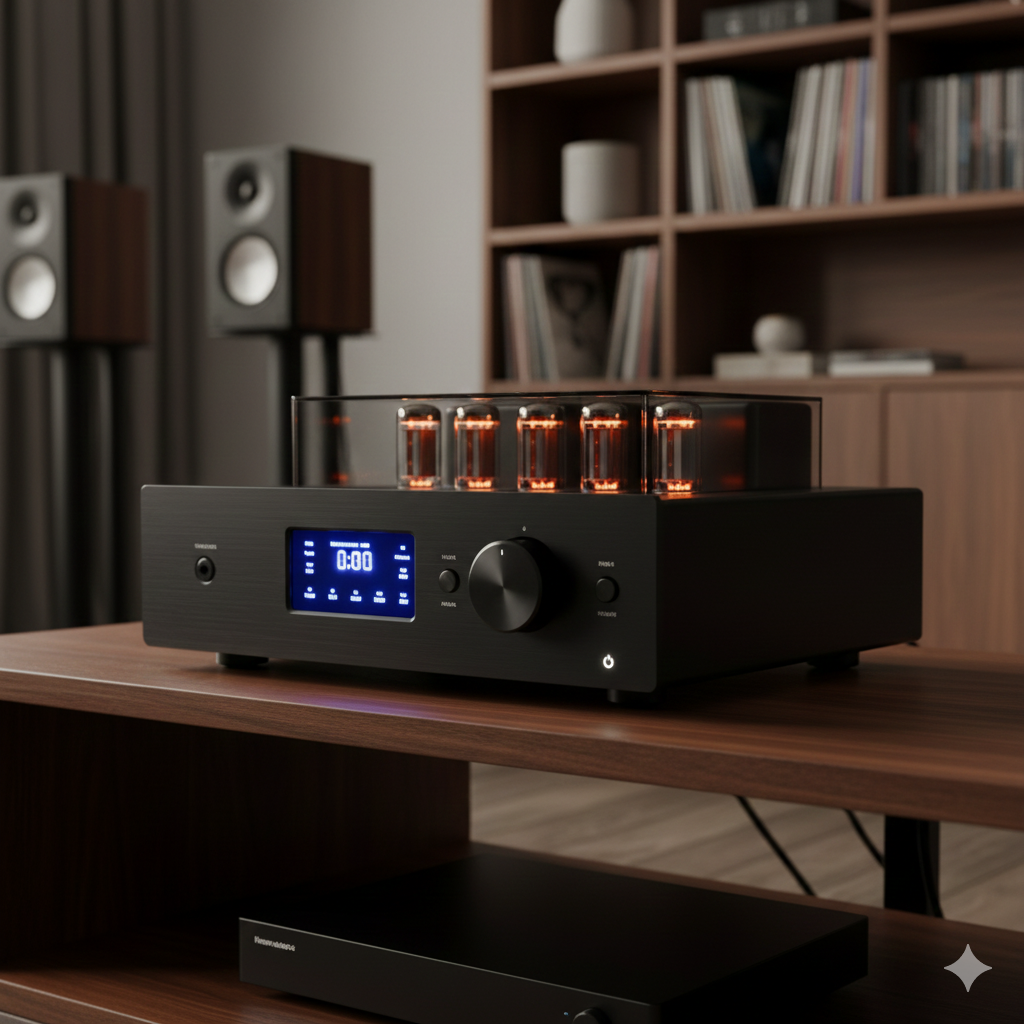
Few topics in audio spark as much passion as the debate between tube (valve) amplifiers and solid-state amplifiers. For some listeners, tubes are the soul of music—warm, rich, and emotional. For others, solid-state amps are the only rational choice—clean, powerful, and reliable.
So which is actually better?
The honest answer is: neither is universally better. Each approach has strengths, weaknesses, and ideal use cases. Understanding the differences helps you choose the right amplifier for your system, music, and listening habits.
How Tube and Solid-State Amps Differ
Tube Amplifiers (Valve Amps)
Tube amps use vacuum tubes to amplify the signal. This technology dates back to the earliest days of audio—and is still cherished today.
Solid-State Amplifiers
Solid-state amps use transistors and integrated circuits, offering modern efficiency and precision.
Both amplify music, but they do so in fundamentally different ways, which affects sound, power delivery, and usability.
Sound Character: The Biggest Reason People Choose
Tube Amp Sound
Tube amplifiers are often described as:
- Warm and rich
- Smooth in the midrange
- Spacious and three-dimensional
- Forgiving of poor recordings
Technically, tubes tend to produce even-order harmonic distortion, which the human ear often perceives as pleasant or musical.
Solid-State Sound
Solid-state amplifiers are commonly described as:
- Clean and transparent
- Tight and controlled bass
- Neutral and accurate
- Highly dynamic
They generally have lower measured distortion, wider bandwidth, and greater consistency across volume levels.
Power and Speaker Compatibility
Tube Amps
- Typically lower power output
- Sensitive to speaker impedance
- Best matched with high-efficiency speakers
- Output transformers add complexity
A 20-watt tube amp can sound surprisingly loud—but only with the right speakers.
Solid-State Amps
- High power is affordable and compact
- Handles low-impedance speakers easily
- Excellent damping factor for bass control
- Predictable performance across speaker types
For difficult-to-drive speakers, solid-state is often the safer choice.
Reliability and Maintenance
Tube Amplifiers
- Tubes wear out and need replacement
- Produce significant heat
- More fragile components
- Require warm-up time
Tube ownership is part performance, part ritual.
Solid-State Amplifiers
- Extremely reliable
- Minimal maintenance
- Cool-running and efficient
- Instant on/off operation
For many users, solid-state’s practicality is hard to ignore.
Cost Considerations
Tube Amps
- Higher cost per watt
- Ongoing tube replacement expense
- Premium transformers increase price
- Often handcrafted or boutique
Solid-State Amps
- Lower cost per watt
- Excellent value at all price levels
- Fewer long-term ownership costs
Budget matters—and solid-state usually wins on pure value.
Measurements vs Listening Experience
On test benches, solid-state amplifiers usually outperform tube amps:
- Lower distortion
- Lower noise
- Wider frequency response
But listening isn’t done with measurement equipment alone. Many listeners prefer the subjective musicality of tubes despite inferior measurements.
This is a classic case of objective performance vs subjective enjoyment.
Hybrid Amplifiers: Best of Both Worlds?
Some amplifiers combine:
- Tube preamp stages
- Solid-state power sections
Hybrids aim to deliver tube warmth with solid-state control and reliability. Results vary, but many listeners find them a compelling compromise.
Which Is Better for You?
Choose a Tube Amp If:
- You value musicality over measurements
- You listen at moderate volumes
- You use efficient speakers
- You enjoy tweaking and maintaining gear
- You love the aesthetic and glow of tubes
Choose Solid-State If:
- You want accuracy and transparency
- You drive demanding speakers
- You listen loudly or in large rooms
- You prefer low maintenance
- You want the best value per dollar
Final Verdict: Tube vs Solid-State
There is no absolute winner.
- Tube amps excel in emotional engagement and tonal richness
- Solid-state amps dominate in power, precision, and practicality
The “better” amplifier is the one that:
- Matches your speakers
- Fits your room and listening habits
- Aligns with your sonic preferences
In audio, enjoyment matters more than ideology.