
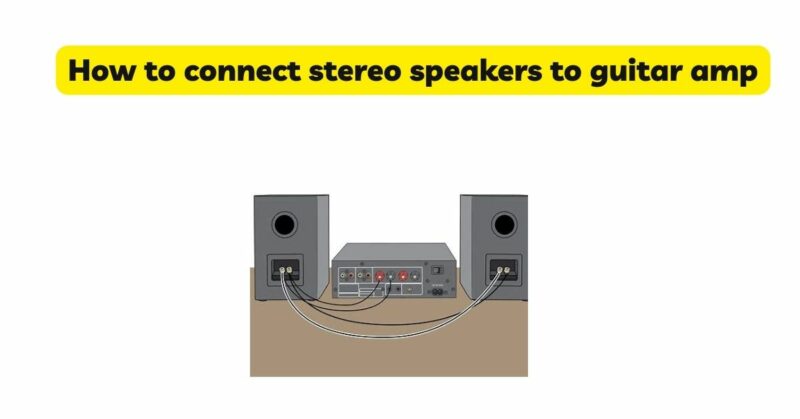
Guitar amps are typically designed for mono sound reproduction, emphasizing the unique characteristics of electric guitars. However, if you’re looking to broaden your soundstage and achieve a more immersive listening experience, you may consider connecting stereo speakers to your guitar amp. This article will guide you through the process of connecting stereo speakers to your guitar amp, allowing you to enjoy a wider stereo image and enhanced audio quality.
Understanding the Setup: Before diving into the steps, it’s important to understand the components involved in connecting stereo speakers to a guitar amp. Typically, guitar amps have a mono output, meaning they output a single audio signal. To achieve stereo sound, you will need an external device, such as a stereo effects processor or a stereo power amp, that can split the mono signal into two separate channels. Additionally, you’ll need a pair of passive or powered stereo speakers to connect to the output of the external device.
- Selecting the External Device: To convert the mono output of your guitar amp into stereo, you’ll need an external device that can split the signal into two separate channels. There are a few options to consider:
a. Stereo Effects Processor: Some multi-effects processors or rack-mounted units feature stereo outputs. These units not only provide a range of effects but also split the mono signal into two separate channels for stereo output.
b. Stereo Power Amp: A stereo power amp can be used to amplify the split mono signal and drive stereo speakers. Connect the mono output of your guitar amp to the input of the stereo power amp.
c. Stereo Mixer: If you already have a stereo mixer in your setup, you can use it to split the mono signal into two channels and connect the stereo speakers directly to the mixer’s outputs.
- Choosing Stereo Speakers: To achieve true stereo sound, you’ll need a pair of stereo speakers. These can be passive speakers that require a separate power amp, or powered speakers with built-in amplification. Choose speakers that are suitable for your intended use, whether it’s for home listening, recording, or small performances. Ensure that the speakers can handle the power output of the external device you’re using.
- Connecting the Setup: Once you have the external device and stereo speakers ready, follow these steps to connect everything together:
a. Connect the mono output of your guitar amp to the input of the external device. This can be the input of the stereo effects processor, the input of the stereo power amp, or one of the channels on the stereo mixer.
b. If you’re using a stereo effects processor, connect its left and right outputs to the inputs of the stereo power amp or directly to the stereo speakers.
c. If you’re using a stereo power amp, connect the left and right outputs of the power amp to the corresponding inputs on the stereo speakers.
d. If you’re using a stereo mixer, connect the left and right outputs of the mixer to the inputs of the stereo speakers.
- Adjusting the Setup: Once the connections are made, it’s important to ensure that the stereo speakers are positioned correctly and that the sound is balanced:
a. Position the stereo speakers in a suitable location, ideally forming an equilateral triangle with your listening position. This helps create an optimal stereo soundstage.
b. Adjust the volume levels of the left and right channels to achieve a balanced sound. Use the controls on the external device or mixer to fine-tune the levels.
c. Experiment with the tone controls and EQ settings on your guitar amp and external device to shape the overall sound to your liking.
Conclusion: Connecting stereo speakers to your guitar amp opens up a whole new dimension of sound reproduction, offering a wider stereo image and enhanced audio quality. By using an external device to split the mono signal and a pair of stereo speakers, you can create a more immersive listening experience for your guitar playing or music enjoyment. So, go ahead and expand your soundstage by embracing the world of stereo sound with your guitar amp setup.