
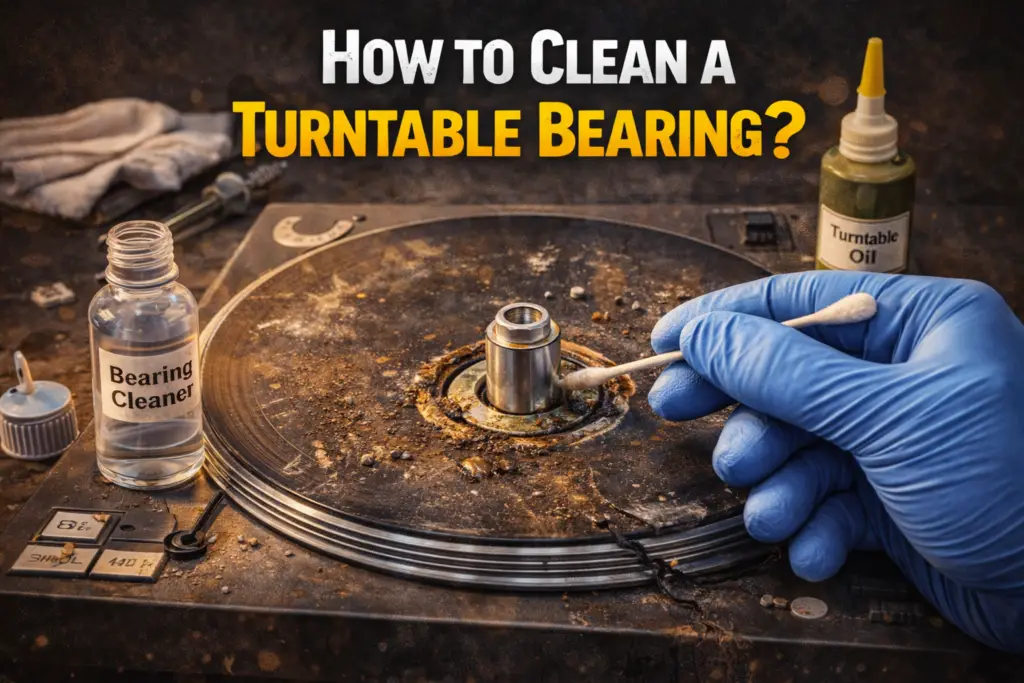
The main bearing is the mechanical heart of a turntable. It supports the platter’s weight, maintains speed stability, and plays a major role in noise performance. Over time, old lubricant, dust, and microscopic wear particles can contaminate the bearing, increasing friction and rumble. Knowing how to clean a turntable bearing properly helps restore performance and extend the life of your turntable.
Why Bearing Cleaning Matters
A contaminated bearing can cause:
- Increased mechanical noise or rumble
- Slower start-up and inconsistent speed
- Accelerated wear on spindle and bearing sleeve
- Loss of low-level detail due to vibration
Cleaning the bearing is not frequent maintenance, but when done correctly, it can produce noticeable improvements.
Before You Begin: Important Precautions
- Check the manufacturer’s instructions first—some bearings are sealed and should not be serviced by users.
- Work in a clean, dust-free area.
- Take photos during disassembly to ensure correct reassembly.
- If unsure, stop and consult a professional technician.
Tools and Materials You’ll Need
- Lint-free cloths or laboratory wipes
- Cotton swabs (high quality, non-shedding)
- Isopropyl alcohol (90% or higher)
- Manufacturer-approved bearing oil
- Gloves (optional, to avoid contamination)
- A clean container or tray
Avoid household solvents, paper towels, or abrasive materials.
Step-by-Step Bearing Cleaning Process
1. Remove the Platter
Carefully lift off the platter according to the turntable design. Some heavy platters require gentle rocking or manufacturer-specific procedures.
2. Extract the Spindle (If Applicable)
If the design allows, slowly remove the spindle from the bearing well. Do this gently to avoid scratching bearing surfaces.
3. Clean the Spindle
Using a lint-free cloth lightly moistened with isopropyl alcohol:
- Wipe the spindle shaft thoroughly
- Remove old oil residue and contaminants
- Inspect for scoring or unusual wear
Allow the spindle to fully dry.
4. Clean the Bearing Well
Using a cotton swab dampened (not dripping) with alcohol:
- Carefully clean the inside of the bearing well
- Use multiple swabs until they come out clean
- Avoid leaving fibers inside the well
Let the bearing well air-dry completely.
5. Inspect the Bearing
Look for:
- Metal particles or discoloration
- Scratches or pitting
- Signs of oil breakdown
If significant wear is visible, professional servicing may be required.
6. Re-Oil the Bearing
Apply only the recommended oil and quantity:
- Typically a few drops in the bearing well
- Spread a thin film on the spindle if specified
Never overfill—the oil should coat, not flood.
7. Reassemble Carefully
Reinsert the spindle slowly, allowing excess oil to distribute evenly. Replace the platter and rotate it by hand to ensure smooth movement.
After Cleaning: What to Expect
A properly cleaned bearing often results in:
- Quieter operation
- Smoother platter rotation
- Improved speed stability
- Subtle improvements in clarity and bass definition
Allow some time for the oil to settle before critical listening.
How Often Should Bearings Be Cleaned?
- Typically every 5–10 years, depending on usage and environment
- More often for vintage turntables or heavily used decks
- Immediately if contaminated oil or noise is noticed
Routine oil changes usually do not require full cleaning.
The Bottom Line
Cleaning a turntable bearing is a precision task, not a casual one. When done correctly and sparingly, it can restore mechanical health and sonic performance. Always prioritize manufacturer guidance and cleanliness—mistakes at the bearing level can be costly.
For many turntables, careful bearing maintenance is one of the most effective long-term investments you can make in analog playback.