
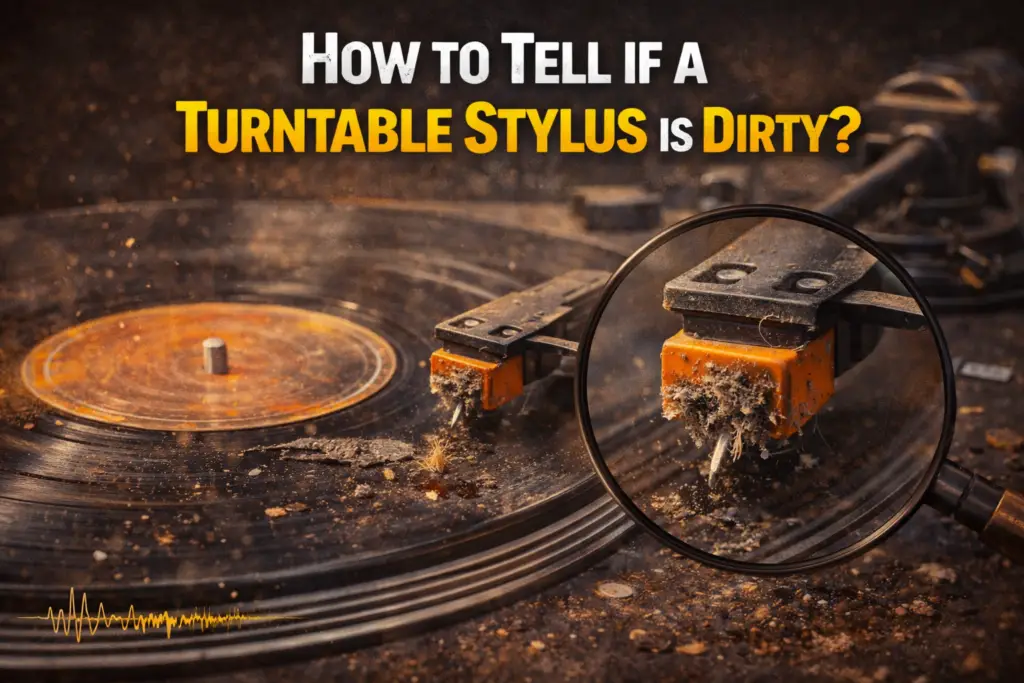
The stylus is the smallest and most delicate part of a turntable system, yet it has one of the biggest impacts on sound quality and record wear. Because it sits deep in the groove, a stylus naturally collects dust, fibers, and residue. Knowing how to tell if a turntable stylus is dirty can prevent unnecessary record damage and restore lost clarity.
Why a Clean Stylus Matters
A dirty stylus can:
- Mistrack or ride improperly in the groove
- Increase distortion and surface noise
- Accelerate record and stylus wear
- Reduce high-frequency detail and dynamics
Even light contamination can audibly degrade performance.
Audible Signs of a Dirty Stylus
Listening carefully often reveals the first clues:
- Increased surface noise or hiss
- Distortion on vocals or loud passages
- Loss of clarity and high-frequency sparkle
- Sibilance or harshness that wasn’t present before
If records suddenly sound worse across multiple LPs, the stylus is a likely culprit.
Visual Inspection Clues
Under good lighting—or better yet, magnification—a dirty stylus may show:
- Gray or brown buildup around the tip
- Fibers or dust clinging to the stylus
- A fuzzy or misshapen appearance
A clean stylus should look sharp and well-defined.
Tracking and Playback Behavior Changes
A contaminated stylus may cause:
- Skipping or mistracking
- Poor tracking on inner grooves
- Inconsistent channel balance
These symptoms can mimic alignment problems, making stylus cleanliness an easy first check.
How Quickly a Stylus Gets Dirty
Stylus contamination can occur faster than many expect:
- Playing dirty records transfers debris instantly
- Static attraction pulls dust toward the stylus
- Certain record cleaning residues leave buildup
Even after just a few sides, debris can accumulate.
Common Mistakes That Make It Worse
Some habits accelerate stylus contamination:
- Playing uncleaned or visibly dusty records
- Using worn or shedding inner sleeves
- Touching the stylus with fingers
- Using aggressive or inappropriate cleaning methods
Proper technique matters as much as frequency.
When to Clean vs When to Replace
Cleaning helps when:
- Buildup is visible
- Sound degrades suddenly
However, if distortion persists after cleaning and the stylus has many hours of use, wear—not dirt—may be the issue.
The Bottom Line
If your records suddenly sound noisier, distorted, or dull, a dirty stylus is often the simplest explanation. Regular inspection and gentle cleaning protect both your records and your cartridge investment.
In vinyl playback, a clean stylus is not a luxury—it’s a necessity.