
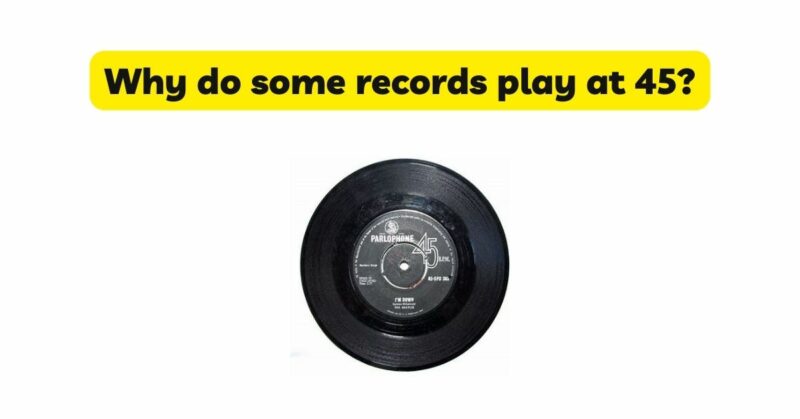
Vinyl records have long been treasured by music enthusiasts for their warm sound and nostalgic appeal. However, not all records spin at the same speed. While the standard playback speed for most records is 33 1/3 revolutions per minute (RPM), there is another common speed: 45 RPM. Have you ever wondered why some records require this faster speed? In this article, we will explore the reasons behind the use of 45 RPM for certain vinyl records and the impact it has on the listening experience.
Extended Playing Time and Sound Quality: One of the primary reasons for utilizing 45 RPM for vinyl records is to accommodate longer playing times while maintaining sound quality. A standard 12-inch LP (long-playing) record played at 33 1/3 RPM typically allows for around 20 minutes of music per side. However, certain albums, particularly those with longer tracks or complex compositions, require more space. By increasing the speed to 45 RPM, each side of the record can accommodate up to 15 minutes of music, allowing for a more extensive sonic experience without sacrificing audio fidelity.
Enhanced Sound Resolution: Playing a record at 45 RPM provides benefits in terms of sound resolution. The faster rotation speed allows for a higher linear velocity of the stylus across the grooves. As a result, the stylus has more surface area to track and capture the intricate details etched into the vinyl, resulting in improved sound reproduction and clarity. The increased accuracy in tracking the grooves can reveal nuances and subtleties in the music that might be less pronounced at the slower 33 1/3 RPM speed.
DJ and Dance Music Culture: The use of 45 RPM also gained popularity within the DJ and dance music culture. DJs often seek records that allow for faster mixing and seamless transitions between tracks. Playing records at 45 RPM provides a quicker tempo and enables DJs to manipulate the music more dynamically. Additionally, dance music, which often relies on energetic beats and rhythms, can benefit from the enhanced sound resolution and increased playback speed, creating a more vibrant and immersive experience on the dance floor.
Audiophile Appeal: For many audiophiles, the use of 45 RPM has a distinct allure. These collectors and music enthusiasts appreciate the superior sound quality and meticulous production associated with high-quality vinyl releases. 45 RPM records are often released as audiophile editions or limited pressings, catering to a niche market seeking the highest possible audio fidelity. The increased rotational speed, combined with high-quality mastering and pressing techniques, can result in a more accurate and detailed sonic reproduction, appealing to those with a discerning ear.
Genre and Artistic Choice: Certain music genres and artistic visions lend themselves to the 45 RPM format. Jazz, classical, and other genres that emphasize instrumental performances, intricate arrangements, and subtle nuances can benefit from the improved sound resolution and extended playing time available on 45 RPM records. Furthermore, some artists and record labels deliberately choose the 45 RPM format to showcase their work in a unique and attention-grabbing manner, adding an element of exclusivity and artistic expression to the vinyl release.
Historical Significance: Finally, the use of 45 RPM records has a historical significance tied to the format’s origins. The 45 RPM format was initially introduced in the late 1940s as a popular format for singles. It allowed for a shorter duration per side, ideal for hit songs or radio-friendly tracks. While the 33 1/3 RPM format became the standard for full-length albums, the 45 RPM format retained its significance as a symbol of the early days of rock ‘n’ roll and the emergence of the jukebox culture, contributing to its enduring appeal among collectors and music enthusiasts.
Conclusion: The utilization of 45 RPM for vinyl records serves various purposes, including accommodating longer playing times while maintaining sound quality, enhancing sound resolution, catering to the DJ and dance music culture, appealing to audiophiles, reflecting genre preferences and artistic choices, and carrying historical significance. The increased speed provides benefits in terms of extended playtime, improved audio fidelity, and a unique listening experience. So, the next time you come across a record that plays at 45 RPM, embrace the opportunity to immerse yourself in the distinctive qualities and sonic intricacies that this format has to offer.