
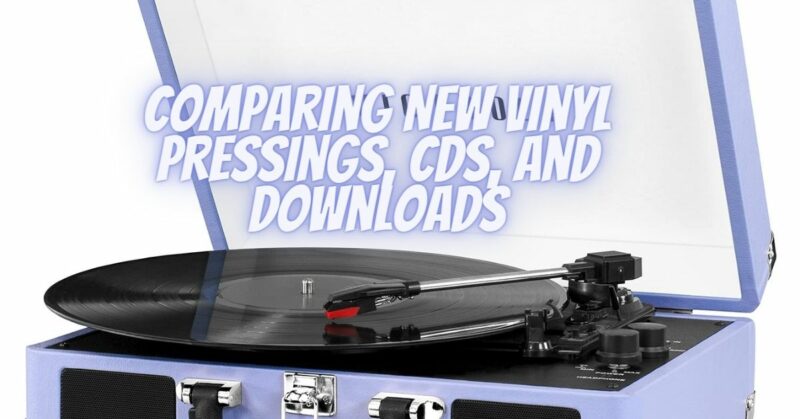
In an era of diverse music consumption options, vinyl records, CDs, and digital downloads each offer a unique way to experience music. The resurgence of vinyl has led to the production of new vinyl pressings, sparking debates about whether they offer superior audio quality compared to CDs and digital downloads. To dissect this complex issue, it’s essential to consider the strengths and limitations of each format and how they contribute to the overall listening experience.
Vinyl Records: The Analog Appeal
Vinyl records are celebrated for their warm, rich sound that’s often associated with analog authenticity. New vinyl pressings benefit from advances in manufacturing technology, resulting in improved consistency and quality control. However, it’s important to note that vinyl is an inherently analog format, prone to certain inherent imperfections such as surface noise, pops, and crackles. While these characteristics contribute to vinyl’s unique charm, they also mean that the audio quality may not be objectively “better” in a technical sense.
CDs: The Digital Precision
CDs brought digital audio into the mainstream, offering a level of precision and clarity that can be challenging for analog formats to match. CDs provide a faithful representation of the original studio recording, delivering a cleaner and more accurate sound. However, some audiophiles argue that the digital nature of CDs can sometimes lack the warmth and character associated with vinyl.
Digital Downloads: Convenience and Customization
Digital downloads offer unparalleled convenience and portability. High-resolution downloads can deliver impressive sound quality, capturing a wide frequency range and dynamic range. The advantage of digital downloads lies in their flexibility; you can choose between various formats and quality levels, catering to your preferences and the capabilities of your playback equipment.
Factors Impacting Audio Quality
The perception of audio quality is influenced by multiple factors beyond the format itself:
- Mastering: The quality of the master recording and the mastering process can have a significant impact on audio quality. A well-mastered recording will sound better across various formats.
- Playback Equipment: The quality of your playback equipment, including speakers, headphones, and turntables or CD players, heavily influences how you perceive audio quality.
- Personal Preferences: Audio quality is subjective, and what sounds better to one person might not resonate the same way with another. Some listeners prefer the warmth of vinyl, while others appreciate the precision of digital formats.
- Room Acoustics: The acoustic properties of your listening environment can affect how you perceive audio quality, with some formats performing better in specific settings.
Conclusion: Apples and Oranges
Comparing the audio quality of new vinyl pressings, CDs, and downloads is akin to comparing apples and oranges. Each format offers its own unique sonic characteristics, and what constitutes “better” audio quality is largely dependent on personal preferences and how you define quality.
While new vinyl pressings may appeal to those seeking a nostalgic and tactile experience, CDs and digital downloads provide convenience, precision, and customization options. Ultimately, the “best” format comes down to the experience you’re seeking, your equipment, and your individual tastes. Rather than focusing solely on technical specifications, embrace the diversity of options available and enjoy the music in the format that resonates most with you.