
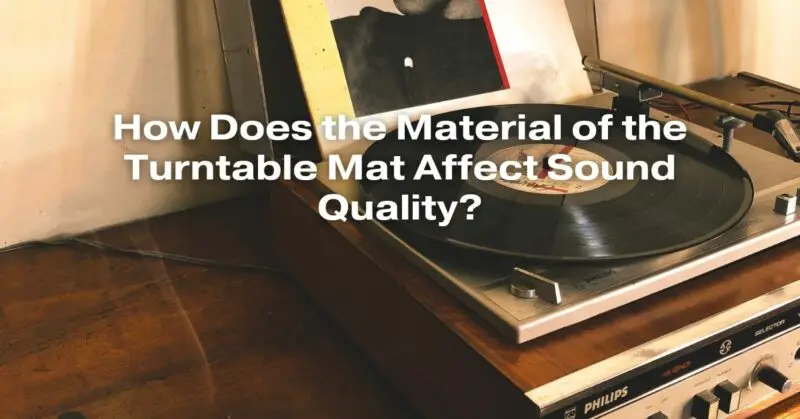
Turntables, the timeless devices that bring music to life through the charming rotation of vinyl records, have been cherished by audiophiles and music enthusiasts for decades. While many factors contribute to the overall audio quality produced by a turntable, one often overlooked element is the turntable mat. Despite its seemingly minor role, the material of the turntable mat plays a significant role in shaping the sound quality that listeners experience. In this article, we delve into the intricacies of how the material of the turntable mat affects sound quality.
1. Damping Vibrations: One of the primary functions of a turntable mat is to dampen vibrations. Vibrations can distort the sound signal picked up by the stylus, leading to a loss of audio fidelity. Different materials have varying degrees of vibration-damping properties. Materials like rubber and cork are excellent at absorbing vibrations, ensuring that the stylus can read the grooves of the record with precision. When vibrations are effectively minimized, the result is a cleaner, clearer sound.
2. Static Electricity and Dust: Vinyl records are susceptible to static electricity, which can attract dust particles. A turntable mat made of materials like felt or carbon fiber can help dissipate static electricity, reducing the attraction of dust. Dust particles can cause pops and crackles, negatively impacting the listening experience. A good turntable mat can mitigate this issue, preserving the purity of the sound.
3. Friction and Slip: The material of the turntable mat affects the friction between the record and the platter. Too much friction can slow down the rotation of the record, affecting pitch and timing. Conversely, too little friction can cause the record to slip, disrupting the sound. Materials like felt and rubber strike a balance, providing sufficient grip to prevent slippage while allowing smooth rotation.
4. Resonance Control: Resonance occurs when the vibrations from the stylus interact with the turntable and its components. Certain materials, such as cork and leather, have natural resonance-controlling properties. By using these materials in the turntable mat, resonance can be managed effectively, preventing it from coloring the sound. This results in a more accurate representation of the recording.
5. Durability and Longevity: The longevity of a turntable mat is another important factor. Materials like rubber and silicone are known for their durability, ensuring that the mat maintains its properties over time. A durable mat provides consistent performance, contributing to a stable and high-quality audio output throughout its lifespan.
6. Customization and Personalization: Some turntable enthusiasts prefer to experiment with different materials to customize their sound. Manufacturers and audiophiles have explored unconventional materials like glass, acrylic, and metals to create unique sonic signatures. This experimentation allows individuals to tailor their listening experience according to their preferences, highlighting the versatility of turntable mats in shaping sound quality.
In conclusion, the material of the turntable mat significantly influences the sound quality produced by a turntable. From damping vibrations and controlling resonance to managing static electricity and dust, the choice of material plays a crucial role in preserving the integrity of the audio signal. Audiophiles and casual listeners alike can benefit from understanding these nuances, enabling them to make informed decisions when selecting or customizing their turntable mats. As the quest for the perfect sound continues, the importance of the humble turntable mat should never be underestimated.