
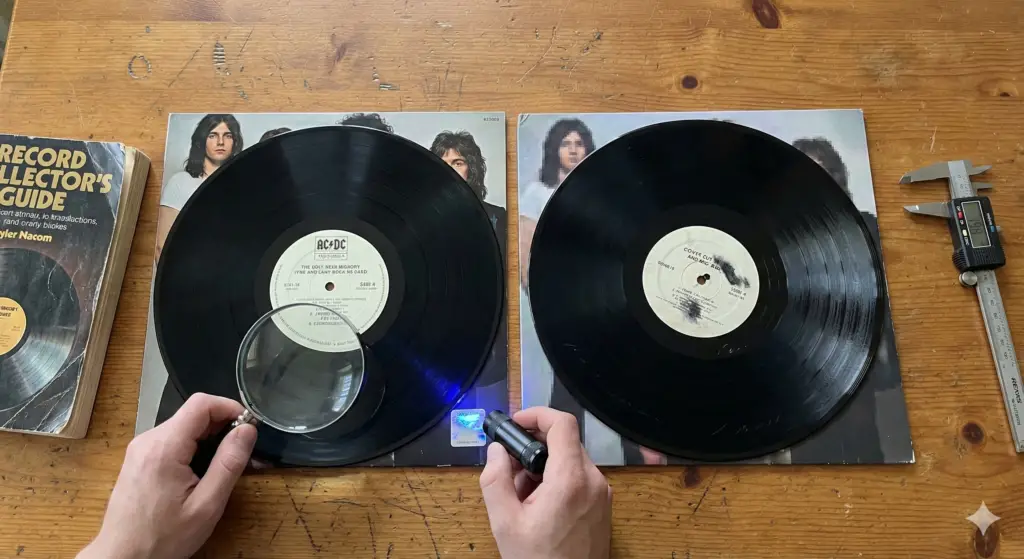
A Complete Guide for Identifying Counterfeit, Unofficial, and Low-Quality Pressings
The rise of vinyl’s popularity has unfortunately brought a wave of fake, unofficial, and bootleg pressings into the market. Some of these records look convincingly real — until you play them. Others are obvious knockoffs once you know what to check.
This guide breaks down exactly how to identify fake vinyl records, protect yourself from bad purchases, and ensure you’re buying authentic, high-quality pressings.
1. What Is a Fake or Bootleg Vinyl?
Not all “fake” records are the same. There are three major categories:
1. Counterfeit Vinyl
Made to look identical to an official release, copying artwork, labels, and catalog numbers.
Goal: Deceive buyers.
2. Bootleg / Unofficial Release
Not authorized by the artist or label.
Often:
- Live recordings
- Demos
- Rare studio sessions
- Compilations
Quality varies wildly — many sound poor.
3. Pirates
Cheap copies of existing albums, often sold on marketplaces with blurry art and no licensing.
2. The Most Reliable Ways to Spot a Fake Vinyl
A. Check the Catalog Number
Every official release has a catalog number — usually printed on:
- Back cover
- Spine
- Center label
Signs of a fake:
- Missing catalog number
- Wrong catalog number for the region
- Fonts inconsistent with the original
- Catalog number printed in the wrong place
Look up the catalog number on Discogs, compare matrix info, and check variations.
B. Inspect the Matrix / Runout Etching
This is the most accurate authenticity check.
The runout area should include:
- Catalog or pressing code
- Mastering engineer initials (ex: “RL,” “KG,” “BG”)
- Plant identifier
Fake runouts often:
- Look laser-etched, not hand-etched
- Have extremely shallow engraving
- Contain random letters or nothing at all
- Are completely missing
If the matrix doesn’t match any documented variants online — red flag.
C. Examine the Artwork Quality
Bootlegs frequently cut corners on the jacket.
Warning signs:
- Blurry or pixelated images
- Washed-out colors
- Incorrect fonts
- Cropped album art
- Missing fine details
- Poorly aligned text or logos
Authentic records use high-resolution print sources; fakes often come from scanned or low-res images.
D. Feel the Weight and Build Quality
While vinyl weight isn’t proof alone, it can support your suspicion.
Common signs of bootlegs:
- Very thin, flimsy vinyl (less than 120g)
- Warped records straight from the sleeve
- Rough, unfinished edges
- Off-center spindle hole
Official pressings generally feel solid and well-finished.
E. Look Closely at the Center Labels
Labels on fake records often show clear mistakes.
Watch for:
- Incorrect label color
- Wrong font size
- Missing copyright text
- Misaligned center hole
- Off-center printing
- Spelling errors
If it looks wrong, compare it to a known genuine copy online.
F. Analyze the Audio Quality
Many bootlegs are pressed from:
- Low-quality digital files
- YouTube rips
- MP3s
- Bad tape transfers
Symptoms include:
- Muddy or compressed sound
- Surface noise even when new
- Unusual distortion or hiss
- Volume level inconsistencies
If the audio sounds dramatically worse than expected, it may be a fake.
3. Common Red Flags When Shopping Online
Be cautious if you notice:
- Seller cannot show real photos
- Only stock images used
- Price too good to be true
- Description says “import,” “unofficial,” or “EU pressing” without details
- Sealed record but shrinkwrap looks loose or cheap
- Seller avoids answering questions about matrix/runout
Trusted sellers will always provide detailed photos and information.
4. How to Protect Yourself From Buying Fake Vinyl
Buy from reputable sources:
- Discogs sellers with strong ratings
- Official band/label websites
- Major retailers (Amazon, Rough Trade, etc.)
- Local record shops
Always request:
- Close-up photos of matrix/runout
- Back cover and spine photos
- Center label photos
Cross-check on Discogs:
Compare every detail:
Catalog number → runout → artwork → tracklist → release country → label info.
If something doesn’t match any known release, it’s likely counterfeit.
5. When Bootlegs Are Acceptable (But Should Be Labeled)
Some collectors buy bootlegs intentionally when:
- The album is out of print
- No official vinyl release exists
- The price of the original is unrealistic
Bootlegs aren’t always “bad,” but they must not be sold as originals.
Final Verdict: Spotting a Fake Vinyl Is Easy Once You Know What to Look For
To identify a fake or bootleg vinyl, check:
1. Catalog number
2. Matrix/runout etching
3. Artwork quality
4. Center label accuracy
5. Vinyl weight & finish
6. Audio quality
7. Seller credibility
A single red flag may not prove it’s fake — but multiple red flags almost certainly do.