
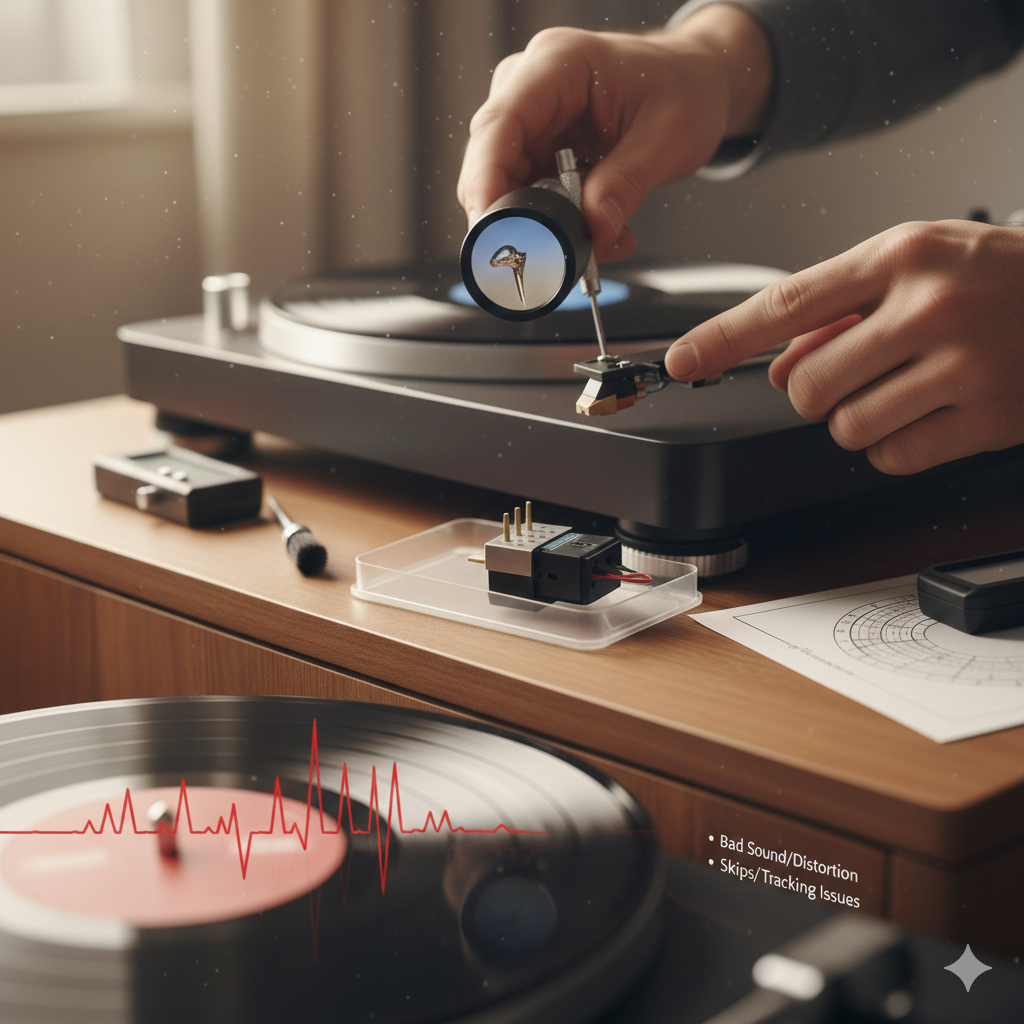
Your turntable’s cartridge is one of the most important components in your entire vinyl setup. It’s responsible for converting the grooves on your record into an electrical signal—so when the cartridge starts to fail, you’ll hear it. But knowing whether the cartridge is actually bad (or if something else is causing the problem) can be tricky.
This guide breaks down the clear signs of a failing cartridge, how to diagnose the issue, and when it’s time to replace it.
Why Cartridge Health Matters
A worn or damaged cartridge doesn’t just ruin the listening experience—it can also damage your vinyl. A bad stylus or misaligned cantilever will cause mistracking, which can permanently wear or gouge the grooves.
That’s why recognizing a failing cartridge early is essential.
⚠️ Common Signs Your Cartridge Might Be Bad
1. Distortion That Wasn’t There Before
If your records suddenly sound fuzzy, muffled, harsh, or overly bright, the cartridge may be struggling to track properly.
Common causes:
- Worn stylus tip
- Bent cantilever
- Internal coil damage
If distortion appears on all records—even clean ones—you likely have a cartridge issue.
2. Sibilance or Harsh High Frequencies
Excessive “S” sounds, harsh cymbals, or brittle vocals often signal that the stylus is worn or the cartridge suspension is deteriorating.
If sibilance suddenly gets worse across different pressings, it’s likely the cartridge.
3. Skipping on Clean, Flat Records
If your records:
- Are clean
- Are not warped
- Don’t skip on other setups
…but skip on your turntable, your cartridge might not be tracking correctly.
This could be due to:
- A worn stylus
- Weak suspension
- Internal cartridge failure
4. Channel Imbalance
If one channel (L or R) sounds louder, quieter, or distorted, your cartridge may have:
- A damaged internal coil
- A failing generator
- Uneven stylus wear
Swap the left/right RCA cables on your preamp:
- If the imbalance switches sides → cartridge is the issue.
- If not → issue is elsewhere.
5. Surface Noise Suddenly Gets Louder
You’ll always hear some crackle with vinyl—but if noise dramatically increases for no reason, it may be a sign your stylus tip is worn and scraping the groove incorrectly.
6. The Stylus Looks Worn or Damaged
Inspect the stylus under a bright light:
Look for:
- A bent cantilever
- A chipped or flat stylus tip
- A stylus that wiggles or feels loose
- Dirt that doesn’t brush off
If you see physical damage, replace it immediately.
7. The Cartridge Has Hundreds of Hours of Use
Every stylus has a lifespan. Typical ranges:
| Stylus Type | Expected Lifespan |
|---|---|
| Conical | 300–500 hours |
| Elliptical | 400–800 hours |
| Nude Elliptical | 800–1,000 hours |
| Microline / Shibata | 1,000–2,000 hours |
If you’ve hit the limit (or don’t remember when you last replaced it), the cartridge/stylus is likely worn.
🎧 How to Diagnose the Cartridge (Step-by-Step)
- Clean your record properly.
Rule out dirt or debris. - Clean the stylus with a brush or gel.
Dust buildup can mimic cartridge failure. - Check the tracking force with a scale.
Too low or high = mistracking. - Check anti-skate.
Misbalanced anti-skate causes skipping and distortion. - Inspect the stylus under bright light.
- Swap channels on your cables.
Helps isolate coil problems. - Try a different record.
Some issues are pressing-specific.
If issues persist after this checklist, your cartridge is likely failing.
When Should You Replace the Cartridge?
You should replace your cartridge (or at least the stylus) if:
✔ Distortion persists after alignment
✔ Skipping occurs on clean, flat records
✔ The stylus shows visible wear
✔ Channel imbalance follows the cartridge
✔ You’ve reached the end of stylus lifespan
✔ You hear scraping or grinding noises (critical danger!)
If your cartridge is inexpensive (under $50), replacing the whole thing is often cheaper than buying a new stylus.
Final Tips
- Always track your stylus hours if possible
- Clean your stylus every few plays
- Avoid playing dirty records
- Keep a spare stylus handy
A healthy cartridge ensures better sound, better tracking, and longer record life—so knowing when it’s failing is essential for every vinyl lover.