
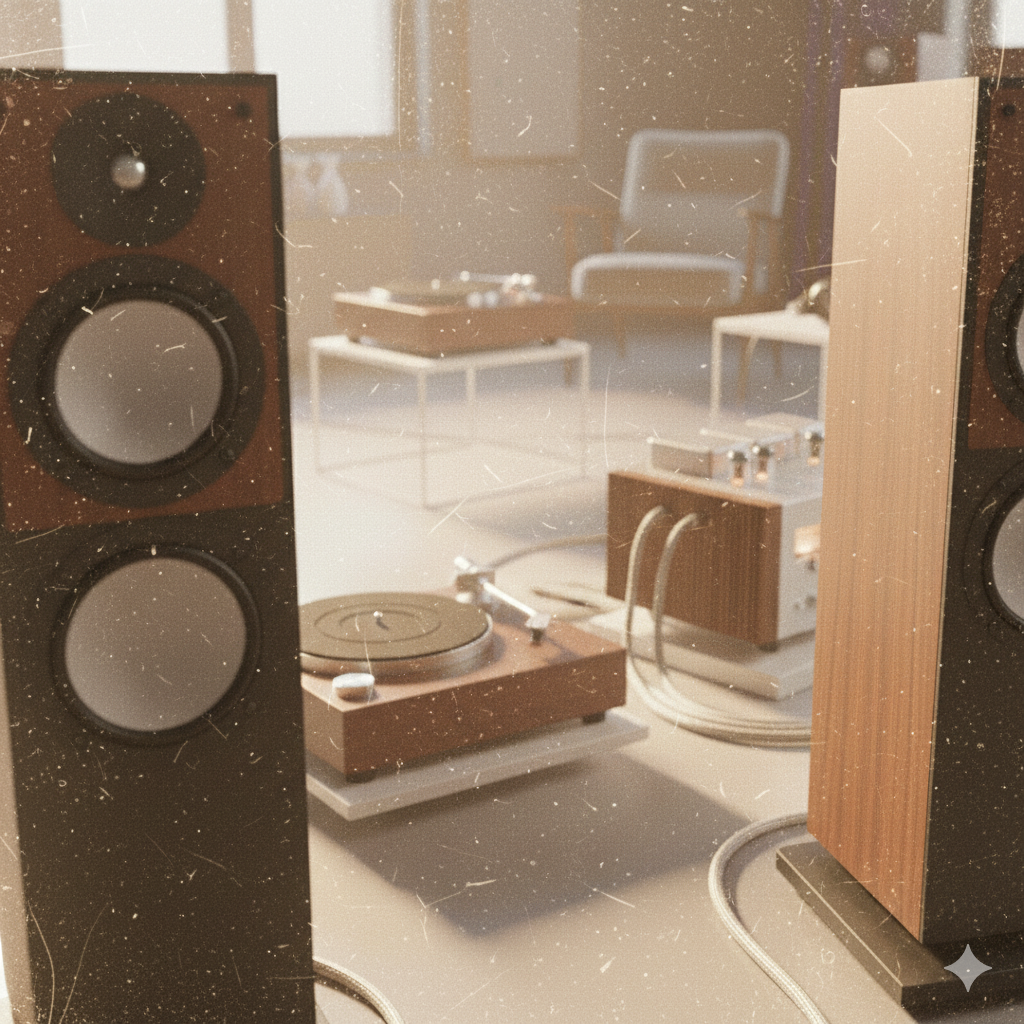
When shopping for speakers, one of the most common questions is whether 2-way or 3-way speakers are better. Many assume that more drivers automatically mean better sound, but the truth is more nuanced. Both designs have strengths—and the “better” choice depends heavily on quality, design, and your listening goals.
This featured article breaks down the differences, advantages, and myths so you can choose the right system with confidence.
🎧 What’s the Difference Between 2-Way and 3-Way Speakers?
2-Way Speaker
- Tweeter – handles high frequencies
- Woofer – handles midrange + bass
3-Way Speaker
- Tweeter – high frequencies
- Midrange driver – mid frequencies
- Woofer – low frequencies
On paper, 3-way looks superior because each driver covers a narrower frequency band. But real performance varies widely by design quality.
🔍 Are 3-Way Speakers Better?
Yes—IF they are designed well.
A properly engineered 3-way system generally offers:
- Cleaner midrange, because it has a dedicated mid driver
- Deeper, more powerful bass, since the woofer focuses only on low frequencies
- Lower distortion, because each driver handles less workload
- Better separation between frequency bands
But here’s the catch…
A cheap 3-way is worse than a high-quality 2-way.
If the manufacturer cuts corners, a 3-way system can suffer from:
- Poor crossovers
- Mismatched drivers
- Phase issues
- Inaccurate frequency integration
This often leads to muddy mids or harsh highs.
🔍 Are 2-Way Speakers Better?
Yes—IF they are built with high-quality components.
A well-designed 2-way speaker usually offers:
- Better coherence, since the crossover divides the signal only once
- More accurate imaging and soundstage
- Fewer phase/alignment problems
- Smoother frequency transitions
- Lower cost for higher-end components
Many legendary bookshelf speakers and studio monitors are 2-way designs because they provide exceptional clarity and precision.
🎛️ Real-World Performance Comparison
2-Way Advantages
✔ Excellent imaging
✔ Simple, accurate crossover
✔ More affordable at high quality
✔ Great for nearfield and small rooms
2-Way Disadvantages
✘ Limited bass output
✘ Higher distortion at high volume
✘ Woofer handles too wide a range
3-Way Advantages
✔ Better bass without strain
✔ Cleaner, more detailed midrange
✔ Handles higher volume easily
✔ Lower distortion across frequencies
3-Way Disadvantages
✘ More expensive
✘ Requires more precise engineering
✘ Can sound disjointed if poorly designed
✘ Larger cabinet size required
📌 So… Which Is Actually Better?
The honest answer:
Neither is inherently better. The design and build quality matter more than the number of drivers.
If you want:
🎶 Precision & coherence → Choose 2-way
Great for:
- Small/medium rooms
- Nearfield listening
- Studio-like accuracy
- Bookshelf setups
🎵 Power, scale & full-range sound → Choose 3-way
Great for:
- Large rooms
- High-volume listening
- Home theater
- Full-body bass impact
🏆 Final Verdict: Choose Based on Quality, Not Driver Count
A premium 2-way speaker will outperform a poorly engineered 3-way every time. But if both are high-quality, 3-way speakers generally offer fuller, more dynamic sound, while 2-way speakers deliver superior coherence and imaging.
The best choice depends on your room, listening style, and budget—not just the number of drivers.