
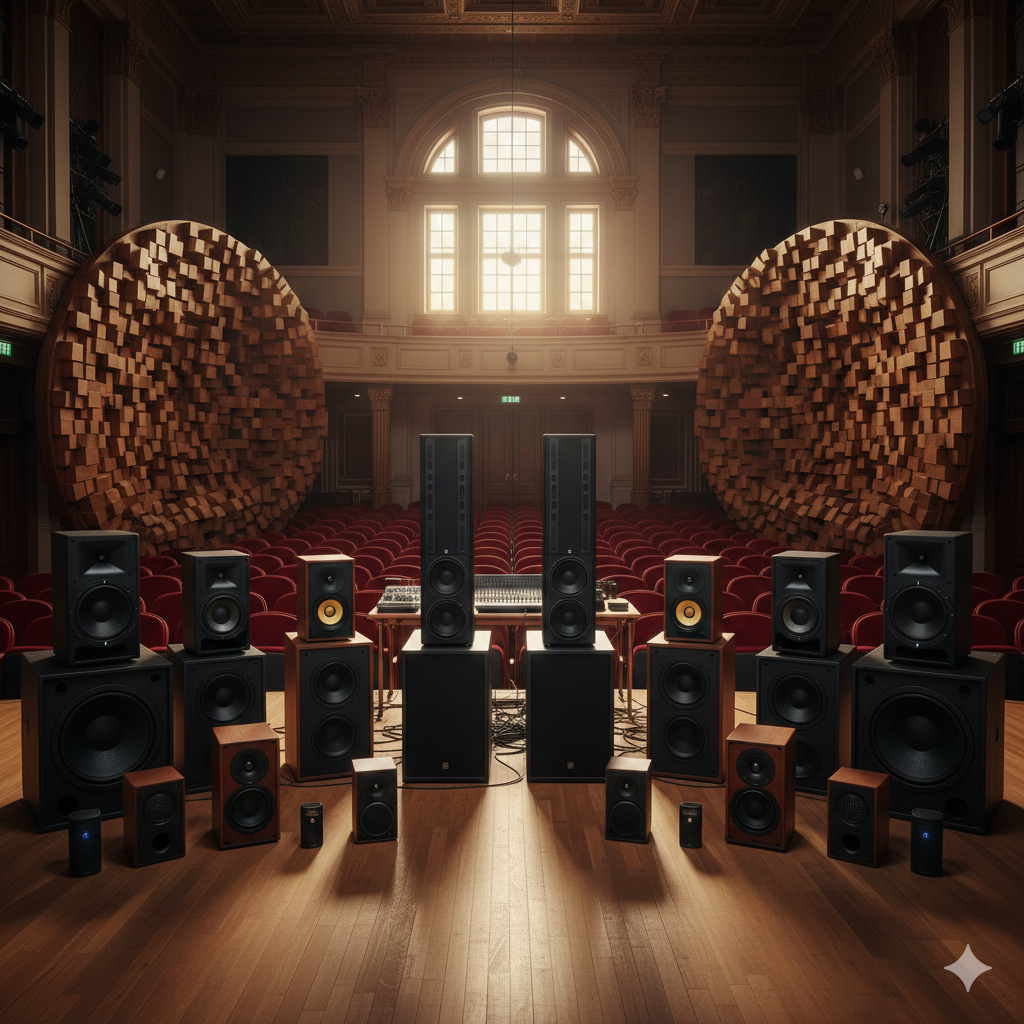
Bookshelf speakers can deliver stunning clarity, imaging, and detail—but only when set up correctly. Even the best speakers will sound average if they’re placed poorly, powered inadequately, or tuned incorrectly.
This featured article walks you through the proven methods to unlock the best possible performance from your bookshelf speakers, whether for music, movies, or critical listening.
🎯 1. Place the Speakers at Ear Level
Bookshelf speakers perform best when their tweeters are aligned with your ears.
This ensures:
- More accurate imaging
- Better treble detail
- A more natural soundstage
Use speaker stands, wall mounts, or proper shelf positioning to get the height right.
📐 2. Follow the “Triangle Rule” for Perfect Imaging
For the best stereo effect, position your speakers and listening seat to form an equilateral triangle:
- Distance between the two speakers = distance from each speaker to your ears
- Toe-in the speakers slightly toward your listening position
This dramatically improves:
- Instrument separation
- Vocal clarity
- Soundstage depth
🏠 3. Keep Speakers Away From Walls
Bookshelf speakers placed too close to walls often sound:
- Boomy
- Muddy
- Overly bass-heavy
Follow these guidelines:
- 6–24 inches from the back wall
- 1–3 feet from side walls
Front-ported speakers are more forgiving, but still benefit from breathing space.
🎵 4. Use a Properly Matched Amplifier
Bookshelf speakers shine when driven by an amp that matches their:
- Power requirements (RMS, not peak)
- Impedance rating
- Sensitivity rating
Underpowering causes distortion. Overpowering is fine if used responsibly. A good amplifier improves:
- Dynamics
- Detail retrieval
- Bass tightness
🔊 5. Add a Subwoofer (When Needed)
Bookshelf speakers often lack deep bass, so a subwoofer can transform your system:
- More depth
- Cleaner mids (because the woofers work less)
- Higher volume without distortion
Set the subwoofer crossover around 70–90 Hz for a seamless blend.
🎛️ 6. Use Quality Speaker Stands
Stands improve sound by:
- Isolating the speaker
- Reducing vibration
- Positioning at correct height
- Improving stereo imaging
Fillable stands (sand or shot) offer even better stability and bass control.
🔌 7. Use Proper Speaker Cables and Connections
You don’t need ultra-expensive cables, but do ensure:
- 14–16 AWG wire
- Secure banana plugs or tight bare-wire connections
- Equal length for left and right speakers
Better connections = better consistency.
🎚️ 8. Optimize Your Room Acoustics
Your room affects sound more than your speakers. Improve acoustics with:
- Rugs or carpets (reduces reflections)
- Curtains (tames brightness)
- Soft furniture (absorbs echoes)
- Acoustic panels or diffusers
Even small changes can noticeably improve clarity and detail.
📀 9. Break In the Speakers
New speakers often need 20–100 hours of use for the drivers to loosen up.
After break-in, you’ll notice:
- Smoother treble
- Fuller bass
- Better imaging
📱 10. Use Proper EQ—But Don’t Overdo It
EQ is powerful but must be used carefully. Use subtle adjustments to fix:
- Mild brightness
- Excessive bass
- Room resonance
Avoid extreme boosts—they cause distortion and poor sound quality.
✨ Final Verdict: Setup Matters More Than Price
Even expensive bookshelf speakers can sound dull if placed incorrectly. But a properly tuned, moderately priced pair can sound incredible with:
- Correct positioning
- Proper amplification
- Good room acoustics
- Subtle tuning
Follow these steps and you’ll unlock the full potential of your bookshelf speakers—revealing detail, depth, and realism you may have never heard before.