
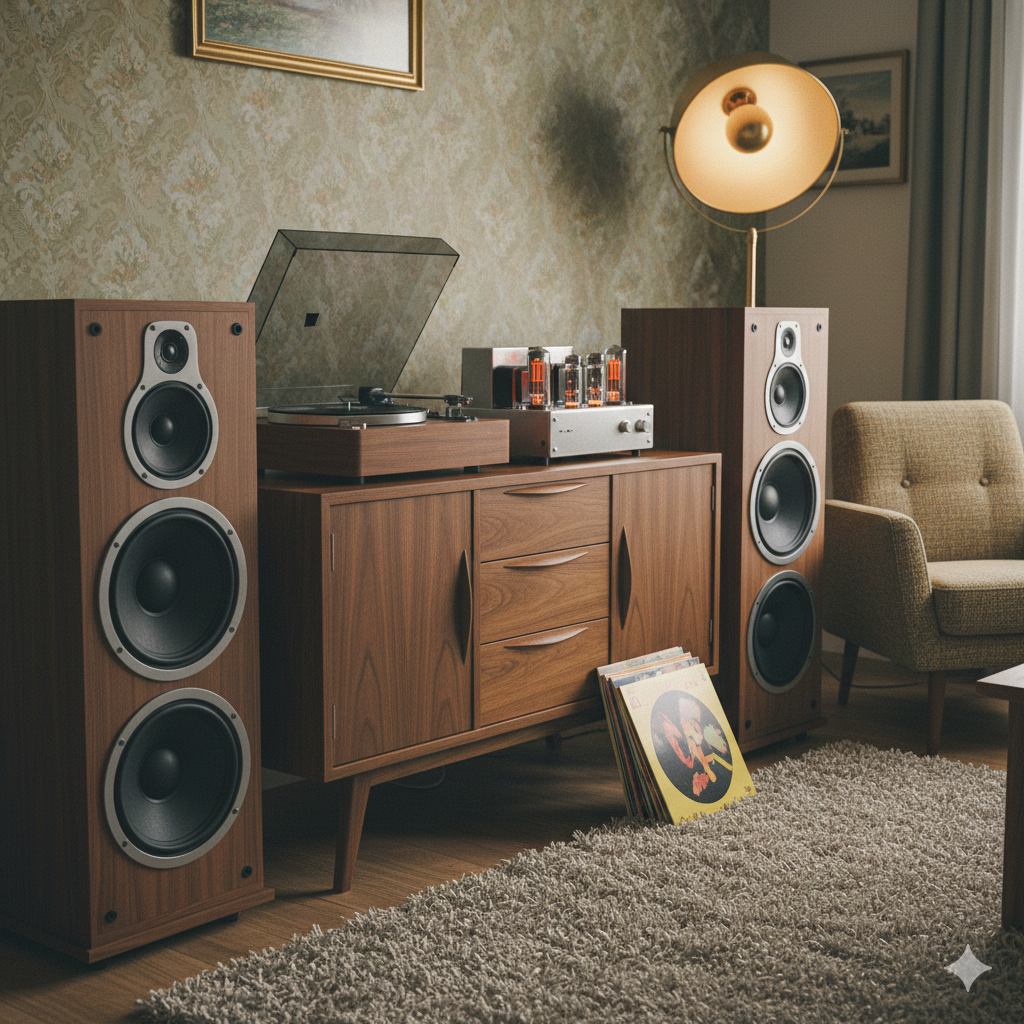
The way you arrange your speakers can make a bigger difference in sound quality than the speakers themselves. Proper placement can improve clarity, bass response, imaging, and overall immersion—without spending a single extra dollar.
Whether you’re using bookshelf speakers, floor standers, or a full home theater system, this guide walks you through the best practices for optimal speaker arrangement.
1. Follow the “Equilateral Triangle” Rule
For stereo setups (left + right speakers), the most important rule is the equilateral triangle method.
How it works:
- The distance between your speakers
- The distance from each speaker to your listening position
- The distance between you and each speaker
All three should be roughly equal.
Benefits:
- Balanced stereo image
- Strong center focus
- Wide, natural soundstage
Start here, then make small adjustments based on room conditions.
2. Place Speakers at Ear Level
Speakers sound best when their tweeters are at ear height during normal listening.
Ear height guideline:
- About 36–40 inches (90–100 cm) for seated listening
- Use speaker stands for precise positioning
Correct height improves:
- Imaging
- Clarity
- High-frequency detail
3. Keep Speakers Away From Walls
Speakers need breathing room to avoid muddy or boomy sound.
Recommended distances:
- Rear-ported speakers: 8–24 inches (20–60 cm) from the wall
- Front-ported or sealed: 4–12 inches (10–30 cm) is usually enough
Why it matters:
- Reduces bass resonance
- Improves accuracy
- Creates cleaner sound
Avoid corner placement unless you want extra low-end (often not ideal for clarity).
4. Use Toe-In for Better Imaging
Toe-in means angling your speakers slightly toward your listening position.
Start with:
- 5–15 degrees of inward angle
Benefits of toe-in:
- Sharper stereo imaging
- Stronger center vocals
- Better high-frequency focus
You can fine-tune toe-in based on preference:
- More toe-in = more focused center
- Less toe-in = wider soundstage
5. Maintain Equal Distance From Side Walls
If one speaker is closer to a wall than the other, the sound becomes unbalanced.
Try to ensure:
- Both speakers have equal spacing from nearby walls
- Both speakers have similar surroundings (furniture, shelving, decor)
This symmetry greatly improves the stereo image.
6. Avoid Obstacles Between You and the Speakers
Anything placed between your speakers and listening position will degrade sound.
Avoid:
- TV cabinets
- Large furniture
- Shelves blocking tweeters
- Clutter on top of speakers
Clear line-of-sight = clear sound.
7. Consider Room Acoustics
Your room affects sound more than almost anything else.
For best results:
- Add a rug if you have hard floors
- Use curtains to reduce reflections
- Place soft furniture to absorb echo
- Avoid bare, reflective rooms
Even small acoustic improvements can transform your listening experience.
8. Arrange Subwoofers Strategically
Bass is omnidirectional, so placement flexibility is higher—but still important.
General rules:
- Avoid placing subs directly in corners (too boomy)
- Try the “subwoofer crawl”:
- Put the sub at your listening position
- Play a bass-heavy track
- Crawl around the room and find where it sounds best
- Place the sub there
Dual subs? Place them:
- At the front left & right
- Or midpoints of opposite walls
- Or diagonally opposite corners
This smooths bass response dramatically.
9. Home Theater Speaker Arrangement Tips
For 5.1 or 7.1 setups:
Front Left & Right:
Form the stereo triangle, angled toward the listener.
Center Speaker:
Directly in front, aligned with ear height, angled toward your seating.
Surrounds (Side or Rear):
- Just above ear level (about 1–2 ft higher)
- Slightly behind or beside seating position
- Avoid pointing directly at ears—angle gently
Subwoofer:
Use the crawl method or front corner placement.
10. Fine-Tune Using Your Ears
Every room is different. After you’ve followed the rules:
- Move speakers a few inches forward or backward
- Adjust toe-in
- Change the distance between them
- Shift your listening position slightly
Small changes = big improvements.
Final Thoughts
Speaker arrangement is one of the most powerful—and free—ways to dramatically improve sound quality. With the right height, spacing, toe-in, and room adjustments, even modest speakers can sound stunning.
Follow these guidelines, experiment a little, and you’ll unlock cleaner, clearer, more immersive sound—no upgrades required.
If you want great audio, the setup matters just as much as the equipment.