
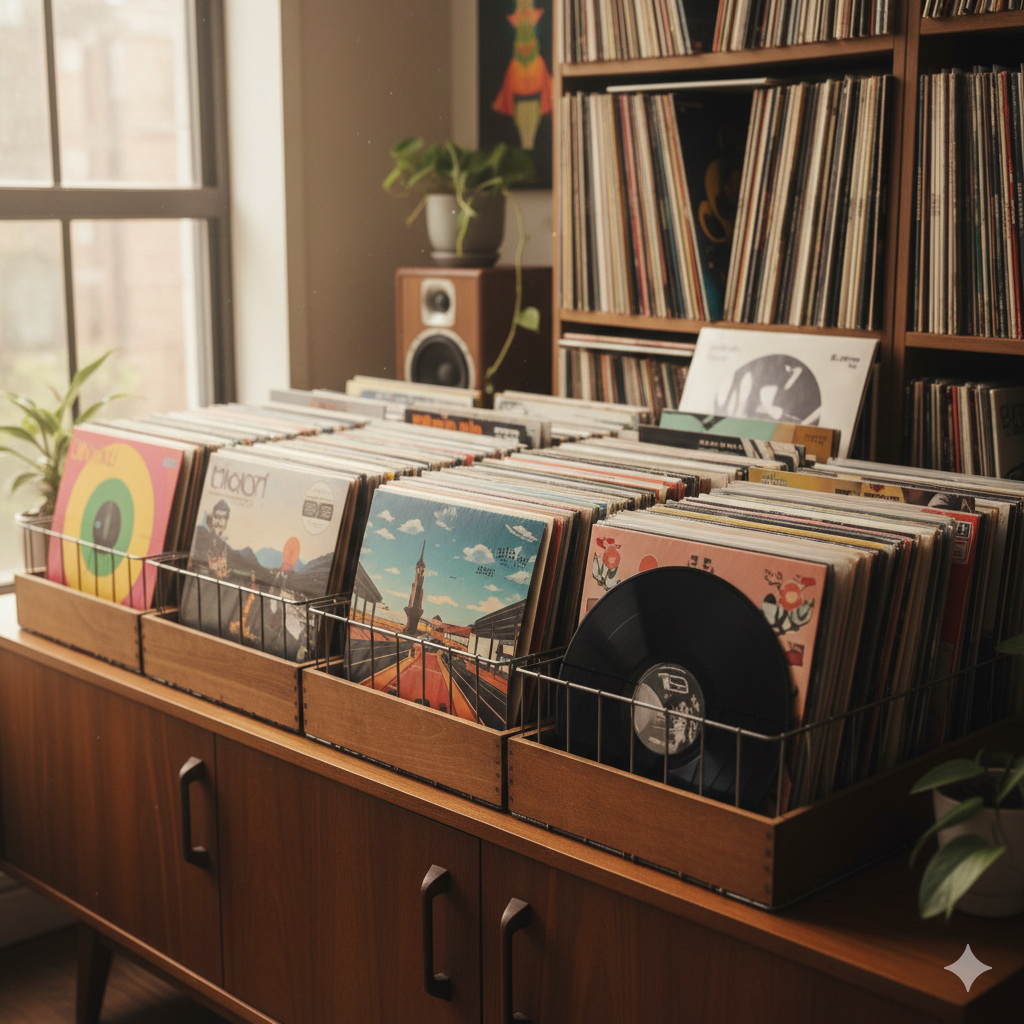
If you’re new to vinyl, one of the first things you’ll notice is that records come in different sizes. These sizes aren’t just cosmetic—they affect playtime, sound quality, speed, and even what type of music they typically contain.
This beginner-friendly guide explains everything you need to know about vinyl record sizes so you can recognize them instantly and play them correctly.
🎛️ Why Vinyl Records Come in Different Sizes
Vinyl records evolved over decades, and their sizes reflect:
- Different speeds
- Different play lengths
- Different intended uses (albums, singles, EPs, DJ use, vintage formats)
The three most common sizes you’ll encounter are:
- 7-inch
- 10-inch
- 12-inch
Each size corresponds to a typical speed and format.
📀 1. The 12-Inch Record – The Standard Album Size
Most Common Use:
✔ Long Play (LP) albums
✔ Audiophile releases
✔ High-fidelity singles (12-inch 45 RPM)
Typical Speeds:
- 33⅓ RPM (most common)
- 45 RPM (audiophile or DJ singles)
Playtime:
- 18–25 minutes per side (33⅓ RPM)
What Makes It Popular:
- Best balance of long playtime and excellent sound
- Deep bass, wide grooves, great dynamics
- Most artists release full albums in this size
You’ll Recognize It As:
Your typical full-length album.
📀 2. The 7-Inch Record – The Classic Single
Most Common Use:
✔ Singles
✔ B-sides
✔ Limited releases
✔ Retro jukebox records
Typical Speed:
- 45 RPM
Playtime:
- 3–6 minutes per side
Why It Exists:
7-inch singles were designed for radio play and hit songs. The faster speed (45 RPM) improves sound quality on short tracks.
You’ll Recognize It As:
A small, compact record with one or two songs.
📀 3. The 10-Inch Record – The Vintage & Specialty Format
Most Common Use:
✔ 1940s–1950s shellac records (78 RPM)
✔ Early EPs
✔ Some modern indie or jazz reissues
Typical Speeds:
- 78 RPM (vintage shellac)
- 33⅓ or 45 RPM (modern vinyl 10-inch)
Playtime:
- 3–5 minutes per side (78 RPM)
- 8–12 minutes per side (vinyl)
Why You See Them Less Often:
The format became largely obsolete after the 1950s but still appears for niche releases.
Important:
78 RPM shellac records require a special stylus (wider 2.5–3 mil tip).
Do NOT play them with a standard microgroove stylus.
🧠 Vinyl Size vs Speed: A Quick Guide
| Record Size | Common Speed | Typical Use |
|---|---|---|
| 12-inch | 33⅓ RPM | Full albums |
| 12-inch | 45 RPM | Audiophile singles / DJ releases |
| 7-inch | 45 RPM | Singles / B-sides |
| 10-inch | 78 RPM | Vintage shellac records |
| 10-inch | 33 or 45 RPM | Modern indie or jazz EPs |
🎧 How to Tell What Size and Speed to Use
✔ Look at the record label
Most records print “33⅓,” “45,” or “78” clearly.
✔ Look at the hole size
- Standard small hole → LP or 7-inch single
- Jukebox big hole → 7-inch 45 RPM single
✔ Look at the thickness & material
- Shellac (heavy, brittle) → 78 RPM 10-inch
✔ Look at the music type
- Full albums → 12-inch
- Hit songs → 7-inch
- Vintage pre-1950 → 10-inch 78 RPM
🎵 Why Understanding Record Sizes Matters
Knowing sizes and speeds helps you:
- Play records at the correct RPM
- Protect your stylus from damage
- Identify vintage formats
- Understand record quality differences
- Handle your collection like a pro
Each size has its own purpose—and part of the charm of collecting vinyl is appreciating these variations.
⭐ Final Thoughts
Vinyl record sizes aren’t just about appearance. They reflect a rich history of audio formats, evolving technology, and listening styles.
- 12-inch → full albums & high fidelity
- 7-inch → singles & classic 45s
- 10-inch → vintage 78s & specialty releases
Once you learn these basics, selecting the correct speed and understanding your records becomes second nature.