
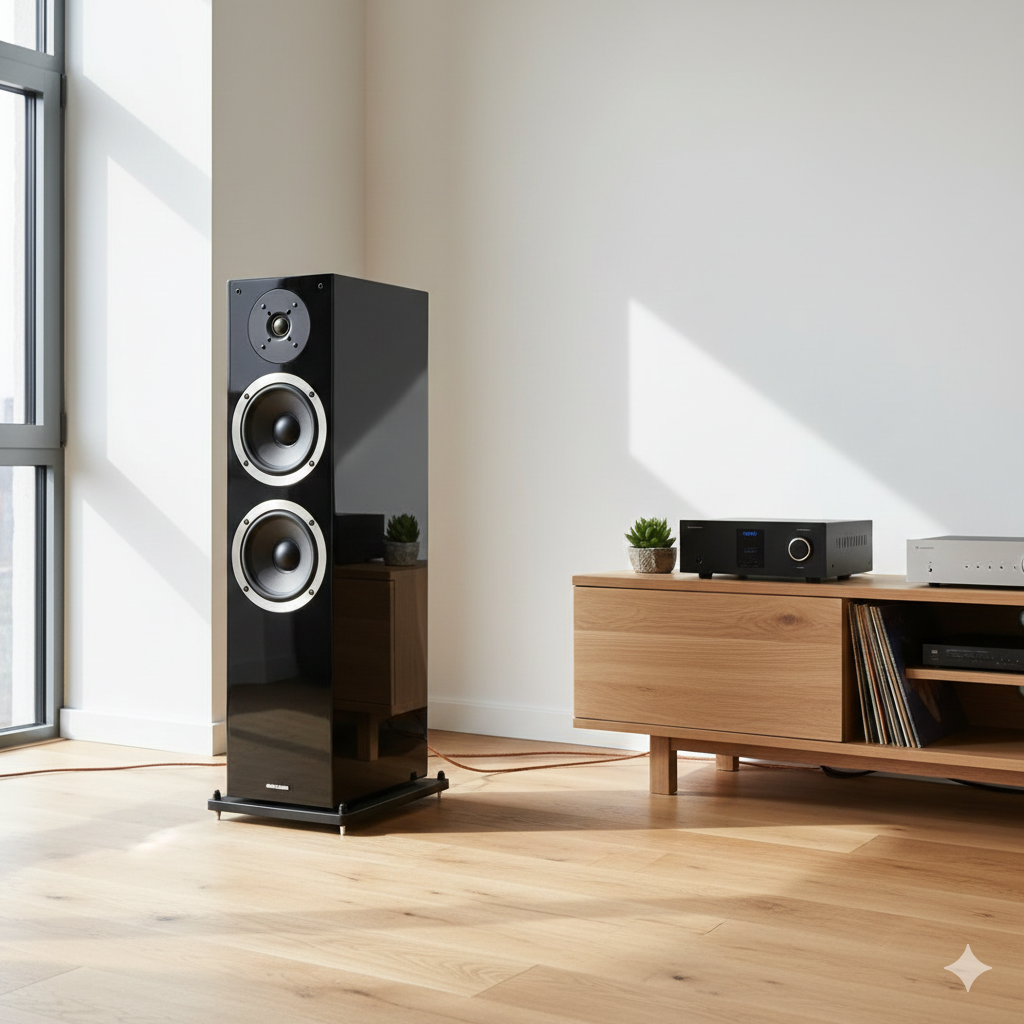
When choosing speakers, subwoofers, or amplifiers, you’ll often see the term RMS power listed in watts. Many people assume that a higher RMS rating automatically means the speaker or amp will be louder.
But is that really true?
Short answer:
Higher RMS can mean louder — but not always.
Loudness comes from several factors, not RMS wattage alone.
This featured guide explains what RMS actually means, how it affects loudness, and what matters more for real-world volume.
🔊 What Is RMS Power?
RMS (Root Mean Square) measures continuous, clean power handling — not peak power, not momentary bursts.
RMS tells you:
- How much power a speaker can handle continuously
- How much power an amp can deliver consistently
- How stable and clean the audio output will be
It’s a reliability rating, not a loudness guarantee.
📈 Does Higher RMS Mean Louder?
✔ Sometimes, yes
If two speakers are identical except for RMS rating, the higher RMS model can play louder when powered properly.
But…
❌ Not always
A speaker with higher RMS won’t automatically be louder because loudness also depends on:
- Speaker sensitivity (dB) ← Most important
- Driver design
- Enclosure design
- Amplifier power and quality
- Room acoustics or car cabin gain
In many cases, a speaker with lower RMS but higher sensitivity can be louder than a high-RMS speaker.
🎧 The Real Key to Loudness: Sensitivity (Efficiency)
Sensitivity is measured in dB (decibels) — usually rated at 1 watt from 1 meter.
Examples:
- 92 dB sensitivity: Very efficient, plays loud with little power
- 86 dB sensitivity: Needs about 4x more power to reach same volume
This matters far more than RMS.
Real-world example:
Speaker A: 50W RMS, 92 dB sensitivity
Speaker B: 100W RMS, 86 dB sensitivity
Even with a lower RMS, Speaker A will sound MUCH louder with the same amplifier.
🔍 Why RMS Alone Doesn’t Predict Loudness
1. Human hearing is logarithmic
Twice the power ≠ twice as loud.
You need 10× more wattage to sound “twice as loud.”
2. Loudness depends on efficiency
A more efficient (high sensitivity) speaker plays louder with less power.
3. RMS doesn’t measure output
RMS is about how much power a speaker can handle, not how loud the speaker produces sound.
4. Amplifier power matters
A high-RMS speaker won’t play louder if the amp isn’t strong enough to feed it.
⚡ A Higher RMS Rating Does Help With Loudness When…
Higher RMS contributes to louder sound if:
- The amplifier can supply enough power
- The speaker sensitivity is high enough
- The speaker design supports high output
- You want headroom for clean, loud playback
- You want distortion-free volume
More RMS = more potential loudness, but only in the right setup.
🧪 Simple Loudness Comparison
If everything else is equal:
Higher RMS → louder (with proper amplification)
If sensitivity differs:
Higher sensitivity → MUCH louder than higher RMS
If the amp is weak:
Higher RMS → not louder
The speaker is underpowered and may even sound worse.
✔ Final Verdict
Higher RMS does not automatically mean louder.
- RMS is a power handling rating, not a loudness rating.
- Real loudness depends heavily on speaker sensitivity.
- A high-RMS speaker needs a strong amp to reach its potential.
- A lower-RMS but high-sensitivity speaker can easily be louder.
So… does higher RMS mean louder?
👉 Only when supported by high sensitivity and enough amplifier power.