
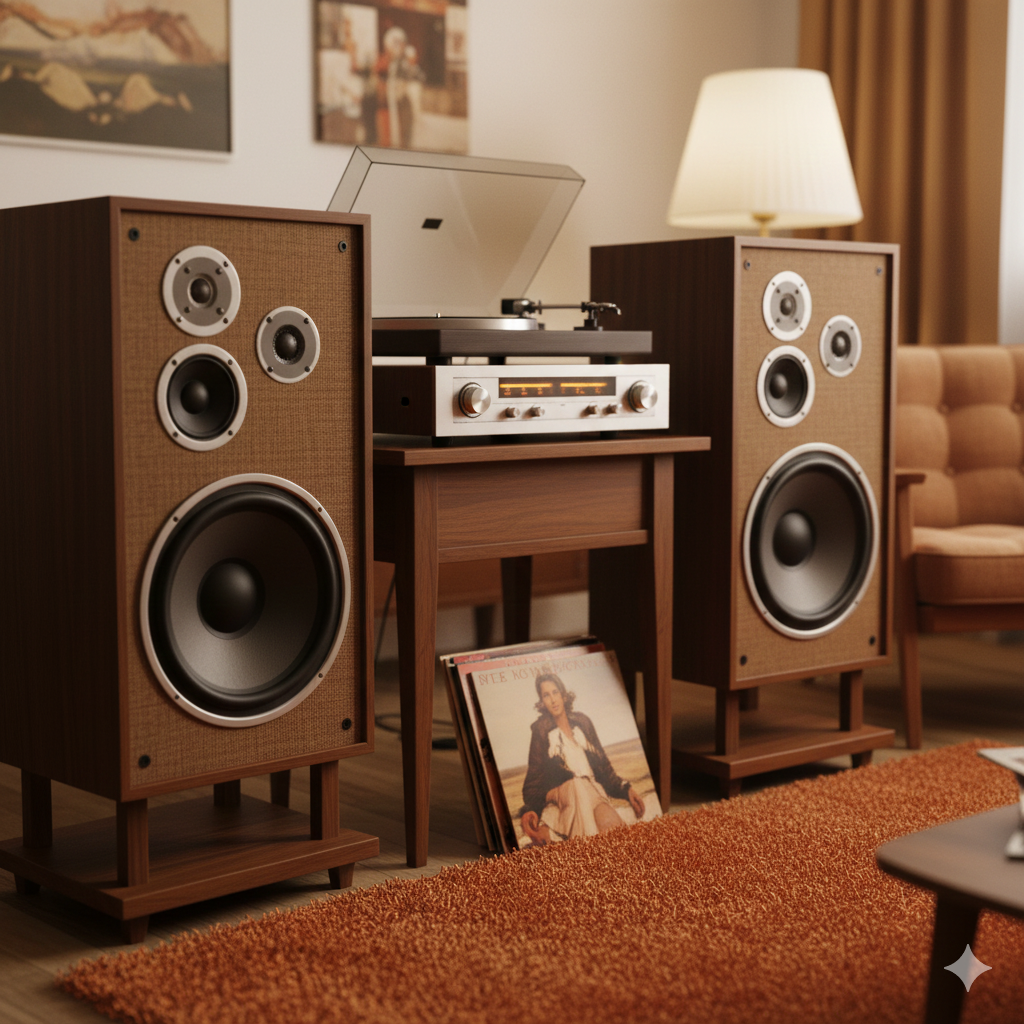
Many people assume that using a lower-powered amplifier with high-demand speakers is harmless—after all, “less power should be safer,” right? In reality, an underpowered amplifier can be far more dangerous to your speakers than an overpowered one. When an amp struggles to deliver the required power, it can distort, clip, and even cause permanent damage.
Here’s what actually happens and how to avoid it.
🔊 What Does “Underpowered” Really Mean?
Speakers require a certain amount of power to reach specific volume levels cleanly. If an amplifier cannot provide that power—due to low wattage, low current capability, or poor design—it becomes underpowered relative to the speakers’ needs.
Underpowering doesn’t mean the system won’t work; it means the amp must work too hard to achieve loudness.
⚠️ The Real Danger: Clipping
When an amp runs out of clean power, it begins to clip—a form of distortion that cuts the waveform into a square-like shape. This produces:
- Harsh, aggressive distortion
- Excessive heat
- High-frequency spikes
Those high-frequency spikes are what burn tweeters and damage drivers.
Why clipping happens:
- You turn the volume too high trying to make the system louder.
- The amplifier cannot supply enough volts or current.
- The output signal becomes distorted instead of louder.
🔥 How Clipping Damages Speakers
When an amp clips, it sends unnatural distortion to the speaker that:
1. Overheats the voice coil
Clipped signals act like DC voltage, causing the coil to heat far more than usual—leading to:
- Melted adhesives
- Burned coils
- Warped formers
2. Destroys tweeters
Tweeters are especially vulnerable because clipping creates intense high-frequency energy they weren’t designed to handle.
3. Causes mechanical stress
Distorted signals can force the woofer to move irregularly, wearing its suspension.
🎧 Signs Your Amp Is Underpowered
Watch for these symptoms:
- You hear distortion at moderate or high volume
- The sound gets harsh or gritty
- Bass feels thin or muddy
- The system gets hot quickly
- You must turn the volume unusually high to get normal loudness
If you’re hearing any of this, you may be pushing the amp beyond its clean output range.
🔍 Myths vs. Reality
❌ Myth: A weaker amp is safer
✔️ Reality: A clipping amp is more harmful than a powerful amp played responsibly.
❌ Myth: Speaker watt ratings must match the amp exactly
✔️ Reality: Clean power from a larger amp is safer than a small amp pushed too hard.
🛠️ How to Avoid Problems
1. Use an amplifier with enough headroom
A good rule of thumb:
👉 Amp RMS ≈ 1.5–2× the speaker’s RMS rating (as long as you don’t abuse the volume knob).
2. Listen for distortion
If the sound gets harsh, you’re entering clipping territory—turn it down immediately.
3. Favor clean power over big numbers
A high-quality 50W amp can outperform a cheap 100W amp.
4. Consider speaker sensitivity
Speakers with low sensitivity (e.g., 84 dB) require much more power than highly sensitive speakers (e.g., 92 dB).
✅ Bottom Line
An underpowered amplifier doesn’t just limit volume—it can damage your speakers through clipping, especially if you push it to keep up. A more powerful amp, used responsibly, is almost always safer and better sounding than one that’s too small for the job.
If you want clean sound, long-lasting speakers, and peace of mind, always ensure your amplifier can comfortably deliver the power your speakers need.