
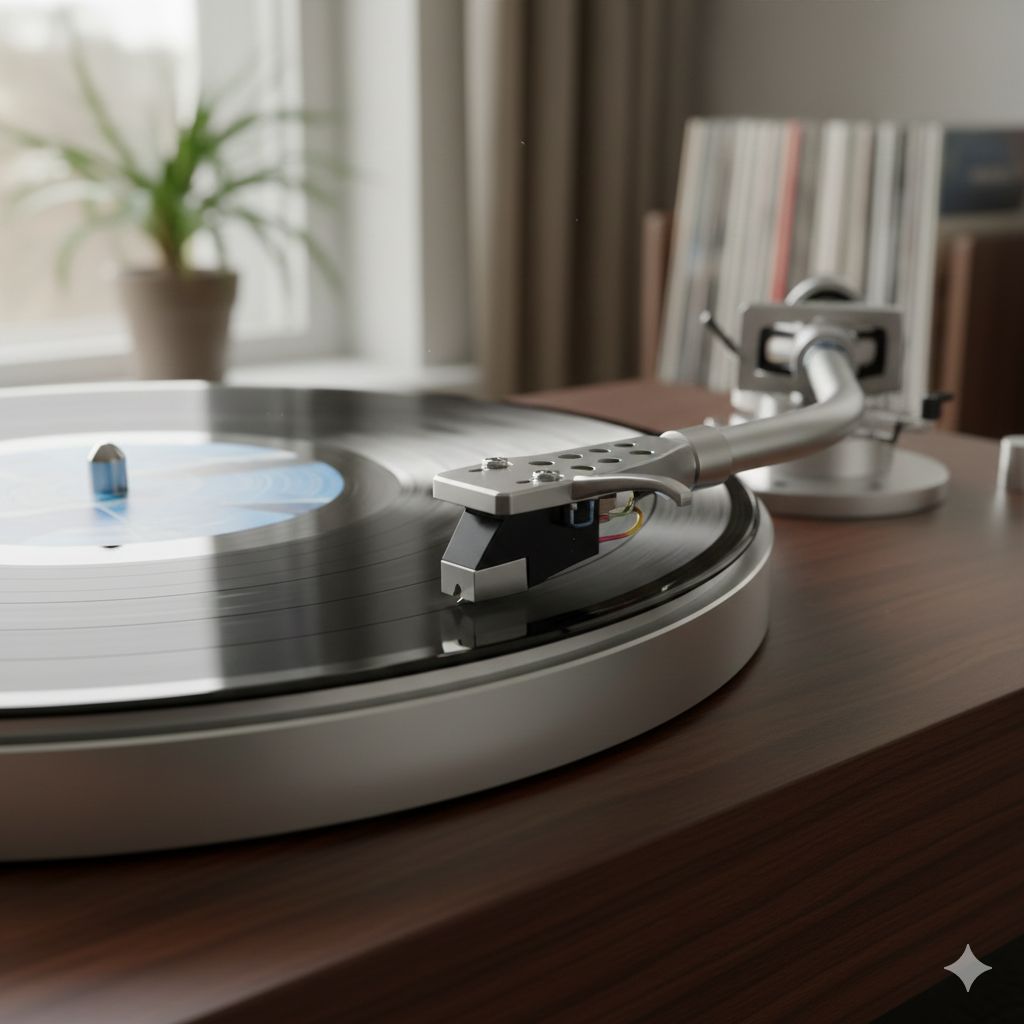
Choosing the correct stylus is one of the most important factors in sound quality—and protecting your collection. Different record types were made with different groove widths, materials, and playback standards. Using the wrong stylus can result in distortion, poor tracking, or even permanent groove damage.
This guide explains exactly which stylus to use for LPs, 45s, and 78s, how to identify them, and how to keep your playback setup safe and accurate.
🎯 Why the Stylus Matters
Your stylus (needle) is the only part of your turntable that actually touches the record—so matching the correct type is essential:
- Too large a stylus → rides too high, misses detail, mistracks
- Too small a stylus → sinks too deep, damages groove walls
- Wrong material → can wear out fast or scratch soft shellac records
Choosing correctly ensures proper sound, low wear, and a long life for your collection.
🥇 Stylus Types by Record Format
🔸 1. Modern Vinyl LPs (12-inch, 33⅓ RPM)
Recommended stylus:
- 0.3 × 0.7 mil elliptical (best balance of detail & tracking)
- 0.4 × 0.7 mil elliptical (common & reliable)
- 0.6 mil conical (safe, budget choice)
- Advanced profiles: MicroLine, Shibata, Fine-Line (audiophile)
Groove type:
- Microgroove
Why:
LPs have narrow microgrooves designed for small, precise stylus shapes.
🔸 2. 7-inch Singles (45 RPM)
Recommended stylus:
- Same as LPs: elliptical or conical microgroove stylus (0.3–0.7 mil)
Groove type:
- Microgroove (modern)
- Some early 45s (1950s) used slightly wider grooves → conical works best
Tip:
If you play older rock/R&B singles from the 1950s, a 0.7 mil conical is safest.
🔸 3. 10-inch Records (33⅓ or 45 RPM)
Most 10-inch vinyl pressed after the 1950s use standard microgroove, same as LPs.
Recommended stylus:
- Elliptical or conical 0.3–0.7 mil
Exception:
Pre-1950s 10-inch records are usually 78 RPM shellac → require 3 mil stylus.
🔸 4. 78 RPM Shellac Records (Pre-1955)
Recommended stylus:
- 2.5 to 3.0 mil conical (standard for 78s)
Groove type:
- Wide standard groove
Why:
A vinyl microgroove stylus (0.7 mil) will sink too deeply into a 78 groove, gouging and damaging it.
A proper 78 stylus is much larger, sitting correctly in the wide groove.
Important:
Never use an elliptical or advanced-profile stylus on 78s—they’re too delicate and too small.
🧭 How to Identify Which Stylus You Need
🔍 1. Check the Record’s Age
- Before 1955 → likely 78 RPM shellac, needs 2.5–3 mil
- After 1955 → vinyl microgroove, needs 0.3–0.7 mil
🔍 2. Check the Material
- Vinyl = flexible, smooth, modern → microgroove stylus
- Shellac = brittle, heavy, matte surface → 78 stylus
🔍 3. Check the Speed
- 33⅓ or 45 RPM → microgroove stylus
- 78 RPM → 3 mil stylus
🔍 4. Check Groove Width
Wide grooves (visible with the naked eye) = 78s
Fine grooves (tight lines) = vinyl microgroove
🎧 Stylus Shape Guide (Quick Breakdown)
Conical (0.6–0.7 mil)
- Most forgiving
- Good for older records
- Ideal for early singles and beat-up LPs
Elliptical (0.3 × 0.7 mil)
- Better tracking and detail
- Best choice for modern LPs
MicroLine / Shibata / Fine-Line
- Best sound quality
- Best for long playing time
- Requires careful alignment
- Great for high-fidelity LPs
3 mil Conical (For 78s)
- Required for shellac
- Safe and accurate for wide grooves
🚫 What Happens If You Use the Wrong Stylus?
Too small stylus on a 78
❌ Damages grooves
❌ Sounds distorted & noisy
❌ Accelerates record wear
Too large stylus on a microgroove LP
❌ Skips
❌ Poor detail
❌ Inaccurate tracking
Wrong shape (e.g., advanced profile on dirty or worn records)
❌ Excessive noise
❌ Premature stylus wear
🏁 Final Advice: Match the Stylus to the Groove
You only need two stylus types for 95% of records:
✔️ A 0.3–0.7 mil stylus for all modern vinyl (LPs & 45s)
✔️ A 3 mil stylus for 78 RPM shellac
With these two, you can safely play almost any collection without risking damage.