
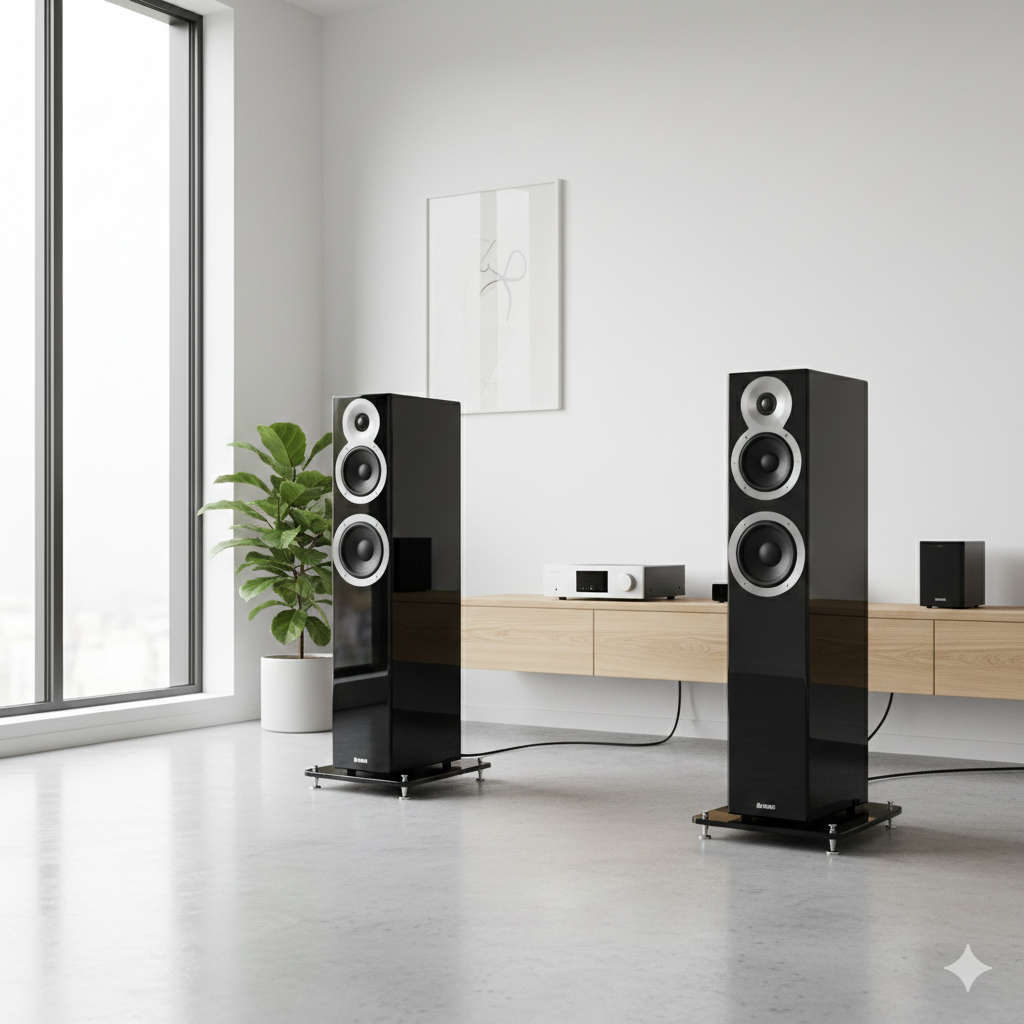
Using 4-ohm speakers with an amplifier rated for 8-ohm loads is one of the most common audio mistakes—yet also one of the most misunderstood. Many people assume it’s fine because “lower ohms means less resistance,” but the reality is more complicated. The mismatch can cause stress, overheating, or even amp failure if not handled properly.
This guide breaks down what actually happens, why it matters, and how to do it safely.
🔍 What “Ohm” Really Means
Ohms measure impedance—how much resistance a speaker presents to the amplifier.
- Higher ohm (8Ω) → Easier on the amp
- Lower ohm (4Ω) → Harder on the amp
When impedance drops, the amp must deliver more current to maintain the same voltage level.
⚠️ The Core Problem: 4Ω Pulls More Power
If an amp is designed for 8Ω loads, it expects a certain electrical “load.”
Connecting 4Ω speakers effectively cuts that load in half, forcing the amp to deliver double the current.
This leads to:
- Higher heat output
- More electrical stress
- Potential protection-mode shutdown
- Risk of permanent damage
Most consumer amps—especially AVRs and budget stereo units—are not built to handle the heavy current draw of 4Ω speakers.
🔥 Worst-Case Scenario: Amp Overheating or Failure
If the amp is not stable at 4Ω, here’s what can happen:
1. Overheating
The increased current generates heat, sometimes faster than the amp can dissipate it.
2. Clipping
When the amp runs out of power while trying to drive the low-impedance load, it begins to clip—sending distorted signals that can damage your speakers.
3. Protection Mode
Many modern amps detect the overload and shut down to prevent damage.
4. Blown Output Transistors
In older or poorly designed amps, excessive current can burn output components and destroy the amplifier.
🧪 Will It Always Fail? Not Necessarily.
Some amps can handle 4-ohm loads safely—especially:
- High-quality stereo amplifiers
- Professional audio amps
- Class D amps with robust power supplies
- Amps explicitly labeled 4Ω stable
If your amp’s manual says it supports 4–16Ω loads, you’re safe.
But if it only says 8Ω minimum, you should not connect 4Ω speakers.
🎧 Why Some People Think It’s Safe
At very low volume levels, an 8Ω-only amp might survive driving 4Ω speakers because the current draw remains minimal. The problems appear when:
- Listening loudly
- Playing dynamic content (bass-heavy music, movies)
- Running multiple channels simultaneously
You may not notice issues immediately, but long-term stress can still shorten the amp’s lifespan.
🛠️ How to Use 4-Ohm Speakers Safely
✔️ 1. Check the manual for impedance ratings
If it says:
- 4Ω OK → safe
- 6–16Ω → use caution
- 8Ω only → avoid
✔️ 2. Keep the volume moderate
This reduces current draw and heat buildup.
✔️ 3. Ensure proper ventilation
An overheated amp is at greater risk of failure, even with proper loads.
✔️ 4. Consider wiring speakers in series
Two 4-ohm speakers in series equal 8Ω.
(Note: this changes sound distribution and is not ideal for stereo fidelity.)
✔️ 5. Use an external power amp
A dedicated power amplifier with 4Ω stability eliminates the risk entirely.
✅ Bottom Line
Running 4-ohm speakers on an 8-ohm amp forces the amplifier to work much harder than intended. While it might function at low volumes, it risks overheating, clipping, and permanent damage when pushed.
If your amp isn’t specifically rated for 4Ω loads, it’s far safer to avoid the mismatch or upgrade to an amplifier designed to handle lower impedance speakers.