
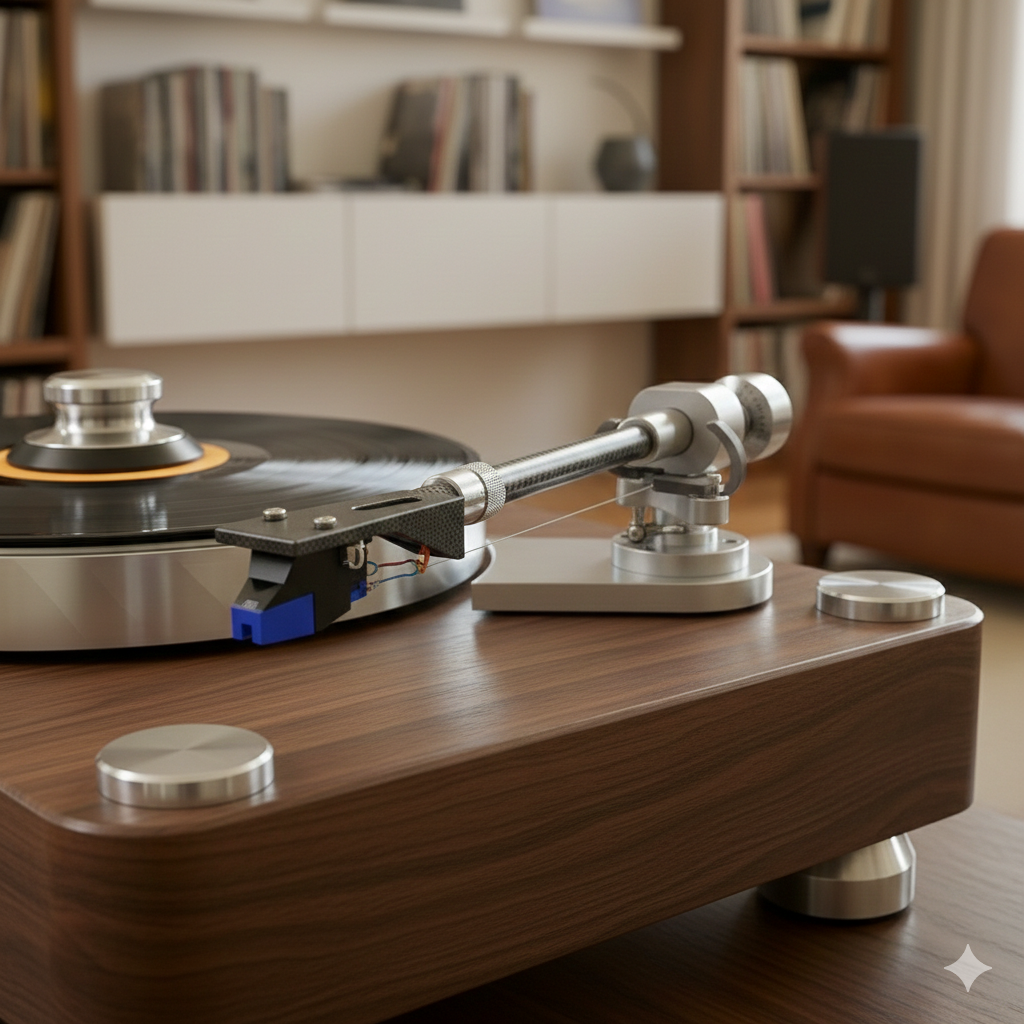
If your tonearm drops too fast, slams onto the record, or refuses to lower smoothly, the problem usually lies with the cueing mechanism. This issue is common on both new and vintage turntables—and the good news is that it’s often easy to fix with careful adjustment and basic maintenance.
This guide explains why cueing problems happen and how to restore smooth, controlled tonearm movement.
What Is the Cueing Mechanism?
The cueing mechanism is a damped lift system that raises and lowers the tonearm gently using a cue lever. It relies on silicone damping fluid to control descent speed and protect your stylus and records.
When it works correctly, the tonearm:
- Lowers slowly and evenly
- Touches down gently in the groove
- Lifts cleanly at the end of play
Common Symptoms of Cueing Problems
You may notice:
- Tonearm drops suddenly or too fast
- Tonearm lowers unevenly
- Cue lever feels loose or ineffective
- Tonearm won’t lower fully
- Stylus bounces when touching the record
These issues should be addressed immediately to avoid damage.
Why the Tonearm Isn’t Dropping Smoothly
1. Dried or Contaminated Damping Fluid (Most Common)
Over time, the silicone oil inside the cueing mechanism dries out or leaks.
Result: Fast or uncontrolled descent.
2. Incorrect Cueing Height Adjustment
If the lift platform is set too high or too low, the tonearm may not lower properly.
3. Mechanical Wear or Misalignment
Older turntables may suffer from worn cueing parts or misaligned linkages.
4. Temperature Effects
Cold environments can thicken damping fluid, slowing movement temporarily.
Step-by-Step: How to Fix Cueing Problems
Step 1: Check Basic Operation
- Remove the stylus guard only after inspection
- Move the cue lever up and down
- Observe tonearm movement without a record
This helps confirm whether the issue is damping or adjustment.
Step 2: Adjust Cueing Height (If Available)
Many turntables allow cueing height adjustment:
- Locate the small adjustment screw near the cue lift
- Turn in small increments
- Aim for 3–6 mm clearance above the record
Always test before playback.
Step 3: Restore Damping Fluid (Advanced but Effective)
If the tonearm drops too fast, the cueing piston likely needs new silicone oil.
What You’ll Need:
- High-viscosity silicone oil (usually 300,000–500,000 cSt)
- Small applicator or syringe
- Service manual (recommended)
General Process:
- Access the cueing piston
- Clean old fluid carefully
- Apply a small amount of fresh silicone oil
- Reassemble and test
This restores smooth, controlled lowering.
Step 4: Check Tonearm Balance and Tracking Force
An improperly balanced tonearm can exaggerate cueing issues.
- Rebalance the tonearm
- Verify correct tracking force
- Confirm anti-skate is set properly
Cueing works best when the tonearm is correctly adjusted.
What NOT to Do
- Don’t use household oil or grease
- Don’t force the cue lever
- Don’t remove parts blindly
- Don’t play records if the arm drops violently
Improper fixes can permanently damage the cueing system.
When to Seek Professional Help
Consider professional service if:
- Cueing mechanism is sealed or inaccessible
- Parts are cracked or broken
- Turntable is rare or high-value
- You’re unsure about disassembly
Some cueing systems require specialized tools.
Preventing Future Cueing Issues
- Avoid rapid cue lever movements
- Keep the turntable clean and dust-free
- Store in a stable temperature environment
- Re-lubricate cueing mechanism every few years (vintage units)
Final Thoughts
A smoothly operating cueing mechanism isn’t just a convenience—it’s essential protection for your stylus and records. If your tonearm isn’t dropping correctly, addressing the issue early prevents accidents and keeps your turntable performing as designed.
With careful adjustment and proper damping, smooth cueing can be fully restored—even on older turntables.