
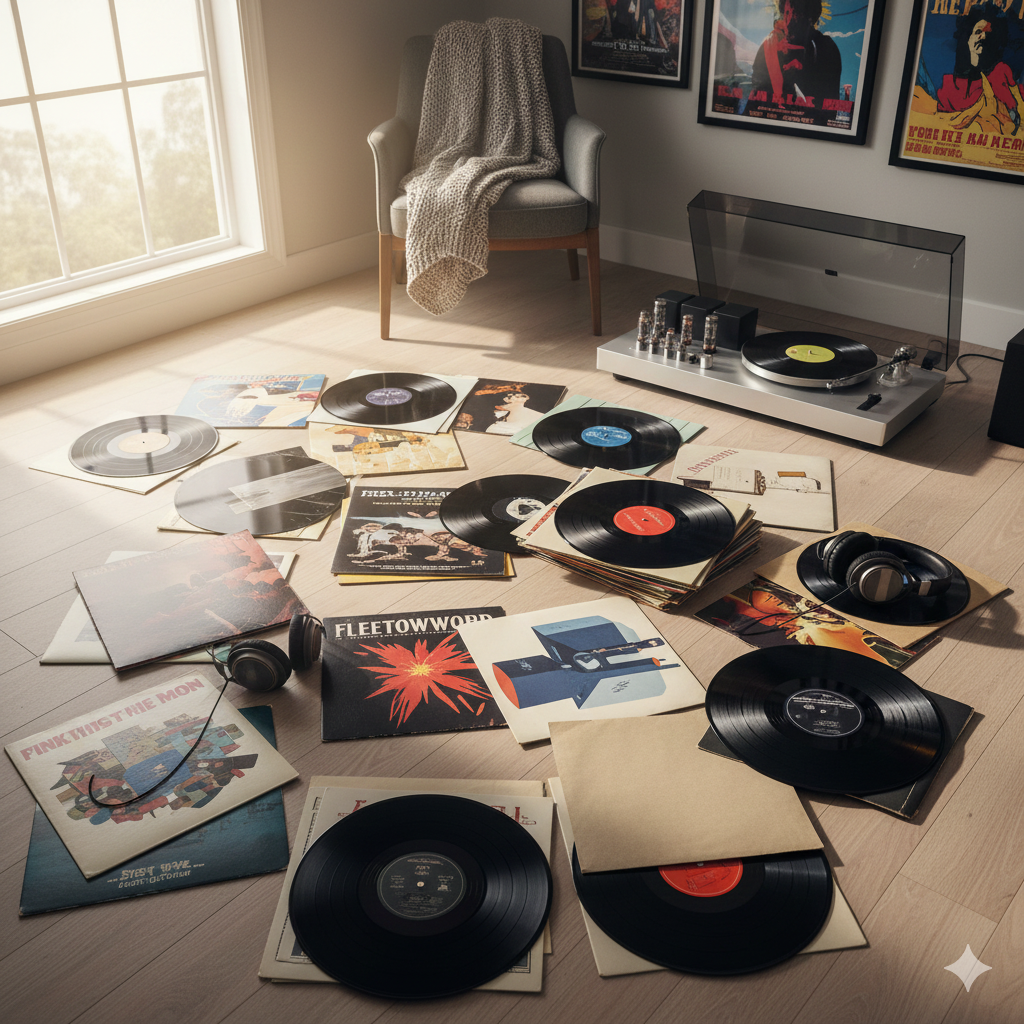
You unwrap a brand-new record, place it on the turntable, lower the stylus—and instead of dead-silent vinyl, you hear pops, crackles, and static. It’s confusing and disappointing, especially when the record has never been played.
So why does this happen? This featured guide explains why brand-new records crackle, what’s normal, what’s not, and how to get the quietest playback possible.
New Doesn’t Mean Clean
One of the biggest misconceptions about vinyl is that new records are clean out of the sleeve.
In reality, brand-new records often carry:
- Pressing debris and vinyl shavings
- Paper dust from inner sleeves
- Mold-release compounds from manufacturing
These contaminants sit deep in the grooves and cause noise—even on first play.
1. Pressing Residue and Manufacturing Debris
During pressing, records are stamped at high pressure and temperature.
What’s left behind:
- Microscopic vinyl particles
- Residual oils or mold-release agents
- Trapped debris that brushes can’t remove
This residue is a major cause of crackling on new records.
2. Static Electricity
Fresh vinyl is especially prone to static.
Why new records build static:
- PVC attracts and holds static charge
- Dry environments worsen the problem
- Paper inner sleeves generate friction
Static causes:
- Crackles and pops
- Dust attraction during playback
- Audible noise when lifting the record
3. Paper Inner Sleeves
Many new records still ship with plain paper sleeves.
Problems they cause:
- Paper fibers embedded in grooves
- Scuffs and micro-abrasions
- Static buildup
Replacing paper sleeves with anti-static poly-lined sleeves can significantly reduce noise.
4. Non-Fill and Pressing Defects
Not all crackle is removable.
Common defects:
- Non-fill: Sounds like tearing or zipper noise
- Poorly cooled vinyl
- Uneven or rushed pressings
These defects are present from the factory and cannot be fixed with cleaning.
5. Lightweight or Colored Vinyl
Some vinyl formulations are noisier than others.
Factors that increase noise:
- Very thin pressings
- Certain colored or picture discs
- Recycled or impure vinyl
Black vinyl often plays quieter due to carbon black additives that reduce static and improve consistency.
6. Your Stylus and Setup Still Matter
New record noise can be exaggerated by setup issues.
Check:
- Stylus cleanliness
- Correct tracking force and anti-skate
- Cartridge alignment
A dirty stylus will turn minor debris into loud crackle.
Should You Clean New Records?
Absolutely.
Best cleaning options:
- Wet cleaning (manual or machine)
- Ultrasonic cleaning
- Anti-static brush before and after play
Many listeners report dramatic noise reduction after the first proper clean, even on sealed records.
When Crackle Is Normal—and When It’s Not
Normal:
- Light crackle on first play
- Static pops that fade after cleaning
Not normal:
- Loud ripping or tearing sounds
- Repeating noise in the same spot
- Persistent crackle after thorough cleaning
In those cases, exchange the record if possible.
How to Get Quieter Playback from New Vinyl
Practical tips:
- Always wet-clean new records
- Replace paper sleeves immediately
- Control room humidity (40–60%)
- Use an anti-static brush or gun
- Keep stylus spotless
Final Thoughts
So—why do brand-new records crackle?
Because new vinyl often carries manufacturing residue, static charge, and sleeve debris—not because it’s defective. With proper cleaning and handling, many noisy new records become surprisingly quiet.
Vinyl isn’t plug-and-play—but with a little care, even brand-new pressings can deliver the clean, immersive sound the format is known for.