
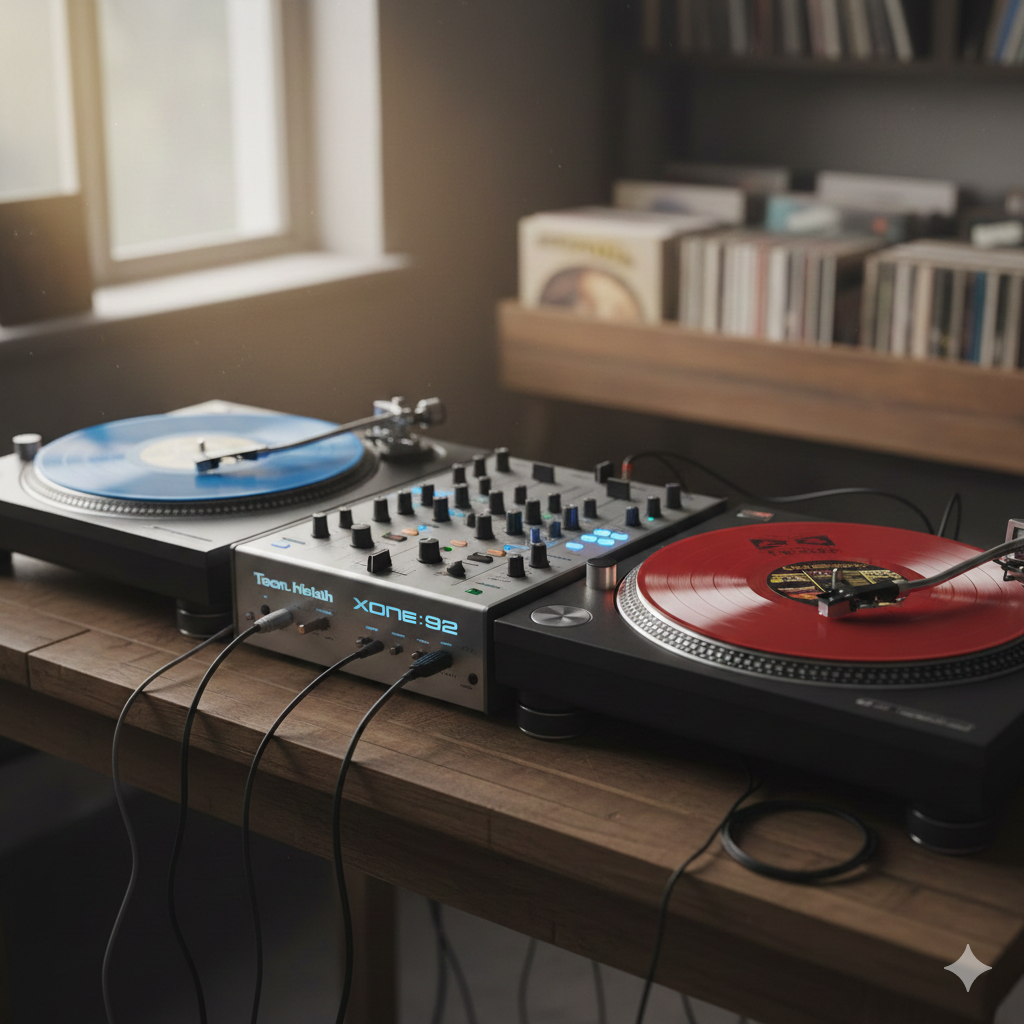
Anti-skate is one of those turntable settings that sparks endless debate. Some listeners swear by precise adjustment, while others claim they’ve run their turntables for years with anti-skate disabled and heard no problems at all. So which is it—essential or optional?
The short answer: anti-skate is usually necessary, but not always critical in the same way for every setup. To understand why, we need to look at what anti-skate actually does and what happens when it’s ignored.
What Is Anti-Skate?
When a stylus tracks a spinning record, friction between the stylus and the groove pulls the tonearm inward toward the center of the record. This force is called skating force.
Anti-skate applies a small outward force to counteract this pull, helping the stylus sit evenly between the groove walls instead of leaning harder on one side.
In simple terms:
- Skating force pulls the stylus inward
- Anti-skate pushes it back outward
- The goal is balance
Why Anti-Skate Exists
Anti-skate isn’t about convenience—it exists to solve real mechanical problems.
Without proper anti-skate:
- One groove wall is stressed more than the other
- Channel balance can shift (often louder on one side)
- Distortion increases, especially on inner grooves
- Stylus and record wear becomes uneven
Over time, this can shorten the life of both your stylus and your vinyl.
What Happens If Anti-Skate Is Set Incorrectly?
Too Little Anti-Skate
- Increased distortion in one channel
- Stylus presses harder on the inner groove wall
- Accelerated stylus wear on one side
Too Much Anti-Skate
- Stylus pushes outward too strongly
- Distortion shifts to the opposite channel
- Reduced tracking ability on loud passages
The ideal setting minimizes distortion and keeps tracking forces balanced.
Is Anti-Skate Always Necessary?
In Most Cases: Yes
For the majority of turntables using:
- Pivoted tonearms
- Standard tracking forces (1.5–2.5g)
- Elliptical, MicroLine, or Shibata styli
Anti-skate is strongly recommended. These setups are sensitive to groove imbalance, and correct anti-skate improves both sound quality and longevity.
When Anti-Skate Might Be Less Critical
There are situations where anti-skate becomes less noticeable or even optional:
- Conical (spherical) styli
Their symmetrical shape is more forgiving of uneven groove pressure. - Very heavy tracking forces
High downforce can mask skating effects (though wear may increase). - Linear-tracking turntables
These arms move straight across the record and don’t create skating force at all. - DJ or scratch setups
Stability and back-cueing often matter more than perfect groove balance.
Even in these cases, “less critical” doesn’t mean “irrelevant”—only that the audible impact may be smaller.
Why Some Audiophiles Run Zero Anti-Skate
You’ll occasionally hear claims like:
“My turntable sounds better with anti-skate turned off.”
This can happen because:
- Some anti-skate mechanisms are imprecise
- Dial markings are often inaccurate
- Incorrect anti-skate can sound worse than none at all
In these cases, zero anti-skate isn’t ideal—it’s simply less wrong than a badly set value.
How Much Anti-Skate Should You Use?
A common starting point:
- Set anti-skate equal to your tracking force
Example:
- 2.0g tracking force → anti-skate around 2
From there, fine-tuning by ear or test record can improve results.
Better Adjustment Methods
- Use a test record with anti-skate tracks
- Listen for equal distortion in both channels
- Observe cantilever centering while playing a record
Perfect accuracy isn’t required—close and balanced is the goal.
Does Anti-Skate Improve Sound Quality?
Anti-skate rarely makes your system sound “better” in an obvious way. Instead, it:
- Reduces distortion
- Improves channel balance
- Preserves record and stylus life
Think of it as preventive maintenance, not a tone control.
Final Verdict: Necessary or Optional?
Anti-skate is generally necessary, but its importance depends on your setup.
- For most home listening turntables → Necessary
- For linear trackers → Not needed
- For DJ or rugged playback → Lower priority
- For audiophile listening → Absolutely recommended
If your turntable has anti-skate, it’s there for a reason. Setting it correctly won’t transform your system overnight—but ignoring it may quietly degrade your sound and your records over time.