
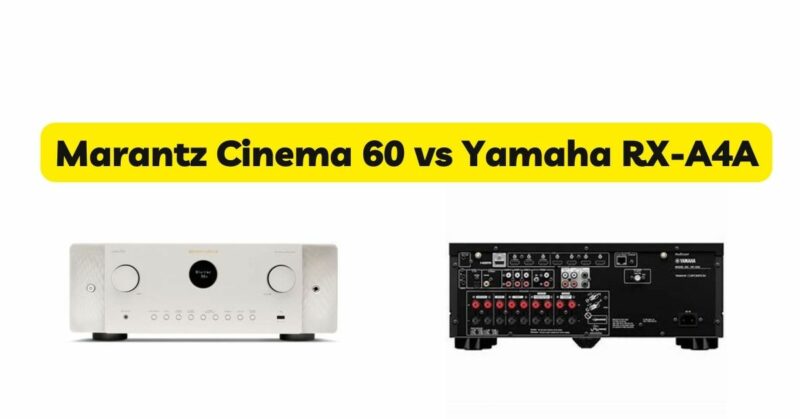
Selecting the right AV receiver is crucial for building an immersive home theater system. In this article, we will compare two high-end AV receivers: the Marantz CINEMA 60 and the Yamaha RX-A4A. Both models offer exceptional audio performance, advanced features, and extensive connectivity options. By examining their specifications, audio capabilities, connectivity, and user experience, we aim to provide a comprehensive analysis that will help you make an informed decision based on your specific needs and preferences.
I. Specifications and Features
Let’s begin by exploring the specifications and notable features of the Marantz CINEMA 60 and the Yamaha RX-A4A.
The Marantz CINEMA 60 is a 9.2-channel AV receiver that delivers powerful and immersive sound. With a power output of 110 watts per channel, it provides excellent audio performance for a captivating home theater experience. The CINEMA 60 supports advanced audio formats, including Dolby Atmos and DTS:X, creating a three-dimensional soundstage that envelops you in sound from all directions. It features advanced room calibration technology, such as Audyssey MultEQ XT32, which analyzes your room’s acoustics and adjusts the audio output for optimal sound quality. The CINEMA 60 offers a wide range of connectivity options, including multiple HDMI inputs and outputs, analog audio inputs, and wireless connectivity via built-in Wi-Fi and Bluetooth. It also supports 4K/60Hz pass-through, HDR10, Dolby Vision, and eARC, ensuring seamless integration with the latest video technologies.
The Yamaha RX-A4A is also a 9.2-channel AV receiver that delivers exceptional audio performance. With a power output of 110 watts per channel, it offers robust and dynamic sound reproduction. The RX-A4A supports advanced audio formats, including Dolby Atmos and DTS:X, for an immersive sound experience. It features Yamaha’s proprietary YPAO room calibration technology, which optimizes the audio output based on your room’s acoustics, resulting in accurate sound reproduction. The RX-A4A provides extensive connectivity options, including multiple HDMI inputs and outputs, analog audio inputs, and wireless connectivity through built-in Wi-Fi and Bluetooth. It also supports 4K/120Hz pass-through, HDR10, Dolby Vision, and eARC, ensuring compatibility with the latest video technologies.
II. Audio Performance and Sound Quality
Both the Marantz CINEMA 60 and the Yamaha RX-A4A excel in terms of audio performance and sound quality. Let’s delve deeper into their audio capabilities and sound reproduction.
The Marantz CINEMA 60 delivers impressive audio performance with its 9.2-channel configuration and high-quality amplification. The 110 watts per channel power output provides ample power reserves for driving various speaker setups. With support for Dolby Atmos and DTS:X, the CINEMA 60 creates a multidimensional soundstage, immersing you in a lifelike audio experience. The advanced room calibration technology, such as Audyssey MultEQ XT32, ensures precise sound reproduction with accurate tonal balance and imaging. The CINEMA 60 also supports high-resolution audio playback, allowing you to enjoy music with exceptional clarity and detail.
The Yamaha RX-A4A offers equally impressive audio performance with its 9.2-channel configuration and high-quality amplification. The 110 watts per channel power output ensures dynamic and detailed sound reproduction. With Dolby Atmos and DTS:X support, the RX-A4A creates a three-dimensional audio experience that fills the room with sound. The Yamaha’s YPAO room calibration technology optimizes the audio output based on your room’s acoustics, resulting in balanced sound reproduction and precise imaging. The RX-A4A also supports high-resolution audio playback, delivering excellent fidelity and detail in music playback.
Both receivers provide a range of audio enhancement features, including various sound modes, equalization options, and dynamic range control. These features allow you to tailor the sound to your preferences and optimize the audio performance based on the content you’re consuming.
III. Connectivity and Additional Features
Connectivity options and additional features are crucial factors to consider when comparing AV receivers. Let’s examine the connectivity options and notable features offered by the Marantz CINEMA 60 and the Yamaha RX-A4A.
The Marantz CINEMA 60 offers comprehensive connectivity options to accommodate various audio and video sources. It features multiple HDMI inputs and outputs, including one HDMI input on the front panel for convenient access. The receiver supports 4K/60Hz pass-through, HDR10, Dolby Vision, and eARC, ensuring compatibility with the latest video formats and technologies. It also offers analog audio inputs, digital audio inputs (optical and coaxial), and wireless connectivity through built-in Wi-Fi and Bluetooth. The CINEMA 60 is compatible with popular music streaming services like Spotify, TIDAL, and Deezer, allowing you to stream music wirelessly. It also integrates with voice control platforms such as Amazon Alexa, Google Assistant, and Apple Siri for convenient hands-free operation.
The Yamaha RX-A4A provides extensive connectivity options to accommodate various audio and video sources. It features multiple HDMI inputs and outputs, including one HDMI input on the front panel. The receiver supports 4K/120Hz pass-through, HDR10, Dolby Vision, and eARC, ensuring compatibility with the latest video technologies. It offers analog audio inputs, digital audio inputs (optical and coaxial), and wireless connectivity via built-in Wi-Fi and Bluetooth. The RX-A4A is compatible with popular music streaming services like Spotify, Amazon Music, and Deezer, providing access to a vast library of music. It also integrates with voice control platforms such as Amazon Alexa and Google Assistant for seamless voice command operation.
IV. User Interface and Setup
The user interface and setup process play a significant role in the overall user experience of an AV receiver. Let’s examine how the Marantz CINEMA 60 and the Yamaha RX-A4A address these factors.
The Marantz CINEMA 60 features a user-friendly interface with an intuitive on-screen setup assistant. The graphical user interface provides quick access to various settings and features, making it easy to configure and customize the receiver. The CINEMA 60 comes with a dedicated remote control that allows for convenient control over its functions. Additionally, it is compatible with the Marantz AVR Remote app, enabling you to control the receiver from your mobile device. The app offers advanced features and facilitates integration with popular smart home control systems.
The Yamaha RX-A4A also offers a user-friendly interface with an intuitive setup process. The on-screen setup guide provides step-by-step instructions, simplifying the initial configuration of the receiver. The RX-A4A comes with a comprehensive remote control that allows for easy navigation and control. It is also compatible with the Yamaha AV Controller app, which provides additional control options and seamless integration with popular smart home control systems.
V. Conclusion
In conclusion, both the Marantz CINEMA 60 and the Yamaha RX-A4A are premium AV receivers that offer outstanding audio performance, advanced features, and extensive connectivity options. The CINEMA 60 impresses with its high-quality amplification, advanced room calibration technology, and support for Dolby Atmos and DTS:X. On the other hand, the RX-A4A delivers dynamic sound reproduction, features Yamaha’s YPAO room calibration technology, and supports the latest audio and video formats. When choosing between the two, consider your specific audio and video requirements, connectivity needs, and user interface preferences. Additionally, evaluate your budget to determine which receiver aligns with your priorities. Ultimately, both the Marantz CINEMA 60 and the Yamaha RX-A4A are excellent choices that will elevate your home theater experience and provide immersive sound for your entertainment enjoyment.