
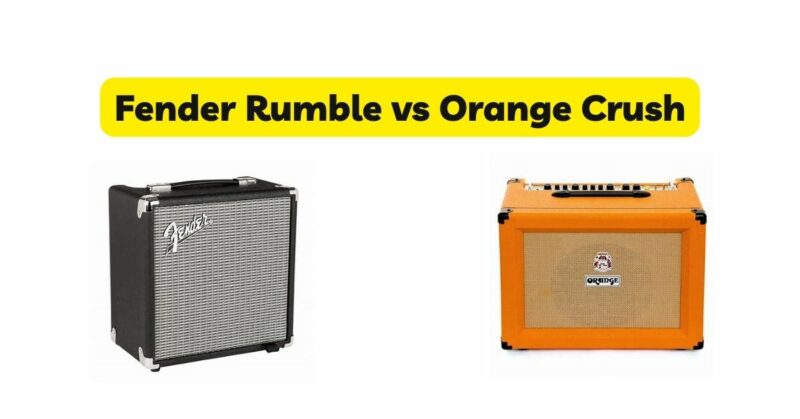
When it comes to choosing the right bass amplifier, Fender and Orange are two highly reputable brands that offer exceptional options. In this article, we will compare the Fender Rumble series and the Orange Crush series to help bass players make an informed decision. Both series have gained popularity among musicians for their distinct sound, reliability, and quality craftsmanship. By examining their features, sound characteristics, and overall performance, we aim to provide a comprehensive comparison of the Fender Rumble and Orange Crush bass amplifiers.
Part 1: Features and Design The Fender Rumble and Orange Crush amplifiers have unique features and designs that set them apart. The Fender Rumble series is known for its lightweight and portable design, making it ideal for gigging musicians. The amplifiers feature rugged construction, providing durability and longevity on the road. The Rumble series offers various models with different power ratings and speaker configurations, catering to different needs and venues.
On the other hand, the Orange Crush series boasts a distinctive vintage-inspired design with its iconic orange-colored tolex covering. The amplifiers are well-built and known for their solid construction. The Crush series offers models with different power outputs and speaker sizes, allowing players to choose based on their preferences and playing requirements.
Part 2: Sound Characteristics When it comes to sound, both the Fender Rumble and Orange Crush series have unique sonic characteristics that appeal to different bass players. The Fender Rumble series is known for its versatility, providing a wide range of tones that suit various musical genres. The amplifiers deliver a clean and punchy sound, with a focus on clarity and articulation. The Rumble series offers a versatile EQ section that allows players to shape their tone and dial in their preferred sound.
On the other hand, the Orange Crush series is revered for its rich, warm, and vintage-inspired tone. The amplifiers produce a distinct midrange growl and a smooth low-end response that complements various musical styles, particularly rock and blues. The Crush series features a simple but effective EQ section that enables players to shape their tone and add character to their sound.
Part 3: Versatility and Additional Features Versatility is an important consideration when choosing a bass amplifier, as it determines the range of musical styles and settings that can be accommodated. The Fender Rumble series excels in versatility, offering a wide array of tones that can adapt to different musical genres. The amplifiers feature built-in overdrive, allowing players to add grit and distortion to their sound when desired. Additionally, some models in the Rumble series offer features such as XLR outputs for direct recording or connecting to a PA system, making them suitable for both live performances and studio sessions.
The Orange Crush series, while known for its vintage-inspired tone, still offers a decent level of versatility. The amplifiers typically have a simple control layout, but they deliver a distinctive sound that works well for rock, blues, and other related genres. While lacking some of the advanced features found in the Rumble series, the Crush amplifiers often include a built-in tuner, headphone output, and an auxiliary input for practicing along with external audio sources.
Conclusion : Choosing between the Fender Rumble and Orange Crush series depends on individual preferences, playing styles, and specific needs. The Fender Rumble series stands out with its versatility, portability, and clean, punchy sound. It offers a wide range of tones, making it suitable for various musical genres and venues. The Orange Crush series, on the other hand, is known for its vintage-inspired tone, rich midrange growl, and solid construction. It caters particularly well to rock and blues players seeking a classic sound.
Ultimately, the choice between the Fender Rumble and Orange Crush bass amplifiers will come down to personal taste, specific musical requirements, and budget considerations. Both series have established themselves as reliable options within their respective price ranges, providing bass players with quality amplification. By carefully evaluating the features, sound characteristics, and versatility of each series, bass players can make an informed decision that aligns with their individual needs and preferences.