
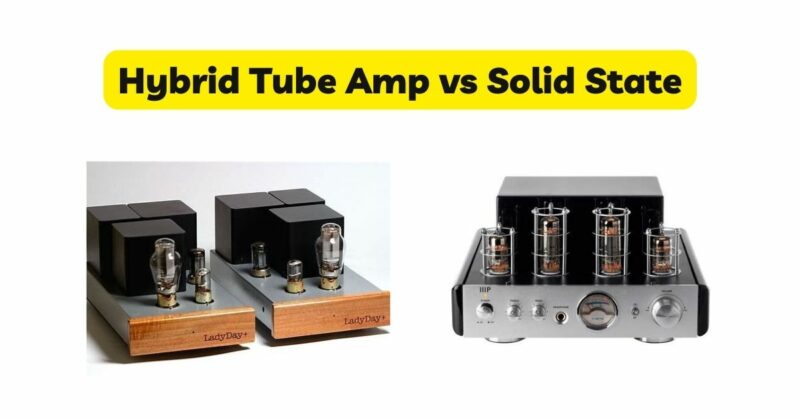
When it comes to amplifiers, two popular choices among audio enthusiasts are hybrid tube amps and solid-state amplifiers. Both options have their unique characteristics, offering different sonic experiences. In this article, we will delve into the world of audio amplification and compare hybrid tube amps with solid-state amplifiers. By understanding the strengths and weaknesses of each, you can make an informed decision when selecting the right amplifier for your audio setup.
Part 1: Understanding Hybrid Tube Amps
- What is a Hybrid Tube Amp?
- A hybrid tube amp combines the warmth and tonal characteristics of vacuum tubes with the stability and efficiency of solid-state components.
- It typically incorporates a tube preamp stage, responsible for signal amplification and adding the signature tube sound, coupled with a solid-state power amp section for efficient power delivery.
- Advantages of Hybrid Tube Amps:
- Warmth and Musicality: Hybrid tube amps are renowned for their warm, lush, and harmonically rich sound. They often provide a more natural and engaging listening experience, particularly with vocals, acoustic instruments, and genres that benefit from a smoother sound reproduction.
- Tube-like Distortion: The tube preamp stage can introduce pleasing harmonic distortion, contributing to a more organic and vintage-like tone.
- Dynamic Range: Hybrid tube amps excel at capturing nuances and delivering a wide dynamic range, ensuring a more expressive and detailed sound performance.
- Limitations of Hybrid Tube Amps:
- Cost: Hybrid tube amps tend to be more expensive than solid-state amplifiers due to the incorporation of vacuum tubes and the associated circuitry.
- Tube Maintenance: Vacuum tubes have a limited lifespan and may require occasional replacement, adding to the overall cost of ownership.
- Power Output: Hybrid tube amps may have lower power output compared to solid-state amplifiers, limiting their suitability for driving power-hungry speakers or large audio setups.
Part 2: Understanding Solid-State Amplifiers
- What is a Solid-State Amplifier?
- A solid-state amplifier utilizes semiconductor devices, such as transistors and integrated circuits, to amplify the audio signal.
- It operates purely on solid-state components, offering a more modern and precise approach to amplification.
- Advantages of Solid-State Amplifiers:
- Accuracy and Transparency: Solid-state amplifiers are known for their accuracy in reproducing audio signals without adding coloration or distortion. They provide a clean and precise sound reproduction.
- Power and Control: Solid-state amplifiers typically offer higher power output, making them suitable for driving demanding speakers and larger audio systems.
- Reliability and Durability: Solid-state amplifiers are generally more robust and less prone to failure compared to vacuum tubes. They require minimal maintenance and offer long-term reliability.
- Limitations of Solid-State Amplifiers:
- Lack of Warmth: Some listeners perceive solid-state amplifiers as colder or more clinical, lacking the warm and euphonic characteristics associated with tube amplification.
- Limited Harmonic Distortion: Solid-state amplifiers produce minimal harmonic distortion, which can be desired in certain musical genres or for listeners seeking a more colored or vintage sound.
- Less Forgiving: Due to their accurate and revealing nature, solid-state amplifiers may expose flaws in poorly recorded or low-quality audio sources.
Part 3: Choosing Between Hybrid Tube Amps and Solid-State Amplifiers
When deciding between a hybrid tube amp and a solid-state amplifier, several factors should be considered:
- Sound Preference: Determine whether you prioritize the warmth, harmonic distortion, and vintage sound of tube amplification or the accuracy, transparency, and power of solid-state amplification.
- Speaker Compatibility: Consider the power requirements of your speakers and ensure that your chosen amplifier can adequately drive them without distortion or strain.
- Budget: Evaluate your budget, as hybrid tube amps often come at a higher price point due to the incorporation of vacuum tubes.
- Room and Application: Assess the intended usage and environment. For smaller spaces or near-field listening, a hybrid tube amp might provide a more intimate and pleasing sound. On the other hand, solid-state amplifiers may be better suited for larger rooms or high-volume listening.
Conclusion : Both hybrid tube amps and solid-state amplifiers offer distinct characteristics and sonic experiences. Hybrid tube amps excel in providing warmth, musicality, and vintage-like distortion, while solid-state amplifiers deliver accuracy, power, and reliability. The choice ultimately depends on your personal preferences, the type of music you listen to, and the requirements of your audio setup. Consider auditioning different options and paying attention to the synergy between your amplifier, speakers, and audio sources. Ultimately, the perfect amplifier is the one that resonates with your ears, enhances your listening pleasure, and brings your favorite music to life.