
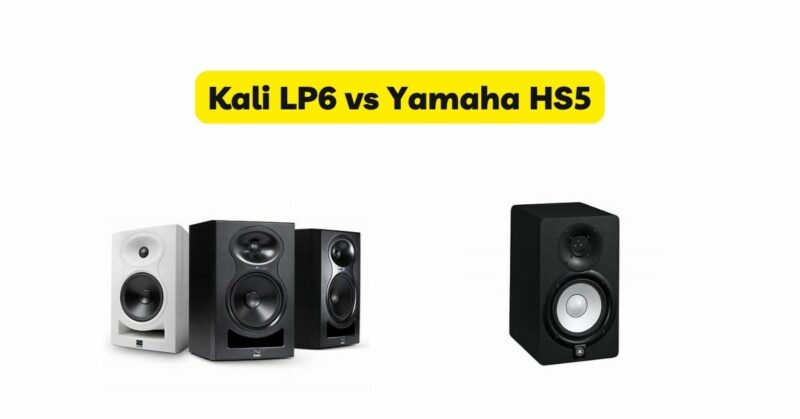
hoosing the right studio monitor is essential for achieving accurate and reliable sound reproduction in your audio production workflow. The Kali LP6 and Yamaha HS5 are two popular options in the mid-range studio monitor market, known for their excellent performance and affordability. In this detailed comparison, we will delve into the features, sound quality, design, and overall value of the Kali LP6 and Yamaha HS5. By the end of this article, you will have a clear understanding of the strengths and differences between these two monitors, helping you make an informed decision for your studio setup.
Design and Build Quality
Both the Kali LP6 and Yamaha HS5 feature a compact and sturdy design suitable for small to medium-sized studios. The LP6 sports a 6.5-inch woven Kevlar woofer, while the HS5 houses a 5-inch cone woofer. Both monitors incorporate a 1-inch silk dome tweeter for accurate high-frequency reproduction. The LP6 boasts a front-firing bass port, while the HS5 utilizes a rear-firing bass port.In terms of build quality, both monitors offer solid construction. The LP6 features an MDF cabinet with rounded edges to minimize diffraction, while the HS5 features a dense MDF enclosure designed to reduce resonance. The LP6 has a sleek and modern appearance, with a slightly curved front baffle, whereas the HS5 adopts a more understated and classic design.
Sound Performance
The sound performance of the Kali LP6 and Yamaha HS5 showcases their unique characteristics and sonic signatures.The LP6 is known for its balanced frequency response and accurate sound reproduction. It delivers a tight and controlled low-end, thanks to the front-firing bass port. The midrange is detailed and transparent, allowing for precise instrument and vocal reproduction. The LP6’s high-frequency response is smooth and extended, offering clarity and airiness to the overall sound. With a well-defined stereo image and a wide sweet spot, the LP6 excels in providing an immersive listening experience.The Yamaha HS5, on the other hand, is celebrated for its exceptional accuracy and reference-quality sound. Its 5-inch woofer offers a tight and punchy low-end response, making it suitable for genres that require precise bass reproduction. The midrange is transparent and detailed, allowing for precise monitoring of instruments and vocals. The HS5’s high-frequency response is smooth and well-extended, providing a balanced and natural sound representation. The HS5’s soundstage and imaging capabilities contribute to accurate stereo imaging, making it an excellent choice for critical listening and mixing tasks.
Features and Connectivity
When it comes to features and connectivity options, the Kali LP6 and Yamaha HS5 offer different approaches.The LP6 features a range of connection options, including balanced XLR and TRS inputs, ensuring compatibility with professional audio equipment. It also provides an unbalanced RCA input for connecting consumer-grade devices. The LP6 includes volume control and high-frequency and low-frequency trim switches on the rear panel, allowing for fine-tuning of the monitor’s response to the listening environment.The Yamaha HS5 offers balanced XLR and TRS inputs, as well as an unbalanced RCA input, providing flexibility in connecting audio sources. The rear panel includes level control and high-trim switches to adjust the monitor’s output according to the room acoustics. The HS5 also features Room Control and High Trim switches, allowing further optimization of the monitor’s response to the listening environment.
Overall Value
Both the Kali LP6 and Yamaha HS5 offer excellent value for their respective price points.The LP6 stands out with its balanced sound, wide sweet spot, and solid build quality. It provides accurate and reliable sound reproduction, making it a great choice for recording, mixing, and mastering applications. The LP6’s additional connectivity options and trim switches add to its versatility, allowing you to tailor the monitor’s response to your studio environment.The Yamaha HS5, known for its reference-quality sound, offers exceptional accuracy and reliability. It is a popular choice among professionals and home studio owners alike. The HS5’s detailed sound reproduction and precise stereo imaging make it an ideal monitor for critical listening and mixing tasks. With its solid build quality and comprehensive connectivity options, the HS5 provides long-lasting performance and versatility.
Conclusion
In conclusion, both the Kali LP6 and Yamaha HS5 are outstanding studio monitors that deliver impressive sound quality and performance. The LP6 offers a balanced and transparent sound reproduction with a wide sweet spot and flexible connectivity options. On the other hand, the HS5 excels in accuracy and reference-quality sound, providing detailed monitoring and precise stereo imaging.Choosing between the Kali LP6 and Yamaha HS5 ultimately comes down to personal preferences and specific requirements. If you prioritize a balanced and versatile monitor with additional connectivity options, the LP6 is an excellent choice. If you seek the utmost accuracy and reference-quality sound reproduction, the HS5 is a compelling option. Whichever monitor you choose, both the Kali LP6 and Yamaha HS5 offer exceptional value and will elevate your audio production experience.