
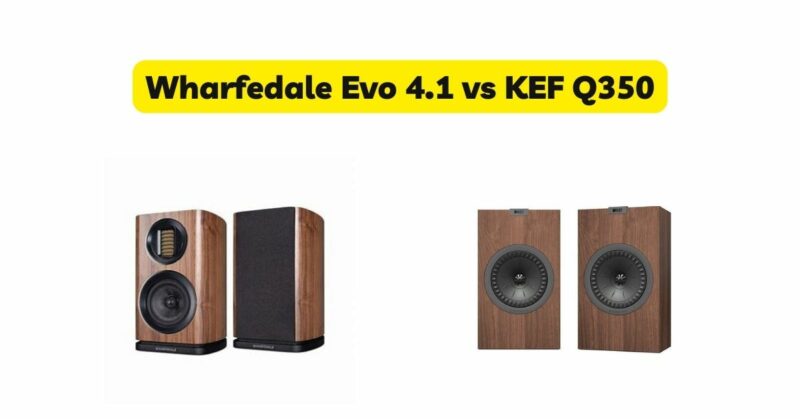
Bookshelf speakers are a popular choice for audiophiles and music enthusiasts seeking high-quality audio performance in a compact form factor. In this detailed comparison, we will explore the features, design, sound quality, and overall performance of two highly regarded bookshelf speakers: the Wharfedale Evo 4.1 and the KEF Q350. By examining their specifications and evaluating their sonic characteristics, we aim to provide valuable insights to help you make an informed decision when choosing between the Wharfedale Evo 4.1 and the KEF Q350 for your audio setup.
Design and Build Quality
Both the Wharfedale Evo 4.1 and the KEF Q350 exhibit excellent craftsmanship, attention to detail, and use high-quality materials to ensure optimal performance and durability.The Wharfedale Evo 4.1 features a classic yet elegant design with a curved cabinet construction that minimizes internal standing waves and resonances. The cabinet is expertly crafted from dense MDF (Medium-Density Fiberboard) to provide a rigid and non-resonant enclosure for the drivers. The Evo 4.1 incorporates a 6.5-inch woven Kevlar mid-bass driver and a 1-inch soft dome tweeter, both designed and engineered by Wharfedale. The drivers are seamlessly integrated into the cabinet to minimize diffraction and enhance the speaker’s overall acoustic performance.The KEF Q350 boasts a sleek and modern design with clean lines and a sturdy build. The cabinet is meticulously engineered using KEF’s renowned Uni-Q driver technology, which positions the 1-inch aluminum dome tweeter concentrically within a 6.5-inch aluminum cone mid-bass driver. This design ensures precise sound dispersion and a wider sweet spot, resulting in a more coherent and accurate soundstage. The Q350’s cabinet is made from high-density fiberboard and is reinforced with internal bracing to minimize vibrations and resonances.
Sound Performance
The Wharfedale Evo 4.1 and the KEF Q350 deliver impressive sound performances, each with its own sonic characteristics and strengths.The Wharfedale Evo 4.1 offers a well-balanced sound signature with a focus on accuracy and detail. The combination of the Kevlar mid-bass driver and soft dome tweeter results in a smooth and natural frequency response. The Evo 4.1 excels in reproducing vocals and instruments with clarity and precision, while maintaining a cohesive and engaging soundstage. The bass response is tight and controlled, providing a solid foundation without overwhelming the rest of the frequency range. Overall, the Evo 4.1’s sound presentation is dynamic, immersive, and enjoyable across various music genres.In comparison, the KEF Q350 delivers a more forward and energetic sound profile. The Uni-Q driver array enhances the Q350’s ability to create a wide and cohesive soundstage, with precise imaging and instrument placement. The Q350 exhibits excellent detail retrieval, allowing intricate nuances in music to be heard with clarity. The bass response is punchy and well-defined, providing a satisfying low-end impact. The Q350’s sound signature is lively, engaging, and particularly suitable for listeners who appreciate a more upfront and energetic presentation.
Features and Connectivity
Both the Wharfedale Evo 4.1 and the KEF Q350 offer a range of features and connectivity options to ensure compatibility with various audio systems and setups.The Wharfedale Evo 4.1 features a rear-firing bass port, which allows for more flexible speaker placement options while minimizing port turbulence. The speaker also offers bi-wire and bi-amp terminals, providing the flexibility to enhance the speaker’s performance by using separate amplification for the mid-bass driver and the tweeter. The Evo 4.1’s sensitivity rating of 88dB and impedance of 6 ohms make it easy to drive with a wide range of amplifiers.The KEF Q350 incorporates KEF’s unique Uni-Q driver technology, which enhances the speaker’s dispersion characteristics and provides a wider sweet spot for optimal listening enjoyment. The Q350 features a front-firing port, allowing for easier placement near walls or in bookshelf environments. The speaker has a sensitivity rating of 87dB and an impedance of 8 ohms, making it compatible with a variety of amplifiers. The Q350 also offers bi-wire and bi-amp capabilities for those who want to further optimize their audio system’s performance.
Conclusion
In the comparison between the Wharfedale Evo 4.1 and the KEF Q350, both speakers showcase impressive performance and deliver a rewarding listening experience. The Evo 4.1 excels in its balanced sound signature, accuracy, and detail retrieval, making it an excellent choice for audiophiles who value transparency and clarity. On the other hand, the Q350 offers a more energetic and forward sound presentation, with precise imaging and a punchy bass response, catering to listeners who prefer a dynamic and engaging listening experience.When deciding between the Wharfedale Evo 4.1 and the KEF Q350, it is crucial to consider your personal preferences, listening habits, and the specific characteristics you prioritize in a bookshelf speaker. Additionally, factors such as room size, amplifier compatibility, and budget should also be taken into account.Ultimately, auditioning both speakers in person and comparing them within your own listening environment can provide valuable insights to help you make an informed decision. Both the Wharfedale Evo 4.1 and the KEF Q350 offer exceptional performance, ensuring that your music and audio content will be reproduced with fidelity and enjoyment.