
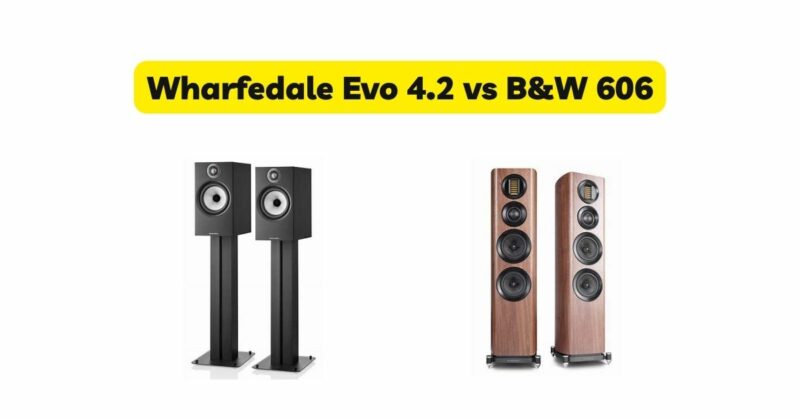
Bookshelf speakers offer a convenient and space-saving solution for those who seek high-quality audio in a compact form. In this detailed comparison, we will explore the features, performance, and design of two exceptional bookshelf speakers: the Wharfedale Evo 4.2 and the B&W 606. By examining their specifications, sound characteristics, and overall value, we aim to help you make an informed decision about which speaker is best suited to your audio preferences and listening environment.
Design and Build Quality
Both the Wharfedale Evo 4.2 and the B&W 606 exhibit impressive design aesthetics and solid build quality, reflecting the brands’ commitment to craftsmanship and audio excellence.The Wharfedale Evo 4.2 features a contemporary design, with a beautifully finished cabinet that exudes elegance and sophistication. The speaker is available in a range of attractive finishes, allowing it to seamlessly blend into any room decor. The Evo 4.2 incorporates a curved cabinet design that minimizes internal resonances and vibrations, resulting in cleaner and more accurate sound reproduction. It employs high-quality drivers, including a woven Kevlar midrange driver and a soft-dome tweeter, delivering a balanced and detailed sound signature.In comparison, the B&W 606 showcases B&W’s renowned design philosophy, combining simplicity and elegance. The speaker cabinet is built using premium materials and advanced construction techniques, ensuring excellent rigidity and minimizing unwanted resonances. The 606 utilizes B&W’s signature Continuum cone technology for its midrange driver, which offers enhanced clarity and reduced distortion. It also features a Decoupled Double Dome tweeter, delivering B&W’s characteristic detailed and extended high-frequency response.
Sound Performance
The Wharfedale Evo 4.2 and the B&W 606 offer distinct sound characteristics, catering to different audio preferences and room sizes.The Wharfedale Evo 4.2 delivers a rich and engaging soundstage, with a particular emphasis on musicality. The speaker offers a balanced tonal response, with well-defined bass, clear midrange, and detailed high frequencies. The Evo 4.2’s sound signature leans slightly towards warmth, providing a pleasant and immersive listening experience across various music genres. It excels in reproducing vocals and instruments with accuracy and transparency.On the other hand, the B&W 606 focuses on accuracy and precision, delivering a more neutral and detailed sound reproduction. The speaker’s Continuum cone technology ensures excellent midrange performance, offering exceptional clarity and articulation. The Decoupled Double Dome tweeter provides extended high-frequency response with remarkable detail and resolution. The overall sound presentation of the 606 is controlled, balanced, and highly detailed, making it an excellent choice for critical listening and audiophile enthusiasts.
Compatibility and Placement
Both the Wharfedale Evo 4.2 and the B&W 606 offer versatility in terms of compatibility with various audio systems and placement options.The Wharfedale Evo 4.2 is designed to work seamlessly with a range of amplifiers and receivers, making it suitable for different setups. Its compact size and rear-ported design allow for flexibility in placement, including bookshelves, stands, or wall mounting. The Evo 4.2’s wide dispersion characteristics ensure a spacious soundstage and optimal imaging, enhancing the listening experience in various room environments.Similarly, the B&W 606 offers compatibility with a wide range of amplification options. Its compact size and rear-ported design enable it to be placed closer to walls without compromising bass performance. The 606’s controlled dispersion characteristics ensure accurate sound imaging and a focused listening experience. It is equally at home in a stereo setup or as part of a home theater system, providing flexibility for different audio configurations.
Value and Price
When considering the value proposition of the Wharfedale Evo 4.2 and the B&W 606, it’s important to assess their performance and features relative to their respective price points.The Wharfedale Evo 4.2 offers exceptional value for its price range. It combines solid build quality, attractive design, and a balanced sound signature that is engaging and enjoyable across a wide range of music genres. The Evo 4.2’s affordability makes it an enticing option for both entry-level enthusiasts and those seeking a high-quality bookshelf speaker without stretching their budget.In contrast, the B&W 606 represents a higher price bracket, reflecting B&W’s reputation for premium audio products. It justifies its higher cost with meticulous craftsmanship, refined aesthetics, and exceptional sound reproduction. The 606’s advanced driver technology, along with B&W’s engineering expertise, delivers an accurate and detailed sound presentation that caters to discerning audiophiles and those who demand uncompromising performance.
Conclusion
In conclusion, the Wharfedale Evo 4.2 and the B&W 606 are both outstanding bookshelf speakers that excel in different areas. The Evo 4.2 offers an attractive combination of design, build quality, and balanced sound reproduction, making it an excellent choice for music enthusiasts who seek an engaging and versatile listening experience.On the other hand, the B&W 606 embodies B&W’s commitment to precision engineering and delivers exceptional clarity and detail in sound reproduction. Its refined design, accurate imaging, and meticulous craftsmanship make it a top-tier option for audiophiles and those who prioritize sonic accuracy and immersion.By carefully considering factors such as design aesthetics, sound performance, compatibility, and overall value, you can make an informed decision about whether the Wharfedale Evo 4.2 or the B&W 606 is the ideal bookshelf speaker to enhance your audio system and provide a captivating and immersive listening experience.