
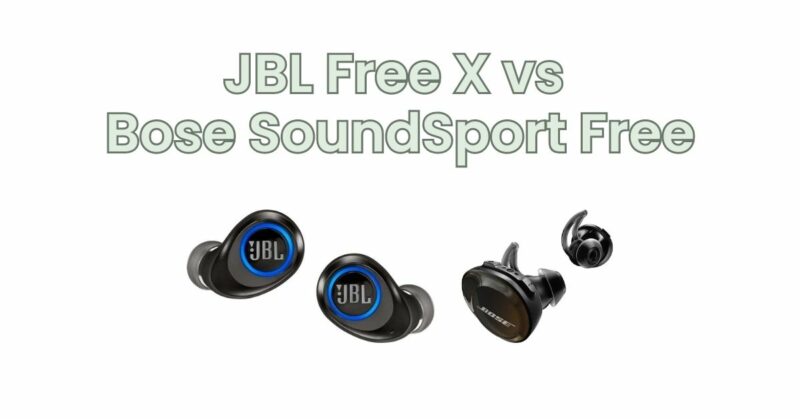
JBL and Bose are renowned audio brands that have made a name for themselves in the true wireless earbuds market. In this article, we will compare two popular models: the JBL Free X and the Bose SoundSport Free. Both earbuds offer impressive features, sound quality, comfort, and convenience. Join us as we explore their key attributes, audio performance, battery life, fit, durability, and overall value, helping you make an informed decision when choosing between these two models.


Design and Comfort: The JBL Free X and the Bose SoundSport Free exhibit different design approaches. The Free X features a compact and lightweight design, making it comfortable to wear for extended periods. The earbuds come with multiple ear tip sizes to ensure a secure and personalized fit. The SoundSport Free, on the other hand, has a bulkier design that may not be as discreet as the Free X. However, the earbuds are designed with an emphasis on stability during physical activities, and they come with three sizes of StayHear+ Sport tips to provide a secure fit during workouts. The choice between the two will depend on personal comfort preferences and intended usage scenarios.
Sound Quality: Both the Free X and the SoundSport Free offer impressive sound quality, providing an enjoyable listening experience. The Free X delivers JBL’s signature sound, which emphasizes deep bass and vibrant mids and highs. The earbuds offer a punchy and energetic sound profile, making them suitable for bass-driven music genres. The SoundSport Free, on the other hand, offers a balanced sound signature with clear and detailed audio reproduction across the frequency range. It provides a more neutral sound profile that caters to a wide range of music genres. The choice between the two will depend on personal sound preferences and the type of music you enjoy.
Battery Life and Charging: Battery life is an important consideration for true wireless earbuds, and both models offer decent battery performance. The Free X provides up to 4 hours of continuous playback on a single charge, and the charging case provides an additional 20 hours of battery life. This allows for extended use throughout the day without needing to find a power source. The SoundSport Free offers up to 5 hours of battery life per charge, with the charging case providing an additional 10 hours of playtime. Both models provide sufficient battery life for most users, but the Free X has a slight edge in terms of total battery life.
Durability and Sweat Resistance: Durability and sweat resistance are crucial factors, especially for sports-oriented earbuds. The Free X features an IPX7 rating, which means they are waterproof and sweat-resistant, making them suitable for intense workouts or outdoor activities. The SoundSport Free also offers an IPX4 rating, providing protection against sweat and light splashes. While the SoundSport Free is not fully waterproof, it can withstand the rigors of most exercise routines. Both earbuds are built to withstand daily use, but if you require full waterproofing, the Free X is the better choice.
Additional Features and Connectivity: The Free X and the SoundSport Free come with useful features to enhance the user experience. The Free X offers intuitive touch controls on the earbuds, allowing you to easily control playback, adjust volume, and answer calls. The SoundSport Free utilizes physical buttons for playback control, which may be preferred by some users. Both models offer Bluetooth connectivity for wireless audio streaming and call handling, ensuring seamless compatibility with most Bluetooth-enabled devices.
When comparing the JBL Free X and the Bose SoundSport Free, both true wireless earbuds offer impressive features, sound quality, and convenience. The Free X provides a compact design, JBL’s signature sound, and longer total battery life. The SoundSport Free prioritizes stability during physical activities, offers balanced audio reproduction, and is sweat-resistant. Consider your comfort preferences, sound preferences, battery life needs, durability requirements, and intended usage scenarios to make an informed decision based on your specific needs. Ultimately, both earbuds provide solid options for wireless audio enjoyment, and you can’t go wrong with either choice.