
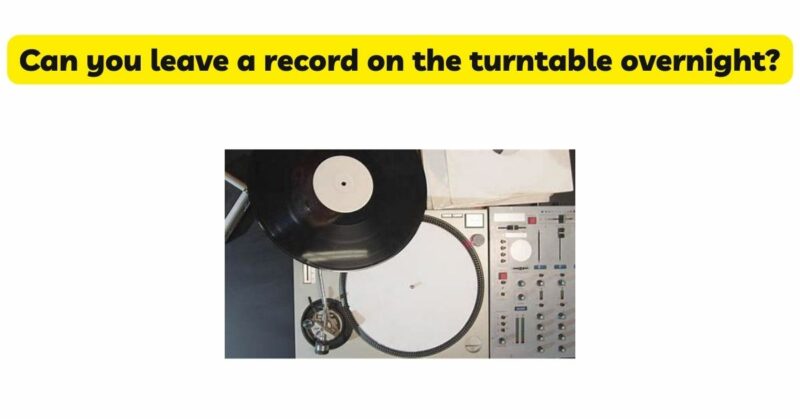
Vinyl records are not only cherished for their unique sound quality but also for the tactile experience and the joy of collecting. However, questions often arise about whether it is safe to leave a record on the turntable overnight. In this article, we will explore the potential implications and considerations of leaving records on the turntable for extended periods. By understanding the factors at play and adopting proper practices, we can ensure the longevity and optimal condition of our vinyl records.
I. Environmental Factors
Environmental conditions play a crucial role in the well-being of vinyl records. Here are some key factors to consider:
- Temperature and Humidity: Fluctuations in temperature and humidity can affect the vinyl’s structural integrity. Extreme heat or cold can cause warping, while high humidity levels can promote mold growth or damage the vinyl. It is important to maintain a stable environment for records, regardless of whether they are on the turntable or stored elsewhere.
- Sunlight Exposure: Direct sunlight can have detrimental effects on vinyl records. UV rays can fade album artwork, and excessive heat generated by sunlight can warp the vinyl. If your turntable is positioned in direct sunlight, it is advisable to shield the records from harmful UV rays.
II. Turntable Mechanics and Potential Risks
Leaving a record on the turntable overnight involves factors related to the mechanics of the turntable and potential risks. Here are some considerations:
- Motor Wear: Depending on the turntable’s design and quality, leaving the motor running continuously for an extended period may result in unnecessary wear on the turntable’s components. This wear can potentially affect playback performance and introduce additional noise or vibrations.
- Record Stability: Leaving a record on the turntable for an extended period can lead to potential instability. Vibrations from the motor or external sources can cause the record to shift or slide, increasing the risk of scratches or damage.
- Dust Accumulation: Exposing records to the open environment on the turntable can result in dust accumulation over time. Dust particles can settle on the record’s surface and within the grooves, affecting sound quality and potentially causing damage during playback.
III. Risks of Surface Contamination
Leaving a record on the turntable overnight can increase the risk of surface contamination. Here are some potential risks to consider:
- Dust and Debris: As mentioned earlier, leaving a record exposed on the turntable can attract dust and debris from the surrounding environment. These particles can settle on the surface or get lodged in the grooves, potentially affecting playback and causing additional wear on the record.
- Static Build-up: Extended exposure to the turntable’s platter can increase the potential for static build-up on the record’s surface. Static electricity can attract dust and cause crackling or popping sounds during playback.
IV. Best Practices and Alternatives
To ensure the longevity and optimal condition of vinyl records, it is advisable to follow best practices and consider alternatives to leaving records on the turntable overnight. Here are some suggestions:
- Proper Storage: When not actively playing a record, it is recommended to store it in its protective sleeve or cover. This helps shield the record from dust, sunlight, and potential accidents or mishaps.
- Regular Cleaning: Establish a routine for cleaning records before playing them. Regular cleaning helps maintain the integrity of the vinyl and ensures a clean and enjoyable listening experience.
- Mindful Listening Sessions: Instead of leaving a record on the turntable overnight, set aside dedicated listening sessions where you can fully engage with the music. This not only reduces the risks associated with prolonged turntable usage but also enhances the overall experience.
- Turntable Timer or Auto-Stop Feature: Some modern turntables come equipped with timers or auto-stop features that allow for a predetermined playback duration. Utilizing these features can help prevent unnecessary wear on the turntable and minimize potential risks associated with extended playtime.
Conclusion
Leaving records on the turntable overnight can introduce potential risks such as environmental factors, mechanical wear, surface contamination, and dust accumulation. While the impact may vary depending on factors such as the turntable design, environmental conditions, and record care, it is generally advisable to adopt best practices to ensure the longevity and optimal condition of vinyl records. Proper storage, regular cleaning, and mindful listening sessions can help preserve the beauty of vinyl records and minimize potential risks. Remember, the joy of vinyl lies not only in the music but also in the care and appreciation of these unique musical artifacts.