
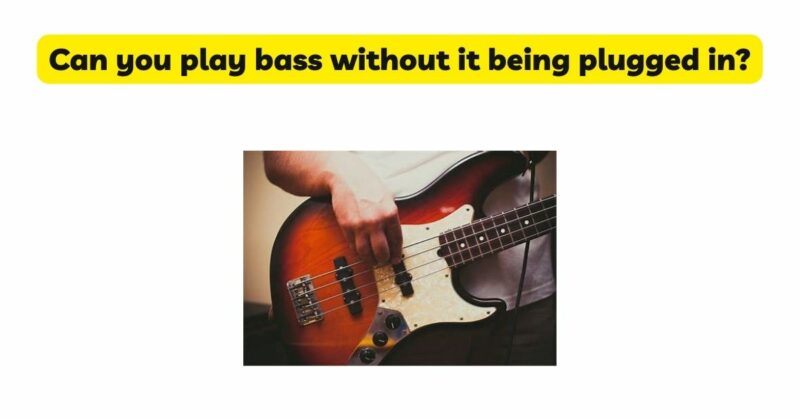
When we think of playing the bass guitar, we often envision a powerful sound amplified through speakers. However, there are times when playing the bass unplugged, without being plugged into an amplifier or a sound system, can be both necessary and rewarding. In this article, we delve into the world of playing bass guitar without being plugged in and explore the techniques, benefits, and creative opportunities it offers. By understanding the instrument’s natural sound, exploring alternative playing techniques, and considering the limitations and advantages, we aim to showcase the unique experience of playing bass guitar unplugged and its potential for musical expression.
I. Tapping into the Natural Sound of the Bass Guitar
Playing the bass guitar unplugged allows musicians to tap into the instrument’s natural sound, emphasizing its acoustic qualities. Here are a few aspects to consider:
- Resonance and Tone: When played unplugged, the bass guitar’s sound is shaped by its natural resonance. The vibrations of the strings resonate through the body, producing a warm and organic tone. This allows for a more intimate and natural sound experience.
- Dynamics and Expressiveness: Playing unplugged encourages bassists to focus on dynamics and expressiveness. Without the amplification, nuances in playing techniques, such as fingerstyle, slapping, and palm muting, become more apparent, allowing for greater control over dynamics and subtle variations in tone.
- Interaction with the Instrument: Playing unplugged provides a tactile and direct connection with the instrument. Bassists can feel the vibrations of the strings and the instrument’s body, fostering a deeper physical and musical relationship.
II. Alternative Playing Techniques for Unplugged Bass
When playing bass guitar unplugged, exploring alternative playing techniques can enhance the instrument’s sound and musical possibilities. Consider the following techniques:
- Fingerstyle and Thumb Slap: Fingerstyle playing is a popular technique among bassists, allowing for precise note articulation and control. Using the thumb to create percussive slaps on the strings adds rhythmic interest and emphasizes the instrument’s natural projection.
- Harmonics: Harmonics are produced by lightly touching the strings at specific points, creating bell-like tones. Experimenting with harmonics on an unplugged bass guitar can add ethereal and expressive elements to your playing.
- Percussive Elements: Unplugged playing provides an opportunity to explore percussive elements on the bass guitar. Incorporating techniques like tapping, popping, and slapping the strings can add rhythmic complexity and create a percussive groove.
- Extended Techniques: Unplugged bass playing allows for the exploration of extended techniques such as fretless slides, string buzzing, and bowing (using a bow). These techniques can unlock unique timbres and expand the sonic possibilities of the instrument.
III. Benefits and Creative Opportunities
Playing bass guitar unplugged offers several benefits and creative opportunities. Let’s explore some of them:
- Portability and Accessibility: Playing unplugged eliminates the need for amplification equipment, making it a portable and accessible option. Bassists can pick up their instrument and play anywhere without the need for power outlets or sound systems.
- Intimate Performances and Practice: Unplugged bass playing lends itself well to intimate performances and practice sessions. It allows for a closer connection with the instrument, providing a more personal and introspective musical experience.
- Song Arrangements and Adaptations: Unplugged playing encourages bassists to experiment with song arrangements and adaptations. By reimagining and rearranging songs for the unplugged context, bassists can bring new life and creative interpretations to familiar tunes.
- Musical Collaboration: Unplugged bass playing can facilitate musical collaboration in small acoustic settings or jam sessions. It allows for more organic and spontaneous musical interactions, promoting communication and improvisation with other musicians.
Conclusion
Playing the bass guitar unplugged, without amplification, offers a unique and rewarding experience for bassists. It allows for a closer connection with the instrument’s natural sound, emphasizes dynamics and expressiveness, and encourages exploration of alternative playing techniques. Unplugged playing opens up creative opportunities, promotes musical intimacy, and enables bassists to showcase the instrument’s versatility in different musical contexts. Whether it’s for personal practice, small acoustic performances, or collaborative jam sessions, playing bass guitar unplugged invites a deeper exploration of the instrument’s acoustic qualities and fosters a more direct and intimate musical connection.