
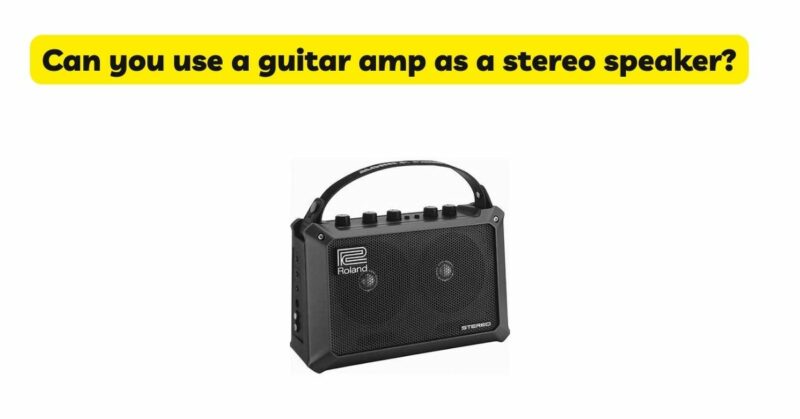
Guitar amps are primarily designed for amplifying the sound of electric guitars, but their versatility extends beyond their intended purpose. Many guitarists wonder if they can repurpose their trusty guitar amp as a stereo speaker for listening to music or as part of a home audio setup. In this article, we will delve into the possibilities and considerations of using a guitar amp as a stereo speaker, exploring its advantages, limitations, and potential alternatives.
Understanding Guitar Amps: Before diving into the topic, it’s important to understand the fundamental differences between guitar amps and conventional stereo speakers. Guitar amps are specifically designed to amplify the unique frequencies and characteristics of electric guitars. They are optimized for handling the dynamic range and tonal nuances of guitar signals, often with built-in equalization controls and effects to shape the sound.
- Compatibility and Connectivity: One of the key considerations when using a guitar amp as a stereo speaker is the compatibility and connectivity options. Guitar amps typically have a single mono input designed for the instrument’s output. This means they may not have the necessary inputs, such as RCA or 3.5mm jacks, to connect multiple audio sources in stereo. Therefore, using a guitar amp as a stereo speaker may require additional adapters or cables to split the stereo signal and connect it to the amp.
- Frequency Response and Sound Reproduction: Another important factor to consider is the frequency response and sound reproduction capabilities of a guitar amp. Unlike dedicated stereo speakers that aim for a balanced and accurate frequency response across the entire audible spectrum, guitar amps are designed to emphasize certain frequencies relevant to electric guitars. This means that using a guitar amp as a stereo speaker may result in altered or colored sound reproduction, with a particular emphasis on the midrange frequencies that guitars typically produce.
- Power Handling and Wattage: Power handling is another critical aspect to consider when repurposing a guitar amp as a stereo speaker. Guitar amps are usually designed to handle lower wattage outputs compared to home stereo systems. Therefore, the power output of a guitar amp may not be sufficient to drive larger speakers or deliver the desired volume levels for a stereo listening experience. It’s important to consider the wattage requirements of the speakers and match them with the power output capabilities of the amp to ensure optimal performance and avoid potential damage to the amp or speakers.
- Tone Controls and EQ: Guitar amps often come with built-in tone controls and EQ settings that are tailored for guitar signals. While these controls can be useful for shaping the sound of an electric guitar, they may not provide the desired level of tonal accuracy and control when using the amp as a stereo speaker. The EQ settings optimized for guitar may not translate well to music playback, potentially affecting the overall sound quality and balance.
- Alternatives to Consider: While using a guitar amp as a stereo speaker is possible, it’s worth considering alternative options that are specifically designed for stereo sound reproduction. Dedicated stereo speakers or powered studio monitors offer a more accurate and balanced frequency response, ensuring faithful sound reproduction across the entire audio spectrum. These speakers are designed to handle stereo signals, provide better power handling, and offer greater flexibility in terms of connectivity options.
Conclusion: Using a guitar amp as a stereo speaker is technically possible, but it comes with limitations and considerations. While it may be a convenient solution for casual listening or small spaces, the altered frequency response, limited connectivity options, and potential mismatch in power handling should be taken into account. For a more accurate and immersive stereo listening experience, dedicated stereo speakers or studio monitors are recommended. They are purpose-built for stereo sound reproduction, providing better frequency response, power handling, and connectivity options, ensuring that you can enjoy your music with clarity and fidelity.