
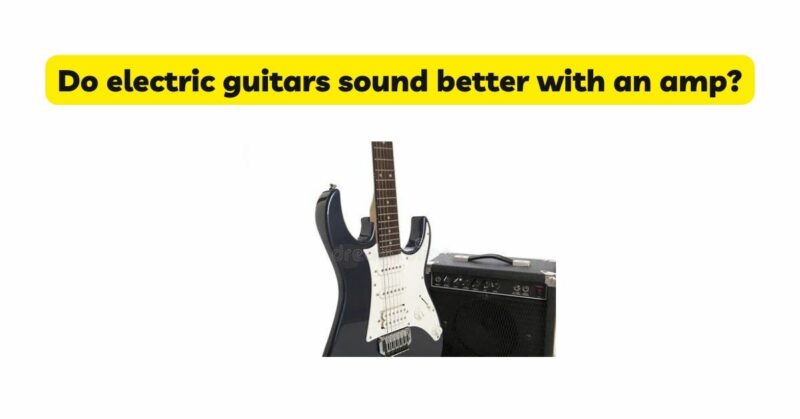
The electric guitar has revolutionized music with its distinctive sound and versatility. One of the key components in harnessing the full potential of an electric guitar is the amplifier. Amplifiers not only increase the volume but also shape the tone, add effects, and contribute to the overall sonic experience. But do electric guitars truly sound better with an amp? In this article, we will explore the significance of amplification and discuss the factors that contribute to the enhanced sound of electric guitars when paired with an amplifier. Whether you’re a beginner guitarist or an experienced player, read on to uncover the impact of amplification on the electric guitar’s sonic landscape.
The Role of Amplifiers in Electric Guitar Sound: Amplifiers play a vital role in the world of electric guitars. They take the raw electrical signal generated by the guitar’s pickups and amplify it, bringing the sound to audible levels. Additionally, amplifiers shape the tone through equalization controls, offer various effects such as distortion, overdrive, reverb, and modulation, and provide the necessary power to project the sound to an audience. Amplifiers enhance the natural characteristics of the electric guitar, allowing players to achieve the desired tone and create a signature sound.
Enhanced Volume and Projection: One of the primary benefits of using an amplifier with an electric guitar is the increased volume and projection. Amplifiers can significantly boost the guitar’s output, allowing it to cut through a mix of instruments in a band setting or fill a larger venue with its sound. The amplified volume ensures that every note and nuance is clearly heard, providing a commanding presence on stage or in a recording.
Tonal Control and Customization: Amplifiers offer a range of tone-shaping controls that allow guitarists to customize their sound. Bass, mid, and treble knobs, along with other EQ options, enable precise adjustments to the frequency response, allowing players to sculpt their desired tone. This level of control is crucial in achieving the right balance and achieving the intended sonic character. Amplifiers also often provide additional tone-shaping options like presence, resonance, and contour controls, further expanding the range of possibilities for tonal customization.
Effects and Sonic Versatility: Amplifiers are known for their ability to add various effects to the electric guitar’s sound. Whether it’s the crunchy distortion of a rock riff, the shimmering ambiance of reverb, or the soaring sustain of delay, these effects contribute to the sonic versatility of the electric guitar. Amplifiers with built-in effects or effects pedals connected to the amp offer endless creative possibilities, allowing guitarists to explore different genres, styles, and moods with ease. These effects can transform the sound of an electric guitar, adding depth, character, and texture to the playing experience.
Sustain and Dynamic Expression: Amplifiers play a crucial role in enhancing the sustain and dynamic expression of an electric guitar. The combination of amplification and effects can extend the natural decay of the notes, allowing for longer sustain and more expressive playing. Additionally, amplifiers respond to the nuances of a player’s technique, providing dynamic sensitivity that translates every touch and pick attack into a varied and responsive sound. This responsiveness contributes to the expressiveness and emotiveness that electric guitars are known for.
Live Performance and Recording Benefits: Amplifiers are essential for live performances and recording sessions. In a live setting, amplifiers ensure that the electric guitar’s sound is projected to the audience, providing the necessary volume and clarity for a memorable performance. Amplifiers are also commonly used in recording studios to capture the true essence of the electric guitar. They allow for microphone placement and offer a direct connection to the recording console, ensuring that the guitar’s sound is captured accurately and can be further shaped during the mixing process.
Alternative Amplification Solutions: While amplifiers play a significant role in enhancing the sound of electric guitars, there are alternative amplification solutions available that cater to different needs. Digital modeling technology has progressed significantly, allowing for amp simulators and software plugins that can emulate the sound and feel of various amplifiers. These alternatives provide convenience, flexibility, and a wide range of options for tone shaping and effects. Additionally, headphone amplifiers and direct recording interfaces allow for silent practice or direct recording without the need for a full-blown amplifier setup.
Conclusion: While electric guitars can produce sound without amplification, they truly come alive and sound better when paired with an amplifier. Amplifiers provide enhanced volume, projection, tonal control, and customization options. They offer a wide range of effects and contribute to the sonic versatility of the electric guitar. Amplifiers also enhance sustain, dynamic expression, and responsiveness, adding depth and emotiveness to the playing experience. Whether in live performances or recording sessions, amplifiers ensure that the electric guitar’s sound is projected accurately and can be captured effectively. While alternative amplification solutions exist, the traditional amplifier remains a cornerstone in unlocking the full sonic potential of the electric guitar. So, plug in, turn up the volume, and explore the endless possibilities that an amplifier brings to your electric guitar journey.