
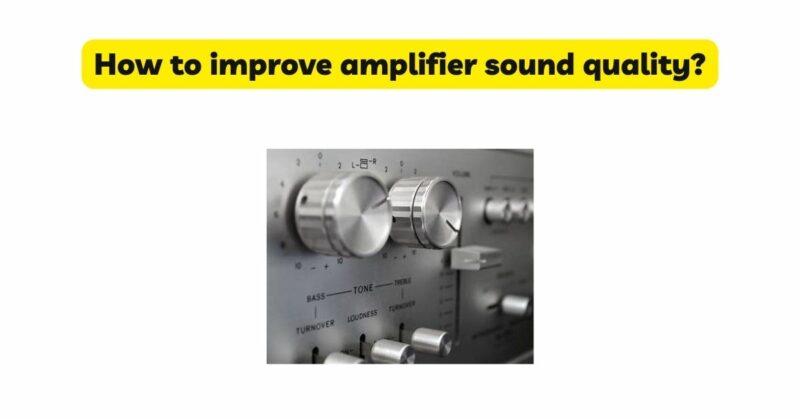
The sound quality of your amplifier plays a crucial role in shaping your overall guitar tone. While purchasing a high-quality amplifier is essential, there are several steps you can take to further enhance its sound quality. In this article, we explore practical techniques and tips that will help you maximize the sonic potential of your amplifier. From optimizing settings and utilizing tone-shaping tools to addressing room acoustics and exploring external enhancements, we delve into the strategies that can elevate your amplifier sound quality and take your guitar playing experience to the next level.
I. Optimize Amplifier Settings
Properly configuring your amplifier settings is fundamental to achieving optimal sound quality. Here are some key areas to focus on:
- Gain and Volume: Find the balance between gain and volume to avoid excessive distortion or muddiness. Adjust the gain settings to achieve the desired level of saturation while maintaining clarity.
- EQ Controls: Experiment with the amplifier’s equalizer (EQ) controls to shape your tone. Tweak the bass, midrange, and treble frequencies to achieve the desired tonal balance and compensate for any inherent deficiencies in your playing environment.
- Presence and Resonance: Explore the presence and resonance controls if your amplifier has them. These settings can add depth and definition to your sound, enhancing overall clarity and projection.
II. Utilize Tone-Shaping Tools
Take advantage of various tone-shaping tools and accessories to further enhance your amplifier sound quality. Consider the following:
- Pedals and Effects: Incorporate external pedals and effects into your signal chain to expand your tonal possibilities. Experiment with overdrive, modulation, delay, and other effects to add depth, texture, and character to your sound.
- Speaker Cabinets and Impedance Matching: The speaker cabinet you use can significantly impact your amplifier’s sound. Experiment with different speaker cabinets and ensure proper impedance matching between the amplifier and the cabinet for optimal performance.
- Speaker Placement and Positioning: The placement and positioning of your amplifier’s speakers can greatly affect the sound quality. Experiment with speaker placement to find the sweet spot where the sound is balanced, focused, and properly dispersed.
III. Address Room Acoustics
The acoustic properties of your playing environment have a significant impact on amplifier sound quality. Consider the following steps to optimize your room acoustics:
- Room Treatment: Apply acoustic treatment to your practice or recording space to minimize unwanted reflections and reverberations. Absorptive panels, diffusers, and bass traps can help control the room’s acoustic characteristics and improve sound clarity.
- Speaker Isolation: Isolate your amplifier’s speakers from the floor or other surfaces to minimize vibrations and resonance that can color the sound. Using speaker stands or isolation pads can help achieve cleaner and more accurate sound reproduction.
- Room Positioning: Experiment with the positioning of your amplifier within the room. Avoid placing it too close to walls or corners, as these locations can introduce unwanted bass buildup and affect overall sound quality. Test different positions to find the spot that offers the best balance and sonic clarity.
IV. External Enhancements
Consider external enhancements that can further enhance your amplifier sound quality:
- Upgrading Tubes or Solid-State Components: Depending on your amplifier type, upgrading tubes or solid-state components can yield noticeable improvements in sound quality. Consult with an experienced technician to explore suitable options for your specific amplifier model.
- Speaker Upgrades: Upgrading your amplifier’s speakers can significantly impact the overall sound quality. Research and choose speakers that match your tonal preferences and playing style, ensuring compatibility with your amplifier’s power rating.
- Power Conditioning and Surge Protection: Protecting your amplifier from power fluctuations and surges is essential. Consider investing in a power conditioner and surge protector to ensure a stable and clean power supply, which can result in improved sound quality and component longevity.
Conclusion
Enhancing the sound quality of your amplifier requires attention to detail, experimentation, and an understanding of the factors that influence sonic performance. By optimizing amplifier settings, utilizing tone-shaping tools, addressing room acoustics, and exploring external enhancements, you can unlock the full potential of your amplifier and elevate your guitar playing experience. Remember that the pursuit of better sound quality is a continuous process, and personal preferences may vary. Embrace the journey of sonic exploration, trust your ears, and fine-tune your setup to create a sound that resonates with your musical vision. With patience and persistence, you can achieve a truly remarkable amplifier sound quality that inspires and captivates both you and your audience.