
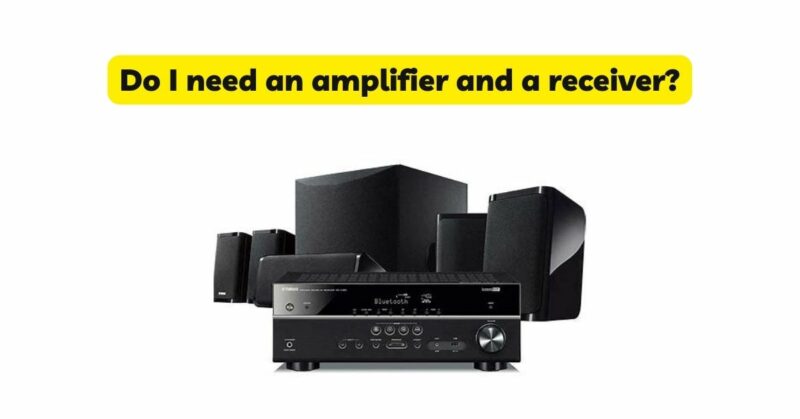
Amplifiers and receivers are two of the most important components in a home audio system. But what’s the difference between the two, and do you really need both?
What is an amplifier?
An amplifier is a device that takes a low-level audio signal and increases its power so that it can drive speakers. The amount of power that an amplifier can provide is measured in watts. The more watts an amplifier has, the louder it can play.
What is a receiver?
A receiver is a device that combines an amplifier with a number of other features, such as a tuner, a preamp, and a variety of inputs and outputs. Receivers are typically used in home theater systems, where they are responsible for processing and amplifying audio and video signals.
Do I need both an amplifier and a receiver?
In most cases, you will only need one or the other. If you are building a simple stereo system, you can get away with using just an amplifier. However, if you are building a more complex home theater system, you will need a receiver.
When do I need a receiver?
There are a few reasons why you might need a receiver instead of an amplifier.
- If you want to connect multiple sources: Receivers typically have a variety of inputs, such as HDMI, optical, and coaxial, which allow you to connect multiple sources to your home theater system.
- If you want to use surround sound: Receivers can decode and amplify surround sound signals, which is necessary for a true home theater experience.
- If you want a remote control: Most receivers come with a remote control, which makes it easy to control the volume, input, and other settings of your home theater system.
When do I need an amplifier?
There are a few reasons why you might need an amplifier instead of a receiver.
- If you want more power: Receivers typically have less power than dedicated amplifiers. If you have a large listening space or you want to play your music at very loud volumes, you will need a more powerful amplifier.
- If you want more features: Some amplifiers have additional features that are not found on receivers, such as a built-in phono stage or a headphone amplifier.
- If you want a simpler system: Amplifiers are typically easier to set up and use than receivers. If you don’t need all of the features that a receiver offers, an amplifier may be a better option for you.
Conclusion
Whether or not you need an amplifier and a receiver depends on your individual needs and preferences. If you are not sure which one is right for you, it is a good idea to consult with an audio expert. They can help you choose the right components for your home audio system.
Here are some additional tips for choosing an amplifier and/or receiver:
- Consider the size of your listening space: If you have a large listening space, you will need an amplifier or receiver with more power.
- Think about the type of speakers you have: Some amplifiers and receivers are designed for specific types of speakers, such as bookshelf speakers or floorstanding speakers.
- Make sure the amplifier or receiver has the features you want: Some amplifiers and receivers come with additional features, such as a built-in phono stage or a remote control.
- Set a budget: Amplifiers and receivers can range in price from a few hundred dollars to several thousand dollars.
With a little research, you can find the perfect amplifier and/or receiver for your home audio system.