
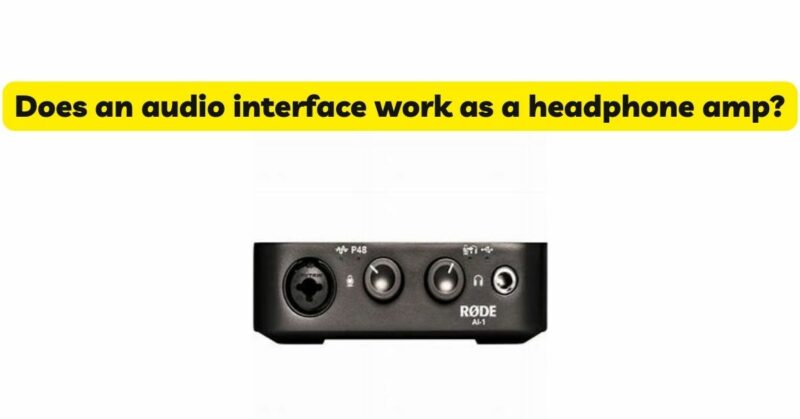
Audio interfaces have become indispensable tools for musicians and producers, offering a multitude of recording and processing features. While their primary purpose is to facilitate audio input and output for recording purposes, an intriguing question arises: Can an audio interface also serve as a headphone amplifier? In this article, we will delve into the functionality and performance of audio interfaces as headphone amps, exploring their advantages, limitations, and considerations for those seeking a convenient and versatile solution.
- Understanding Headphone Amplification: Headphone amplifiers are designed to provide sufficient power and amplification to drive headphones effectively. They play a crucial role in delivering accurate and dynamic audio reproduction, ensuring that headphones can reach their full sonic potential. Key aspects of headphone amplification include:
a. Power Output: Headphones require a specific amount of power to deliver optimal sound quality. A dedicated headphone amplifier ensures that headphones receive adequate power, resulting in enhanced audio performance and improved dynamics.
b. Impedance Matching: Headphones have varying impedance levels, and a well-matched amplifier ensures that the impedance of the headphones is properly driven, allowing for better control and accuracy in sound reproduction.
c. Signal Fidelity: A high-quality headphone amplifier ensures clean and accurate amplification, preserving the integrity of the audio signal and minimizing distortion or coloration that could negatively impact the listening experience.
- The Headphone Amplification Capabilities of Audio Interfaces: Many modern audio interfaces include built-in headphone amplifiers, allowing users to monitor their recordings or enjoy high-quality audio playback directly through headphones. These interfaces offer several advantages:
a. Convenience and Cost-Effectiveness: Audio interfaces with headphone amplifiers provide a space-saving and cost-effective solution, eliminating the need for a separate standalone headphone amplifier.
b. Direct Integration: With an audio interface acting as a headphone amplifier, users can connect their headphones directly to the interface, streamlining their setup and minimizing signal degradation.
c. Quality Conversion and Preamp Stages: High-end audio interfaces often feature top-quality digital-to-analog converters (DACs) and preamp stages, which can significantly enhance the headphone listening experience. These components contribute to superior audio fidelity, detail, and dynamic range.
d. Multiple Headphone Outputs: Some audio interfaces offer multiple headphone outputs, allowing for simultaneous monitoring by multiple users or accommodating different impedance requirements.
- Considerations and Limitations: While audio interfaces can function as competent headphone amplifiers, it is important to consider a few factors:
a. Power Output and Impedance Matching: Check the specifications of the audio interface’s headphone output to ensure that it can adequately drive your specific headphones. Headphones with higher impedance may require a more powerful amplifier to achieve optimal performance.
b. Noise and Signal-to-Noise Ratio: Cheaper or lower-end audio interfaces may introduce more noise into the headphone signal path. It is crucial to select an audio interface with a low noise floor and a high signal-to-noise ratio to maintain audio clarity and minimize unwanted artifacts.
c. Dedicated Headphone Amplifier Advantages: Dedicated headphone amplifiers often offer additional features such as specialized impedance settings, dedicated gain control, and optimized circuitry for headphone-specific performance. These features may be lacking in some audio interfaces.
d. Monitoring and Mixing Considerations: If you require precise monitoring and mixing capabilities, a dedicated headphone amplifier with separate controls for multiple inputs or cue mixes may be preferable.
- Enhancing the Experience: External Headphone Amplifiers: For users who demand even higher fidelity or have specific headphone requirements, external headphone amplifiers can be used in conjunction with audio interfaces. These dedicated amplifiers provide additional power, impedance matching options, and advanced circuitry to further optimize the headphone listening experience.
Conclusion: Audio interfaces with built-in headphone amplifiers offer a convenient and cost-effective solution for musicians, producers, and audio enthusiasts seeking to monitor recordings or enjoy high-quality audio playback through headphones. While they may not match the performance of dedicated headphone amplifiers in terms of power output and specialized features, audio interfaces can deliver impressive results when properly matched with compatible headphones. Consider your specific needs, the power requirements of your headphones, and the desired listening experience when deciding between an audio interface’s built-in headphone amplifier and a dedicated amplifier.