
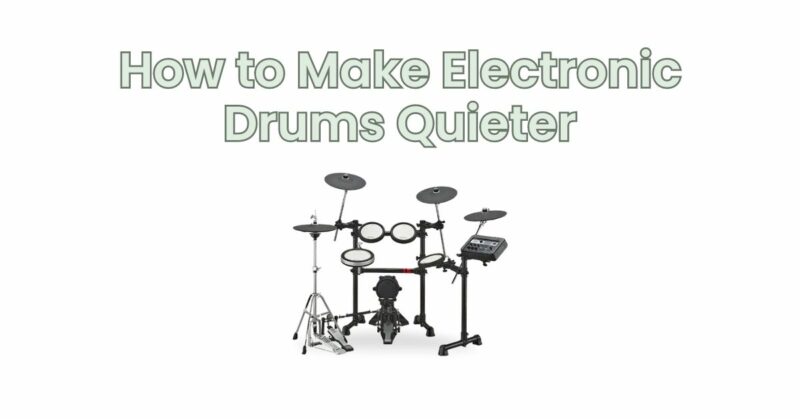
Electronic drums have gained immense popularity among drummers due to their versatility, portability, and the ability to play with headphones. However, for those living in shared spaces or noise-sensitive environments, the volume of electronic drums can still be a concern. Thankfully, there are several effective methods to make electronic drums quieter without compromising the overall playing experience. In this article, we will explore various techniques and tips to help you enjoy your electronic drums while keeping the noise levels under control.
- Soundproofing the Drum Kit: Soundproofing your electronic drum kit is an essential step to minimize noise transmission. Consider the following approaches:
a. Acoustic Panels: Install acoustic panels on the walls of your practice space. These panels absorb sound waves, preventing them from bouncing back into the room and reducing overall noise levels.
b. Drum Shields: Set up a drum shield or drum booth around your electronic drum set. These transparent barriers act as sound deflectors, containing the sound within a confined area and preventing it from spreading excessively.
c. Rubber Mat or Carpet: Place a rubber mat or carpet underneath your drum kit to absorb impact noise. This will help dampen vibrations and reduce the sound transmitted through the floor.
- Optimize Drum Pad Placement: Proper placement of your drum pads can significantly impact the volume levels. Consider the following strategies:
a. Adjust Pad Sensitivity: Many electronic drum modules allow you to adjust the sensitivity of individual drum pads. Lowering the sensitivity can reduce the volume output while still maintaining the playability.
b. Pad Positioning: Experiment with different pad positions to find the sweet spot that minimizes vibrations and noise. Try angling the pads downward slightly to decrease the sound projection.
c. Sound Dampening: Apply drum pad silencers or mute pads to the surface of the drum pads. These accessories help reduce the impact noise and stick rebound, resulting in a quieter playing experience.
- Utilize Electronic Drumming Features: Electronic drum sets offer a range of features to help control and tailor the sound output:
a. Headphone Monitoring: Connect your headphones to the drum module for personal monitoring. This allows you to play at any time without disturbing others, as the sound is contained within your headphones.
b. Volume Control: Adjust the overall volume settings on your electronic drum module. Lowering the volume level can make a significant difference in reducing the noise output.
c. Sound Modules and Pre-Recorded Kits: Explore different sound modules and pre-recorded drum kits to find options that produce softer sounds. Some modules offer specific kits designed for low-volume practice.
- Time Management: Respecting the time constraints of noise-sensitive environments is crucial. Consider the following guidelines:
a. Establish Practice Hours: Coordinate your practice schedule with your living arrangements. Communicate and reach a mutual agreement with neighbors or housemates regarding designated practice times to minimize disturbances.
b. Use Low-Volume Practice Modes: Many electronic drum kits provide practice modes that generate reduced volume levels while maintaining responsiveness. Utilize these features during late-night or early-morning sessions.
With a combination of soundproofing techniques, optimized drum pad placement, the use of electronic drumming features, and respectful time management, it is possible to enjoy playing electronic drums without causing excessive noise. Implementing these strategies will help you create a quieter drumming experience, allowing you to practice or perform with greater peace of mind and consideration for those around you.