
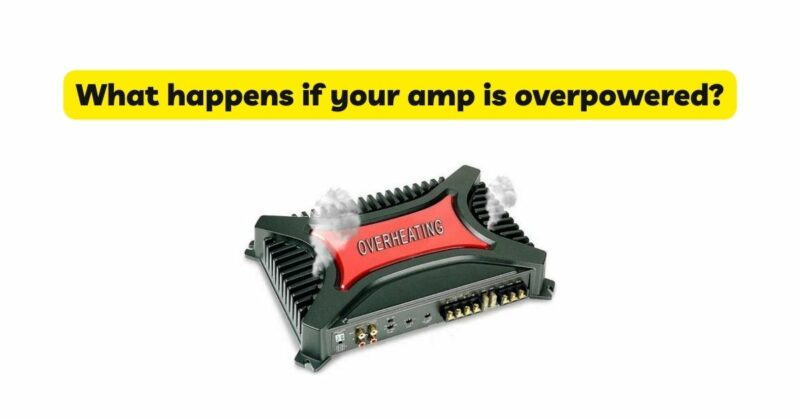
When it comes to amplifiers, matching the power requirements of your speakers is crucial for optimal performance and longevity. However, there may be instances where an amplifier is overpowering the speakers it is connected to. In this article, we will explore the potential consequences of overpowering your amplifier and shed light on the risks and effects it can have on your audio equipment.
Understanding Amplifier Power Ratings: Amplifiers are rated based on their power output, typically measured in watts. This rating indicates the maximum power that an amplifier can deliver to the connected speakers. It is essential to choose an amplifier with a power rating that matches or closely matches the power handling capabilities of your speakers.
Consequences of Overpowering Your Amplifier:
- Speaker Damage: One of the most significant risks of overpowering your amplifier is the potential damage it can cause to your speakers. When an amplifier delivers more power than the speakers can handle, it can strain the speaker components, including the voice coil, cone, and suspension. This can lead to distortion, reduced sound quality, and even physical damage to the speakers, such as blown drivers or torn cones.
- Distortion and Clipping: Overpowering your amplifier can result in distortion and clipping, which negatively impact the audio quality. Distortion occurs when the amplifier is pushed beyond its limits, causing the waveform to become distorted and resulting in a harsh, unpleasant sound. Clipping, on the other hand, happens when the amplifier is pushed beyond its maximum output capabilities, causing the peaks of the waveform to be cut off. Clipping not only degrades the sound quality but can also introduce additional stress on the amplifier and speakers.
- Reduced Lifespan: Overpowering your amplifier puts additional strain on its internal components. The amplifier’s power supply, output transistors, and other circuitry may be forced to work harder to handle the excess power, which can lead to increased heat generation and component stress. Over time, this can significantly reduce the lifespan of your amplifier, resulting in more frequent repairs or the need for a complete replacement.
- Safety Hazards: Overpowering an amplifier can create safety hazards, particularly in extreme cases. Excessive power demands can cause the amplifier to overheat, potentially leading to component failure or even fire. Additionally, the increased voltage and current levels associated with overpowering an amplifier can pose a risk of electrical shocks if proper safety measures are not in place.
Preventing Overpowering: To avoid the risks associated with overpowering your amplifier, it is important to understand the power requirements of your speakers and choose an amplifier that matches or closely matches those requirements. Consider the speaker’s power handling capabilities, impedance, and sensitivity when selecting an amplifier. Additionally, it is advisable to consult the manufacturer’s recommendations or seek expert advice to ensure a proper match between your amplifier and speakers.
Additional Considerations:
- Headroom and Dynamic Range: Having some headroom, which refers to the available power beyond the average listening level, is desirable. It allows for dynamic peaks in the music without straining the amplifier or speakers. However, there is a balance to strike, as too much headroom can lead to underutilization of the amplifier’s capabilities.
- Room Size and Listening Environment: The size of your listening room and the intended listening volume also play a role in determining the appropriate amplifier power. Larger rooms or louder listening environments may require more power to achieve the desired sound levels without overstraining the system.
Conclusion: Overpowering your amplifier can have detrimental effects on both your amplifier and speakers, leading to potential damage, distortion, reduced lifespan, and safety hazards. It is crucial to match the power requirements of your speakers with an appropriate amplifier to ensure optimal performance, sound quality, and longevity. By understanding the risks and effects of overpowering, you can make informed decisions when selecting and using audio equipment, ultimately preserving the integrity of your system and enhancing your listening experience.