
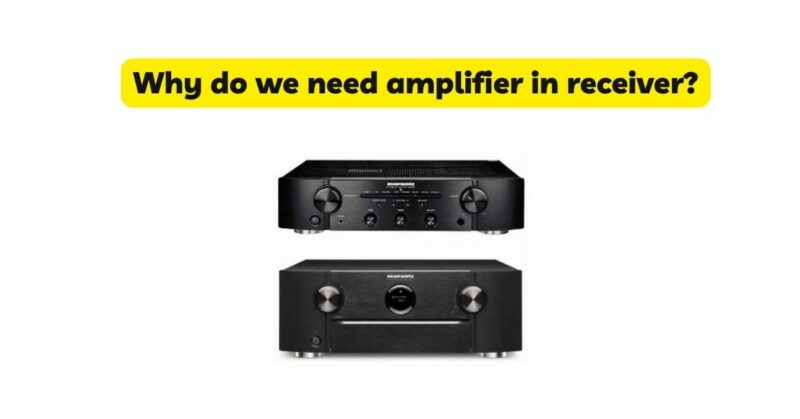
In the world of audio systems, receivers play a central role in delivering high-quality sound. These all-in-one units bring together various audio components, including amplifiers. But why do we need amplifiers in receivers? In this article, we will explore the vital role that amplifiers play in receivers, discussing their functions, benefits, and the impact they have on sound quality.
Understanding Receivers: Before delving into the importance of amplifiers in receivers, let’s first grasp the concept of receivers themselves. A receiver is a versatile device that combines multiple audio components into a single unit. It typically consists of an amplifier, a radio tuner, audio inputs and outputs, and often includes additional features like surround sound processing and connectivity options.
The Role of Amplifiers in Receivers: Amplifiers are an integral part of receivers, and they serve several crucial functions that contribute to the overall performance of the audio system. Let’s explore these functions in detail:
- Powering the Speakers: One of the primary functions of amplifiers in receivers is to power the speakers. Amplifiers take the low-level audio signals from various sources, such as CD players, turntables, or media players, and increase their power to a level that can drive the speakers. This boost in power ensures that the sound produced by the speakers is clear, robust, and impactful.
- Signal Amplification: Amplifiers in receivers are responsible for amplifying the audio signals, enhancing their strength and quality. This amplification process helps to overcome any losses or degradation that may occur in the audio signal during transmission or processing. By boosting the signal, amplifiers ensure that the sound reproduced by the speakers accurately represents the original audio source.
- Impedance Matching: Another critical function of amplifiers in receivers is impedance matching. Impedance refers to the resistance that the speakers present to the audio signal. Amplifiers adjust their output impedance to match the impedance requirements of the speakers, ensuring an efficient transfer of power and minimizing distortion. Proper impedance matching helps optimize the performance of the speakers and improves overall sound quality.
- Volume Control: Amplifiers in receivers provide volume control, allowing users to adjust the sound output to their desired levels. The volume control feature is essential for creating a balanced listening experience, accommodating different preferences and environmental factors. It enables users to increase or decrease the sound levels without compromising the audio quality.
- Audio Processing and Customization: In modern receivers, amplifiers often incorporate advanced audio processing technologies and customization options. These features include equalization controls, tone adjustments, surround sound processing, and room correction capabilities. Amplifiers with these functionalities allow users to tailor the audio output according to their preferences, room acoustics, and specific content, enhancing the overall listening experience.
Benefits of Amplifiers in Receivers: The inclusion of amplifiers in receivers brings several benefits to audio systems:
- Convenience and Integration: By integrating amplifiers into receivers, manufacturers provide users with a compact, all-in-one solution. This integration simplifies the setup process, reduces the number of separate components, and minimizes cable clutter. It offers convenience and ease of use, particularly for those who prefer a streamlined audio system.
- Enhanced Sound Quality: Amplifiers play a significant role in ensuring high-fidelity sound reproduction. With their ability to amplify weak signals, impedance matching capabilities, and precise volume control, they contribute to improved sound clarity, dynamics, and accuracy. The inclusion of advanced audio processing technologies further enhances the sound quality, allowing for customization and optimization.
- Versatility and Expandability: Receivers with built-in amplifiers provide a foundation for versatile audio systems. They often include multiple audio inputs and outputs, enabling users to connect various sources and expand their setup. Additionally, many receivers feature preamp outputs that allow for the connection of external power amplifiers, offering the flexibility to upgrade or customize the amplification stage of the system.
Conclusion: Amplifiers are an essential component of receivers, playing a vital role in powering speakers, amplifying audio signals, and enhancing sound quality. They provide the necessary power and control to ensure an immersive and enjoyable audio experience. The integration of amplifiers into receivers offers convenience, versatility, and customization options, making them a popular choice for audio enthusiasts.When selecting a receiver, it’s important to consider the power output, impedance compatibility, and additional features of the amplifier section. Understanding the functions and benefits of amplifiers in receivers empowers users to make informed decisions and create audio systems that deliver outstanding performance and fidelity.