
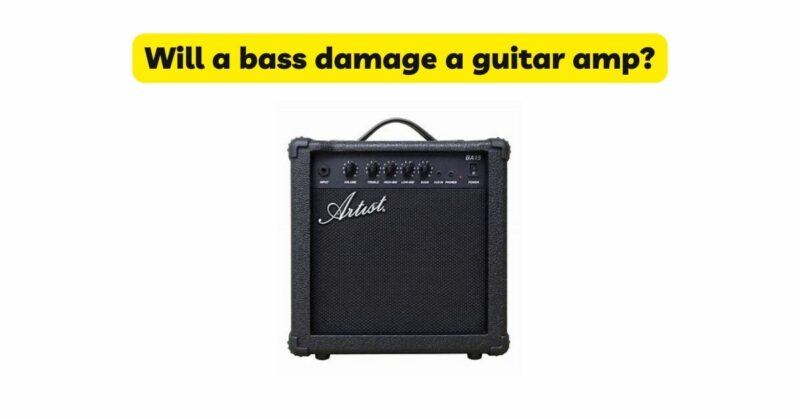
When it comes to amplifying a bass guitar, the question often arises: Can I use a guitar amp without risking damage to the amplifier? While it is technically possible to plug a bass guitar into a guitar amp, there are several factors to consider to avoid potential damage. In this article, we will explore the risks and limitations of using a guitar amp with a bass guitar and provide insights to help you make an informed decision.
Understanding the Differences: Bass guitars produce lower frequencies compared to electric guitars, and bass amps are specifically designed to handle these frequencies. On the other hand, guitar amps are optimized for mid to high-range frequencies. The key differences between the two lie in power handling, speaker design, and overall frequency response. These differences play a crucial role in determining the compatibility of a guitar amp with a bass guitar.
Power Handling: Bass guitars produce more low-frequency energy, requiring more power to accurately reproduce the sound. Guitar amps are generally designed with lower power ratings compared to bass amps. Running a bass guitar through a guitar amp at high volumes can push the amp beyond its power limits, potentially causing the amplifier to distort or even damage its components.
Speaker Response: Guitar and bass speakers are designed differently to accommodate the frequency range of their respective instruments. Guitar speakers often emphasize mid-range frequencies, while bass speakers are built to handle low frequencies and deliver a more robust low-end response. When a bass guitar is played through a guitar amp, the speaker may struggle to reproduce the lower frequencies, resulting in a thin and less defined bass tone.
Overloading the Amplifier: Bass guitars produce more energy in the low-frequency range, which can overload the preamp and power amp stages of a guitar amp. This can lead to distortion, clipping, or even overheating of the amplifier components. Continuous overloading can cause long-term damage to the amp, affecting its overall performance and lifespan.
Speaker Damage: Using a guitar amp with a bass guitar can put extra stress on the speaker. The extended low-frequency vibrations generated by the bass can potentially damage the speaker cone or voice coil, resulting in a distorted or blown-out sound. Prolonged use of a bass guitar with a guitar amp can increase the risk of speaker damage.
Mitigating the Risks: While using a guitar amp with a bass guitar carries inherent risks, there are steps you can take to mitigate them:
- Moderate Volume Levels: To minimize the risk of damage, keep the volume levels of the guitar amp low when playing a bass guitar. Playing at moderate volumes reduces the strain on the amplifier and speakers, decreasing the chances of distortion or damage.
- EQ Adjustments: Adjust the amp’s EQ settings to reduce the emphasis on mid-range frequencies and boost the bass frequencies. This can help compensate for the speaker’s limited low-frequency response, allowing for a more balanced bass tone.
- Use a Bass-Specific Speaker Cabinet: Consider connecting the guitar amp to a separate bass-specific speaker cabinet. Bass cabinets are designed to handle low frequencies and provide a more accurate and robust sound reproduction for bass guitars.
- Dedicated Bass Amps: Investing in a dedicated bass amplifier is the best long-term solution. Bass amps are designed to handle the specific needs of a bass guitar, providing adequate power, speaker response, and tonal control.
Conclusion: While it is possible to use a guitar amp with a bass guitar, it is not without risks. The power handling, speaker response, and overall frequency range of guitar amps are optimized for electric guitars and may not fully support the requirements of a bass guitar. To protect your equipment and achieve the best bass tone, it is recommended to invest in a dedicated bass amplifier that is designed specifically for bass frequencies. By doing so, you can ensure optimal sound quality, avoid potential damage to your equipment, and fully enjoy the unique characteristics of your bass guitar.