
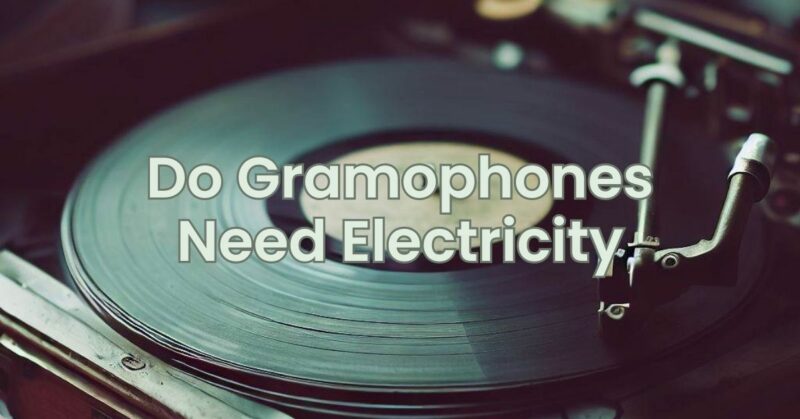
Gramophones, also known as phonographs, are iconic mechanical devices that have played a significant role in the history of sound recording and playback. With the rise of modern electronic audio equipment, questions may arise about whether gramophones need electricity to function. In this article, we will explore the unique mechanics behind gramophones and address whether these nostalgic machines require electricity to produce the beautiful sound of vinyl records.
The Mechanical Marvel of Gramophones:
Unlike contemporary audio devices that heavily rely on electricity and digital technology, gramophones operate using purely mechanical principles. These ingenious machines were invented in the late 19th century and became popular during the early 20th century as the primary means of playing recorded music.
Key Components of a Gramophone:
- Turntable: The turntable is the central component of a gramophone. It is a flat circular platform on which the vinyl record rests and rotates during playback.
- Stylus: The stylus, also known as the needle, is a small, pointed piece of metal attached to the end of the tonearm. It follows the grooves of the vinyl record and transforms the physical vibrations encoded in the grooves into sound.
- Tonearm: The tonearm is a mechanical arm that holds the stylus and allows it to trace the grooves on the vinyl record. It also houses the sound reproducer, which converts the mechanical vibrations into sound waves.
- Sound Box/Reproducer: The sound box, located at the end of the tonearm, contains a diaphragm and a set of mechanical components. The diaphragm vibrates in response to the stylus movements, and these vibrations are amplified by the sound box to produce audible sound.
Mechanical Amplification:
Gramophones achieve mechanical amplification through a clever system of gears, levers, and resonance chambers. As the stylus traces the grooves on the rotating vinyl record, it vibrates, creating physical vibrations. These vibrations are transmitted through the tonearm to the sound box, which, in turn, amplifies the sound by utilizing the resonance of the components within it. The amplified sound waves are then channeled through a horn or directly projected to the listener, producing the distinctive warm and nostalgic sound associated with gramophones.
In conclusion, gramophones are marvelous mechanical devices that do not require electricity to function. Instead, they rely on the physical interactions between the stylus, tonearm, and sound box to convert the grooves on a vinyl record into delightful sound. This purely mechanical process showcases the ingenuity and craftsmanship of early sound recording and playback technology. Owning and operating a gramophone can be a unique and gratifying experience for audiophiles and music enthusiasts who appreciate the rich history and authentic sound of vinyl records.